Text in Latin.
Only 3 copies of this edition are recorded worldwide (all in Italy).
An extremely rare early post-incunable edition of this very popular 15th-century short treatise on the notarial art. This widely used practical manual, titled ‘Ars Notariatus’, though printed anonymously, is believed to be the work of Antonius Grassus, judge of the Apostolic Tribunal of the Rota Romana, who held office as a professor of Canon Law in Bologna in 1472, and later served the Church as chancellor to pope Sixtus IV, and bishop of Tivoli until his death in 1491.
After circulating extensively in manuscript, It was first printed in 1474 in Rome by Sachsel and Golsch.
Comprising 26 chapters, the Ars Notariatus presents a very straightforward and clear summary of a notary’s work which it introduces as follows: “the art of being a notary is the art of writing and expressing arguments in writing so as to straighten the complexities of human frailty and commit them to perennial memory”. This is followed by a clarification of the legal role and status of a notary. The requirements for becoming a notary are formulated as follows: being a free man, not of peasant background, not constrained by other ties (e.g., holy orders), a male individual who is compos mentis (e.g., not prone to excessive anger), with good eyesight and hearing, sound reputation and character.
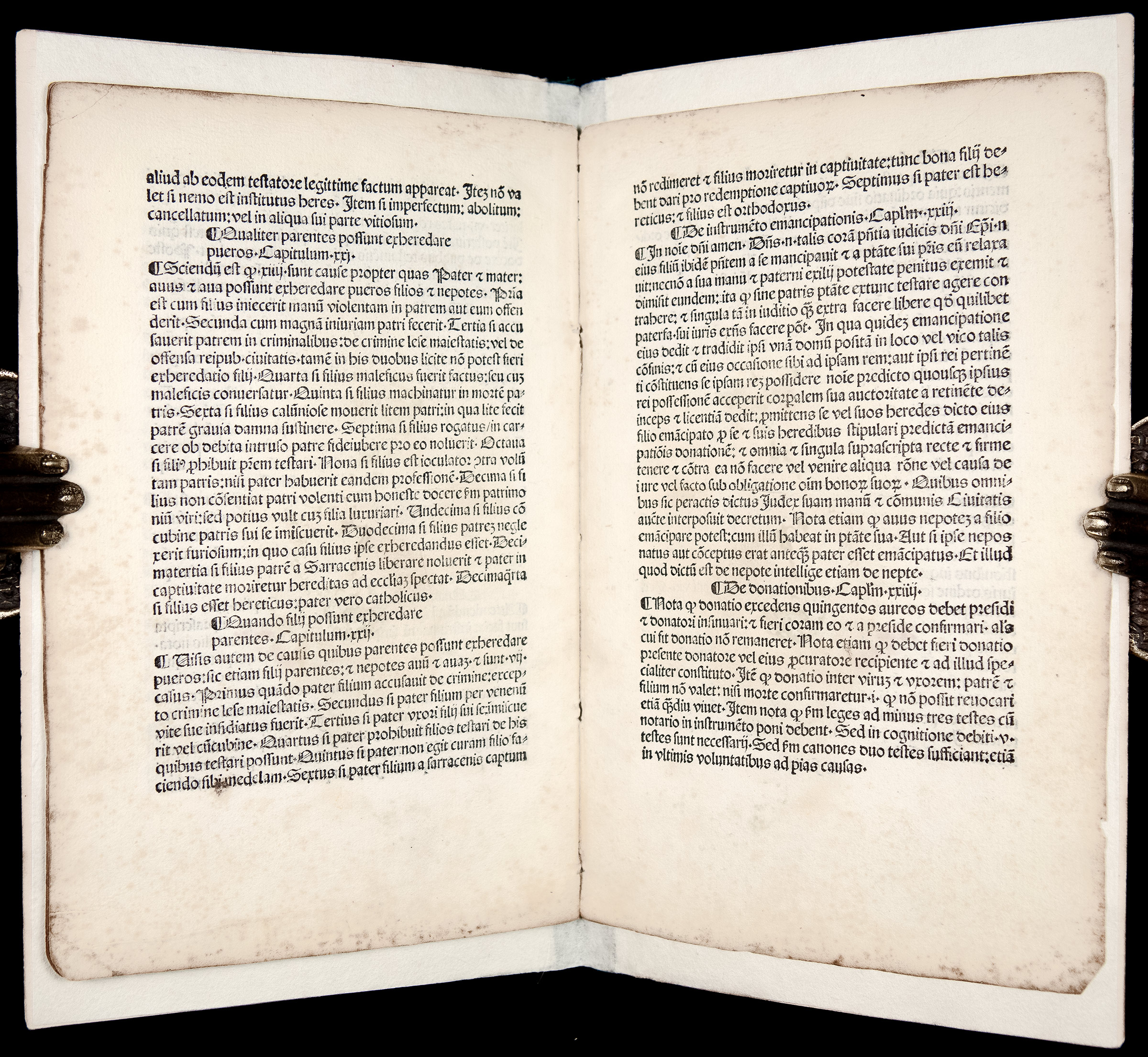
The rest of the work explains various aspects and areas of everyday notarial practice: dealing with contracts, obligations, customs, sales arbitrations and stipulations, and, most importantly, how to deal with last wills and testaments and the subdivision of inheritance (e.g., if a son refuses to ransom his father from the Saracens and the father dies in prison, his inheritance will go to the Church).
This fascinating little document of late-medieval legal practice, offers a valuable insight into the professional role, daily tasks, and individual character of a medieval notary.
Eucario Silber's press in Rome became active in 1480. Upon Eucario's death in (presumably) 1509, it was inherited by his son Marcello, who ran it for another 17 years. The type in our edition of Ars Notariatus is Eucario's gothic rotunda 6*:86G/M88 (same as G.4 a (83-85) [H.6*] M88, per Tinto), used between 1490 and 1510.
USTC 801767; Censimento Nazionale 3175; OPAC CNCE003175; Alberto Tinto, Gli annali tipografici di Eucario e Marcello Silber, p. 37: no.51.
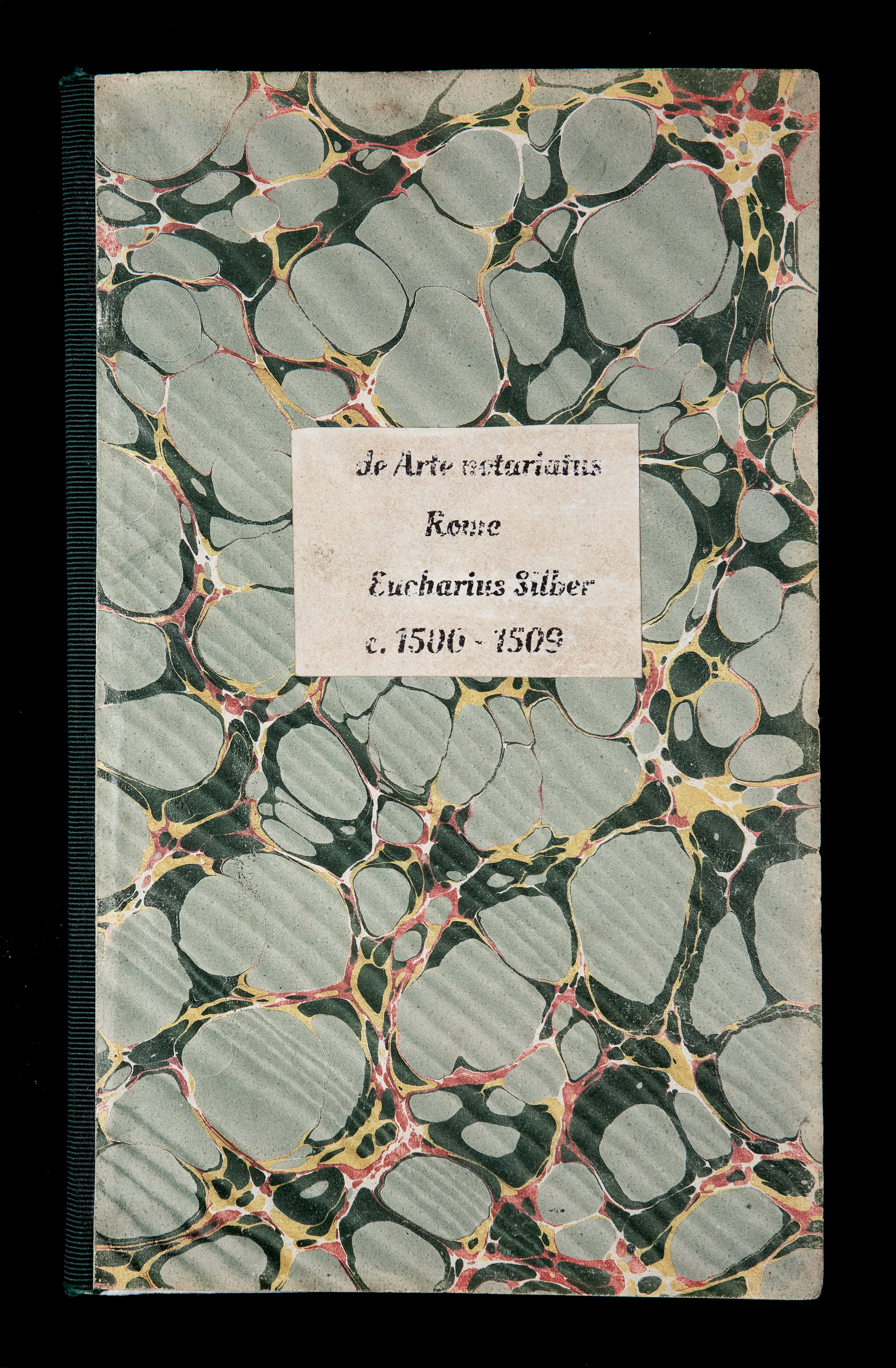
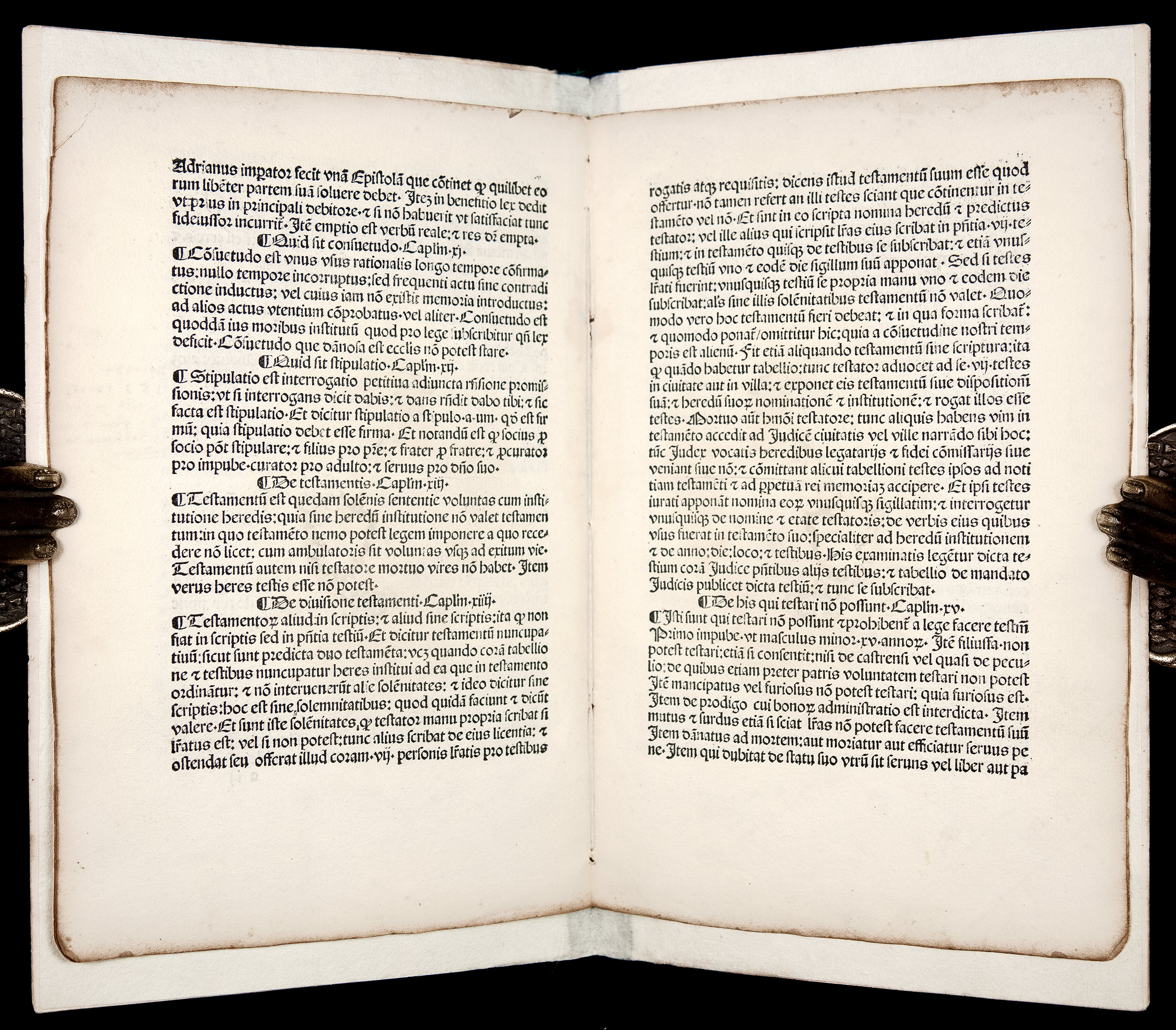
A slim Quarto, text-block measures 207 mm x 133 mm; sewn into (slightly oversized) 20th-century marbled paper wraps, with printed paper label to front cover.
[12] pages, i.e. a single quite of 6 leaves: a6. Complete.
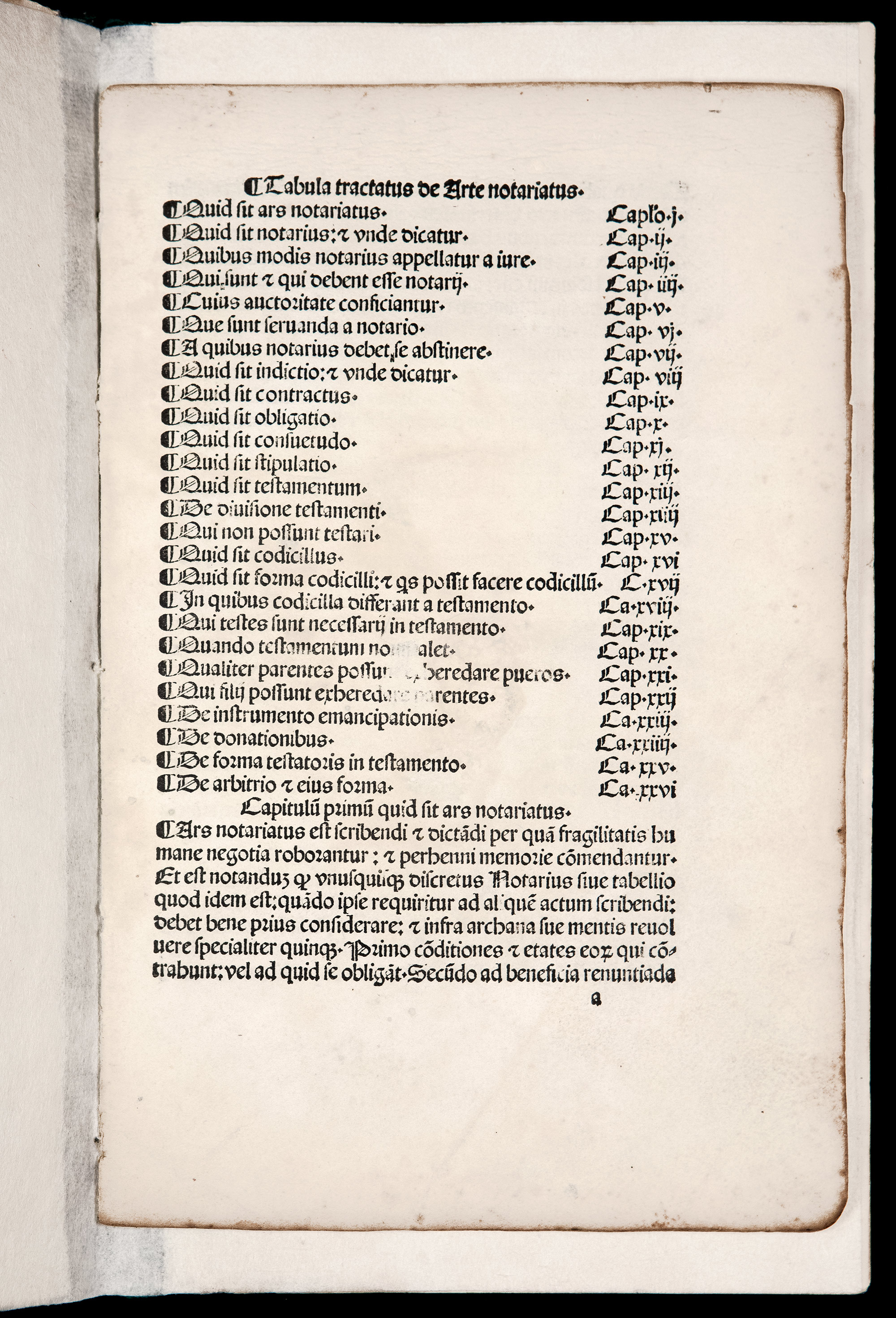
Issued without a title page (in the same format as it was printed in numerous incunable editions). Text beginning (on a1r) with table of contents: “Tabula tractatus de Arte notariatus”.
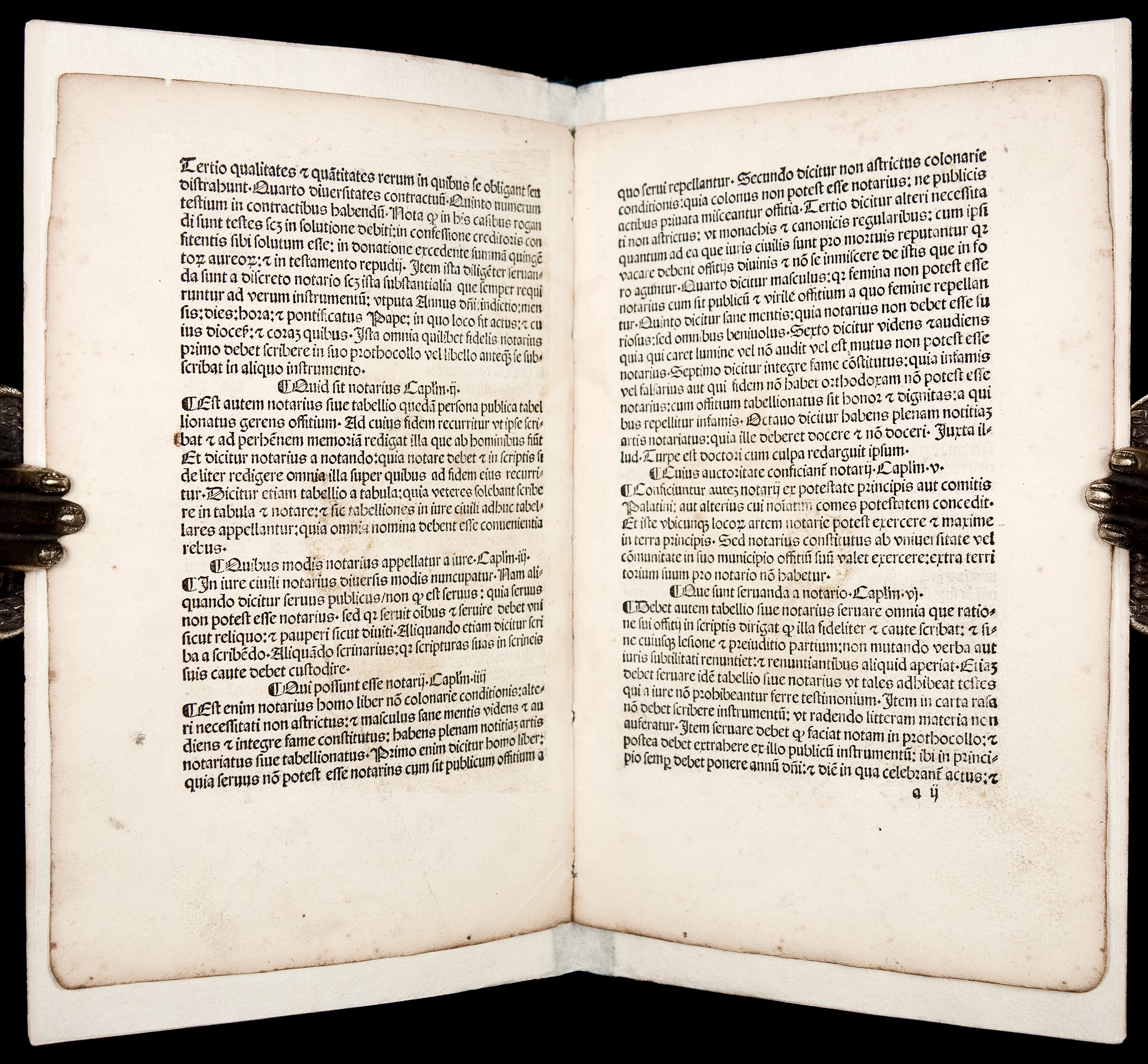
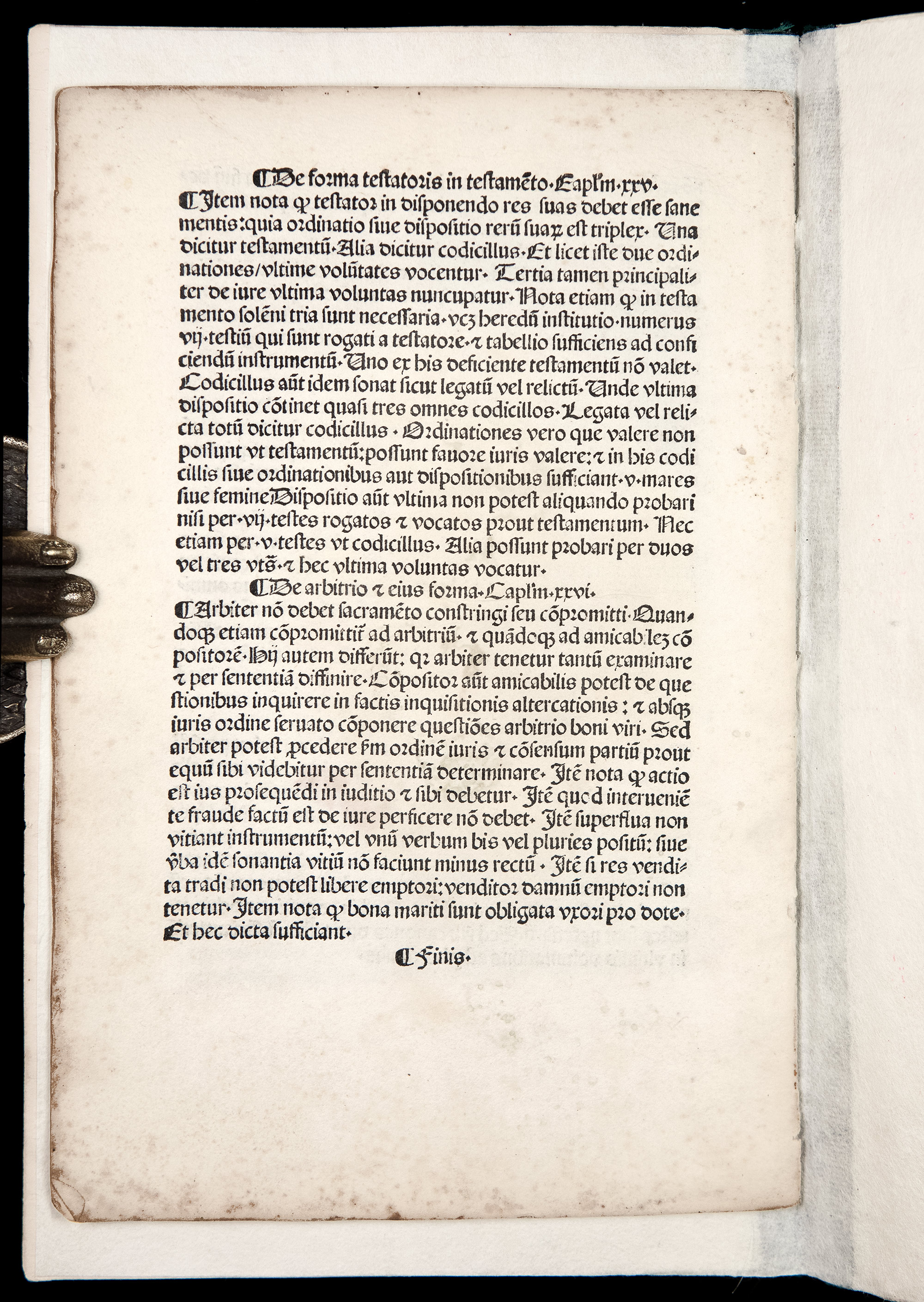
Printed in single column, in Eucario Silber's handsome rotunda gothic type (6*:86G M88, referred to by Tinto as G.4 a (83-85) [H.6*] M88); 35 lines per page.
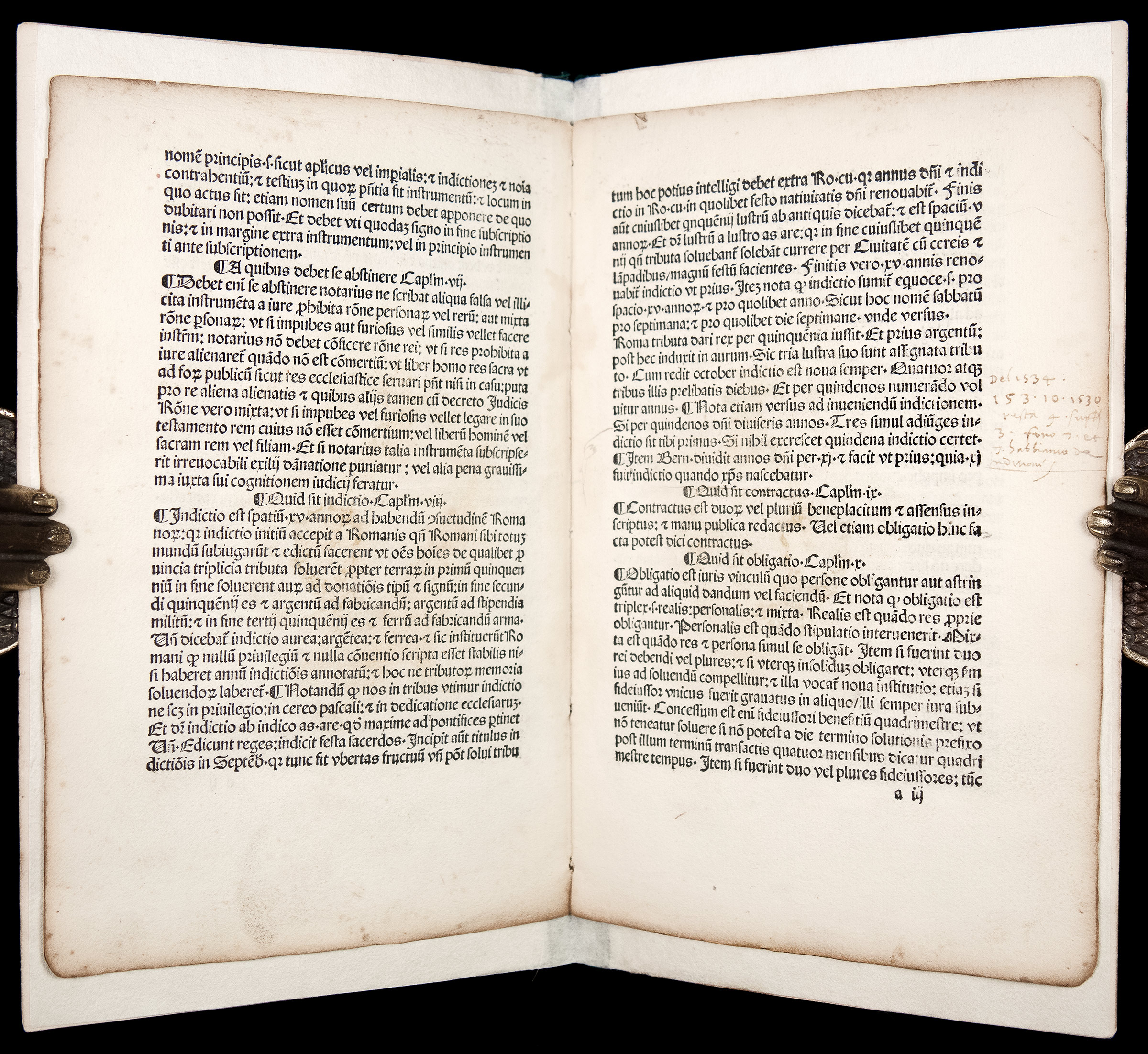
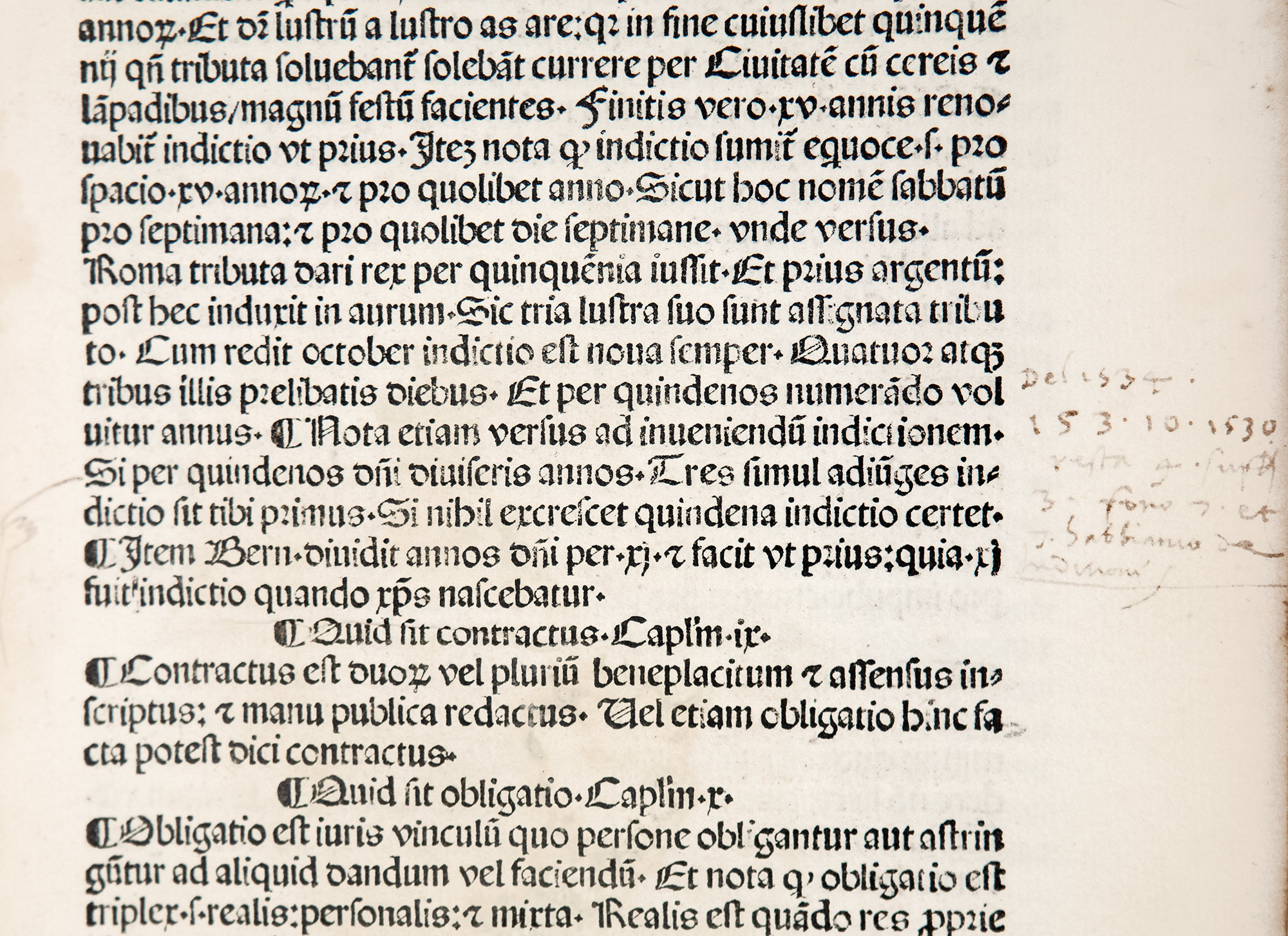
Binding a bit faded and rubbed. Complete. Internally with some hand-soiling, light foxing and age-toning to paper, but mostly marginal. First page (a1r) with a few letters (in the Tabula) obscured due to adhesion or minor abrasion. A small manuscript marginal note in fore-margin of a4r. Else, a solid, genuine, wide-margined example of this extremely rare Roman post-incunable legal pamphlet.