opera c labore Hieremie Marti Auguftane
Reipubli ce Medici, in Latinum
fermonem [...]
Superb copy with stellar provenance (see below).
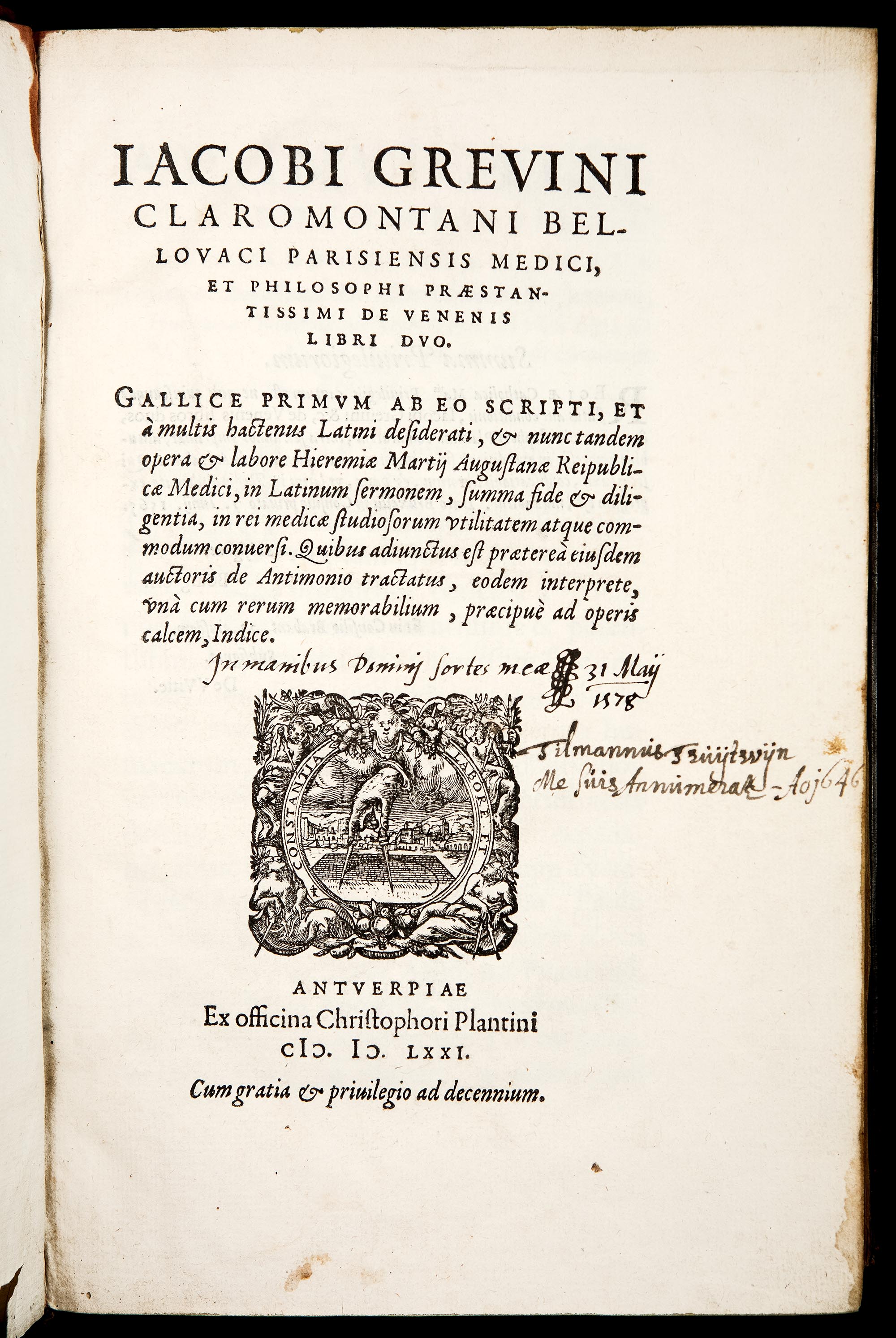
Printed by Christoph Plantin, Antwerp, 1571.
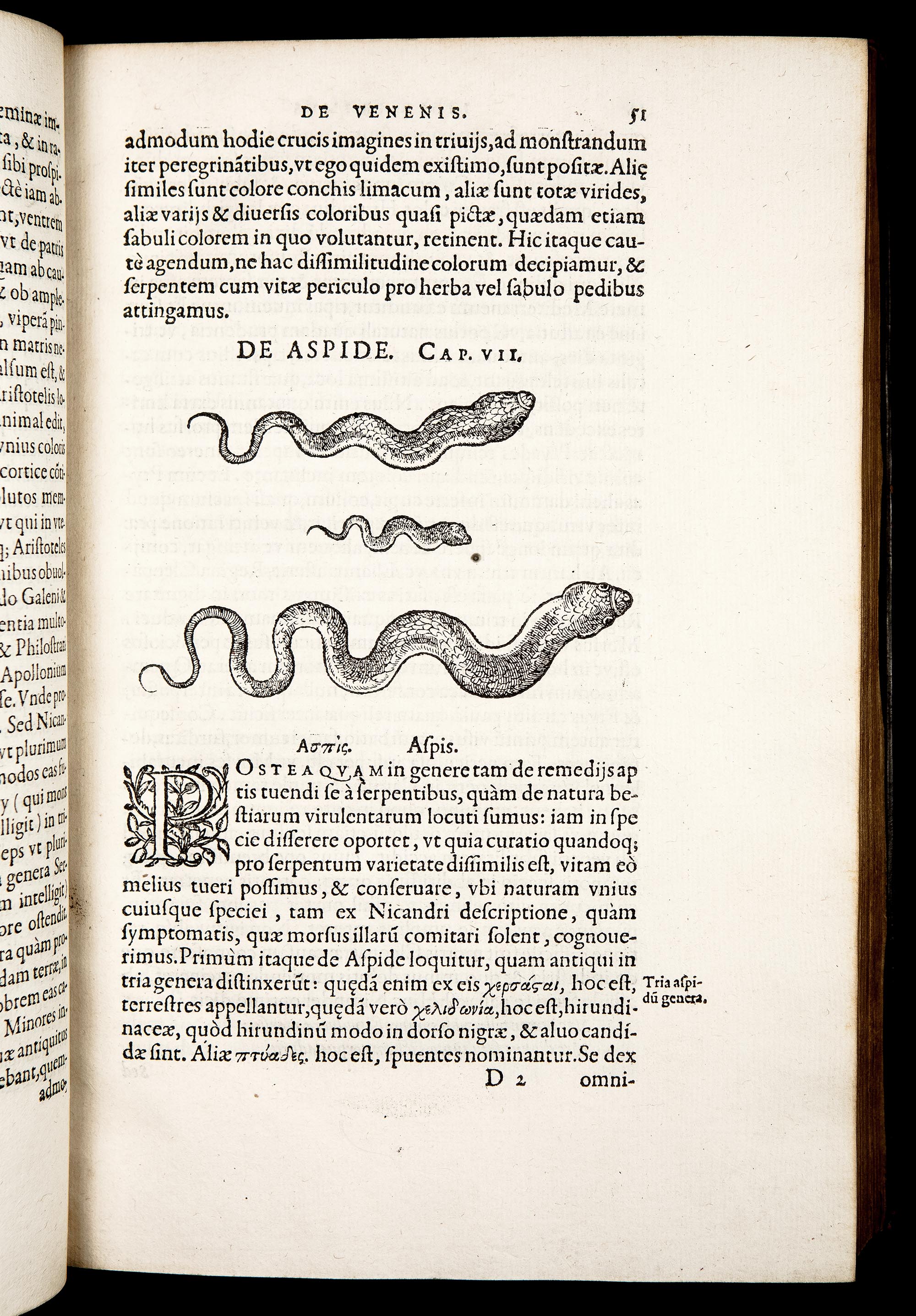
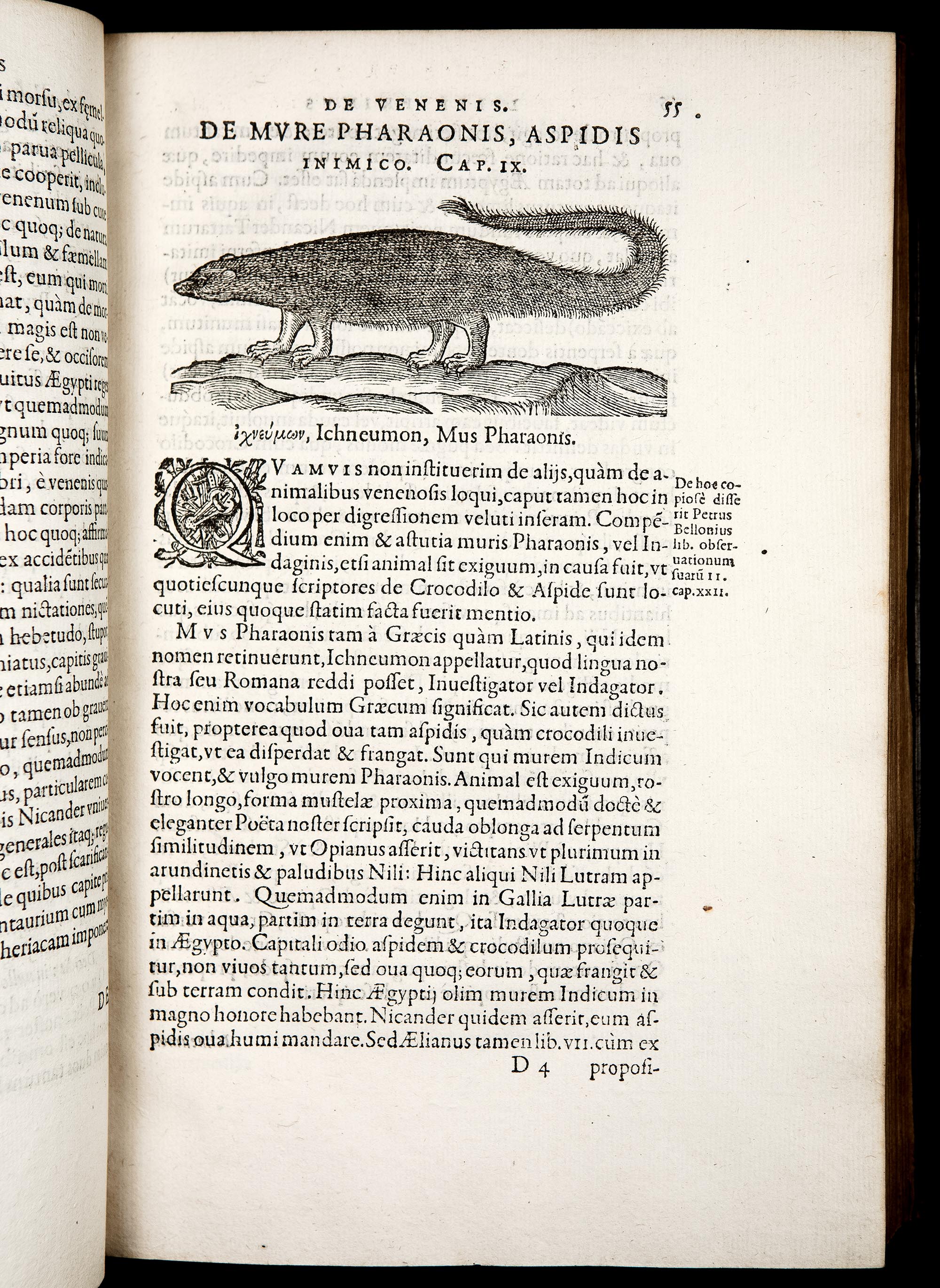
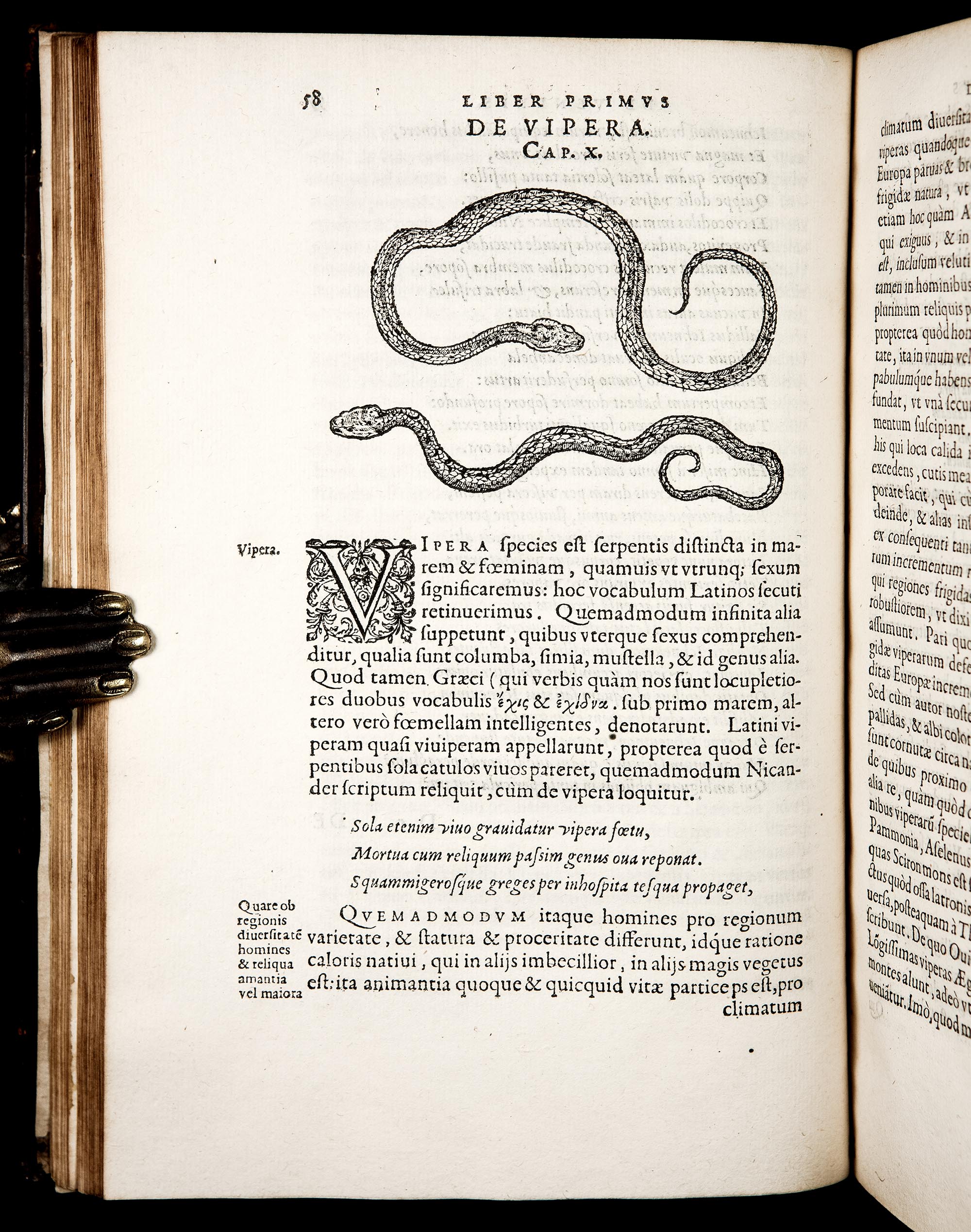
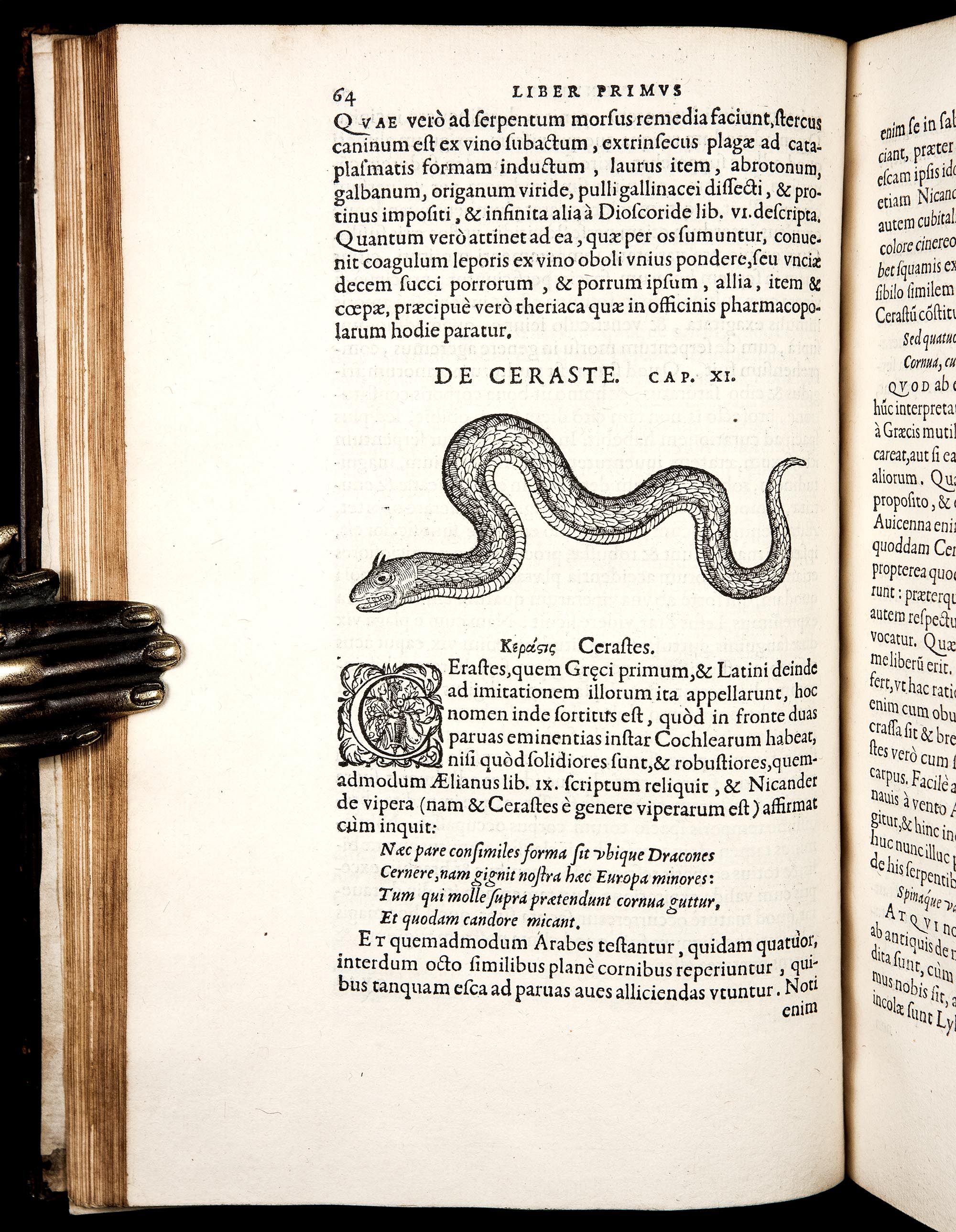
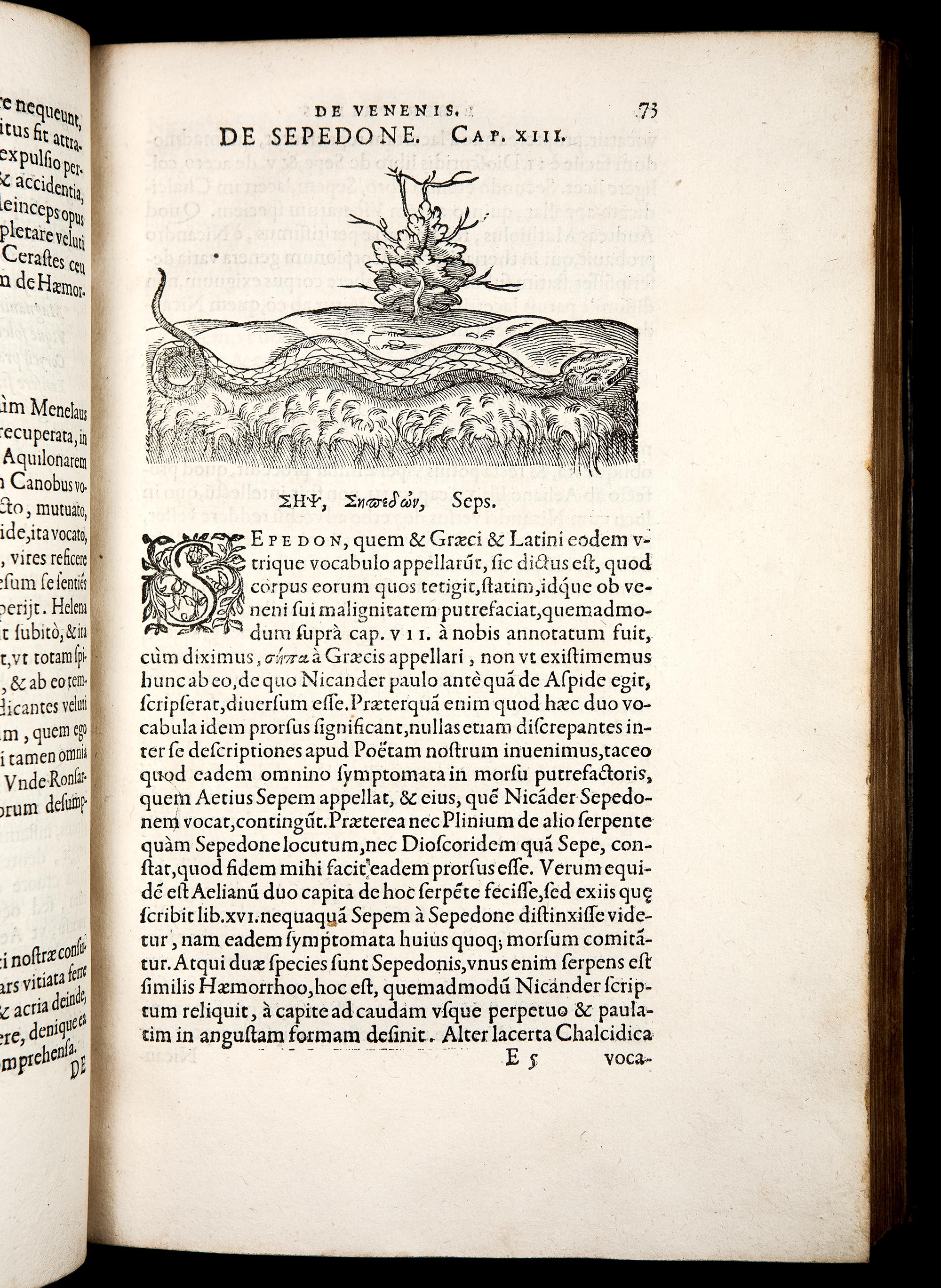
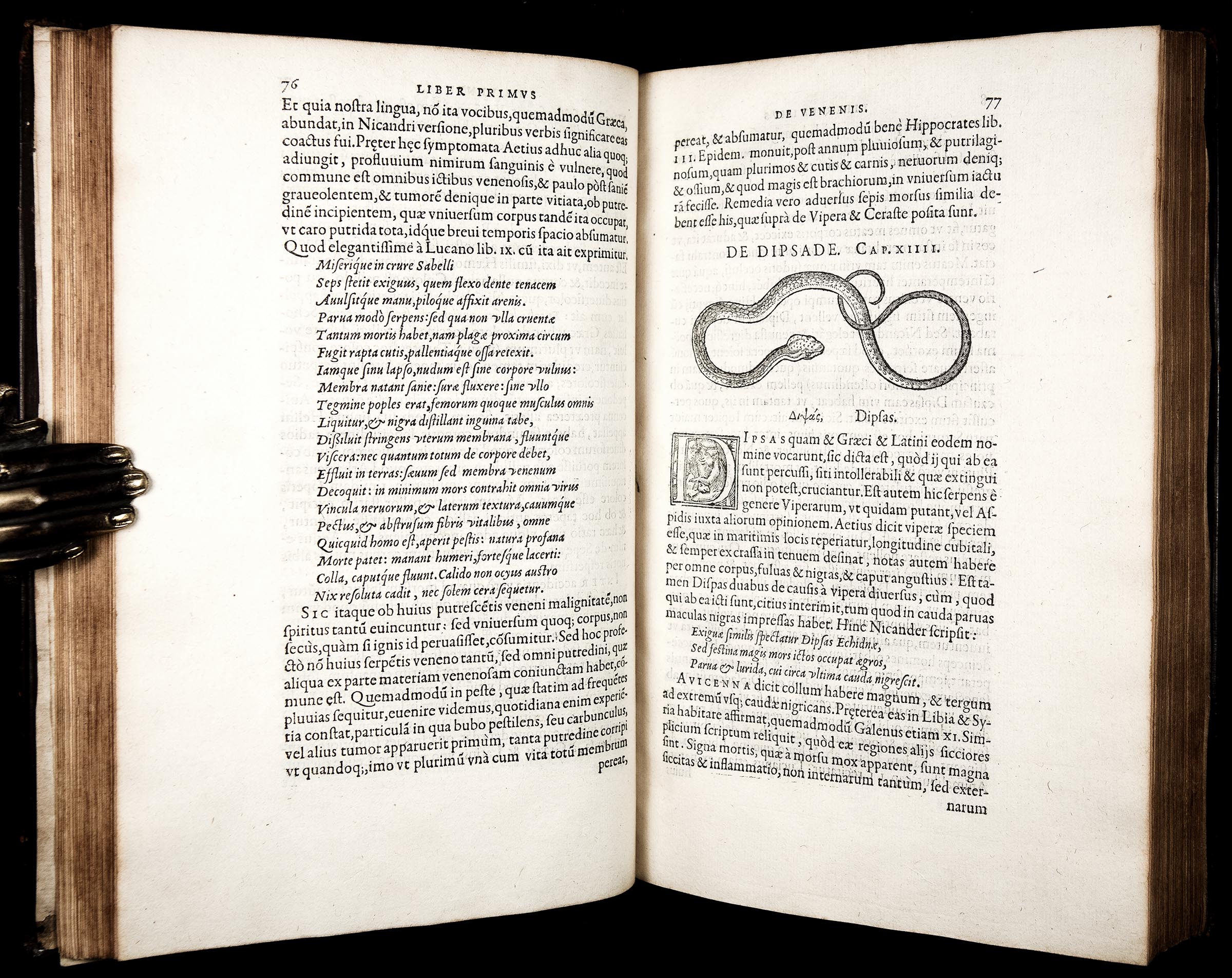
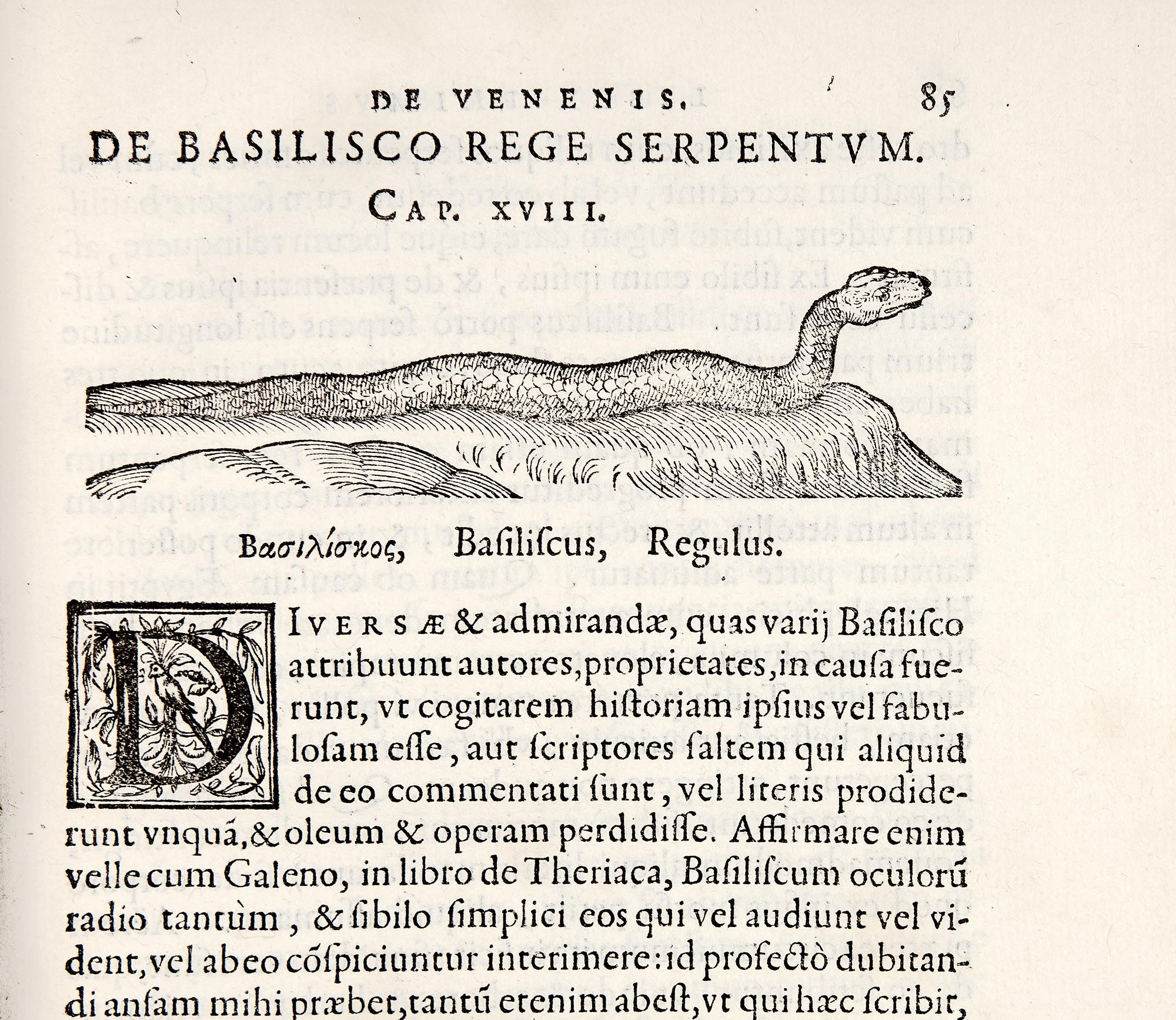
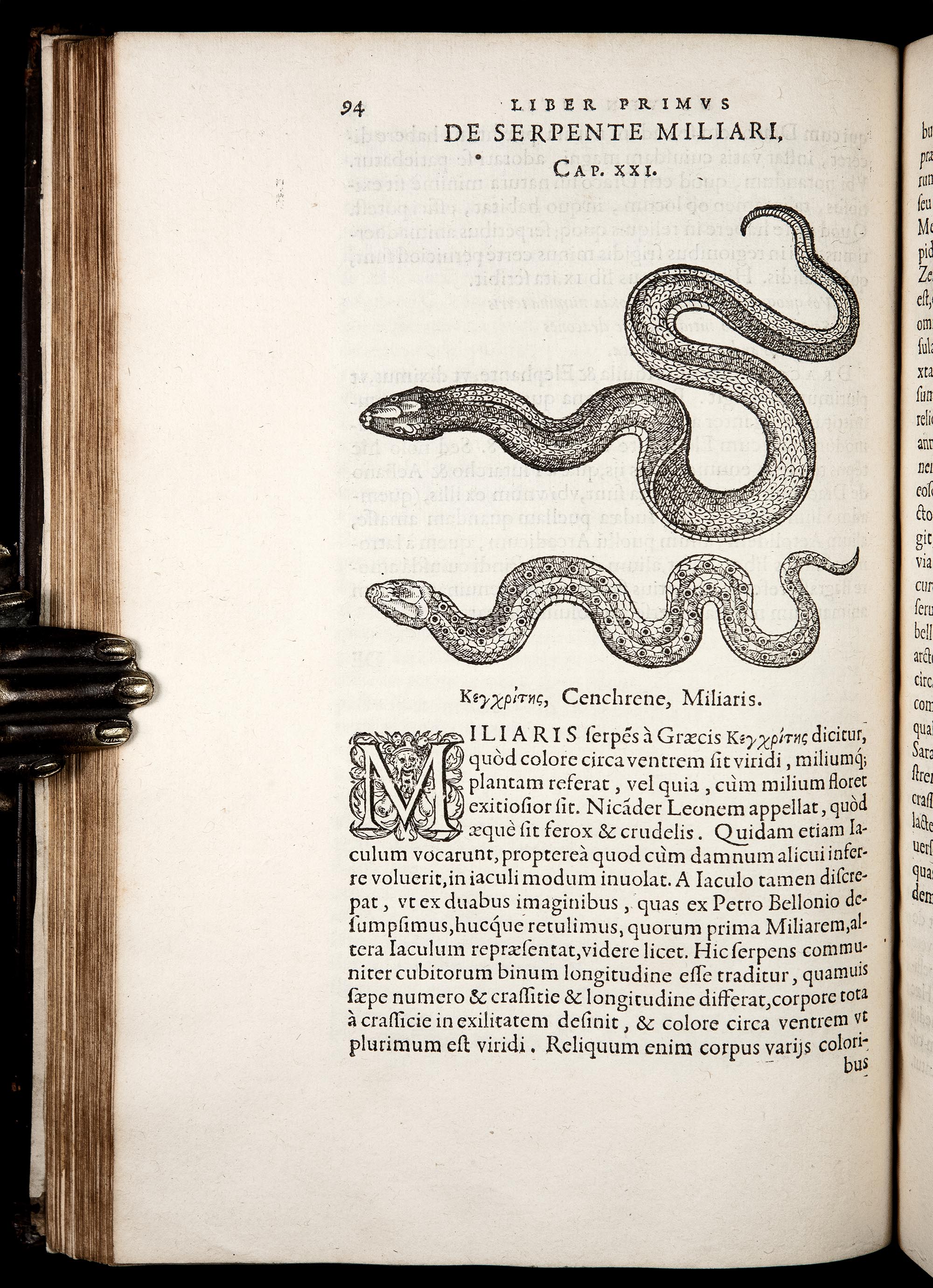
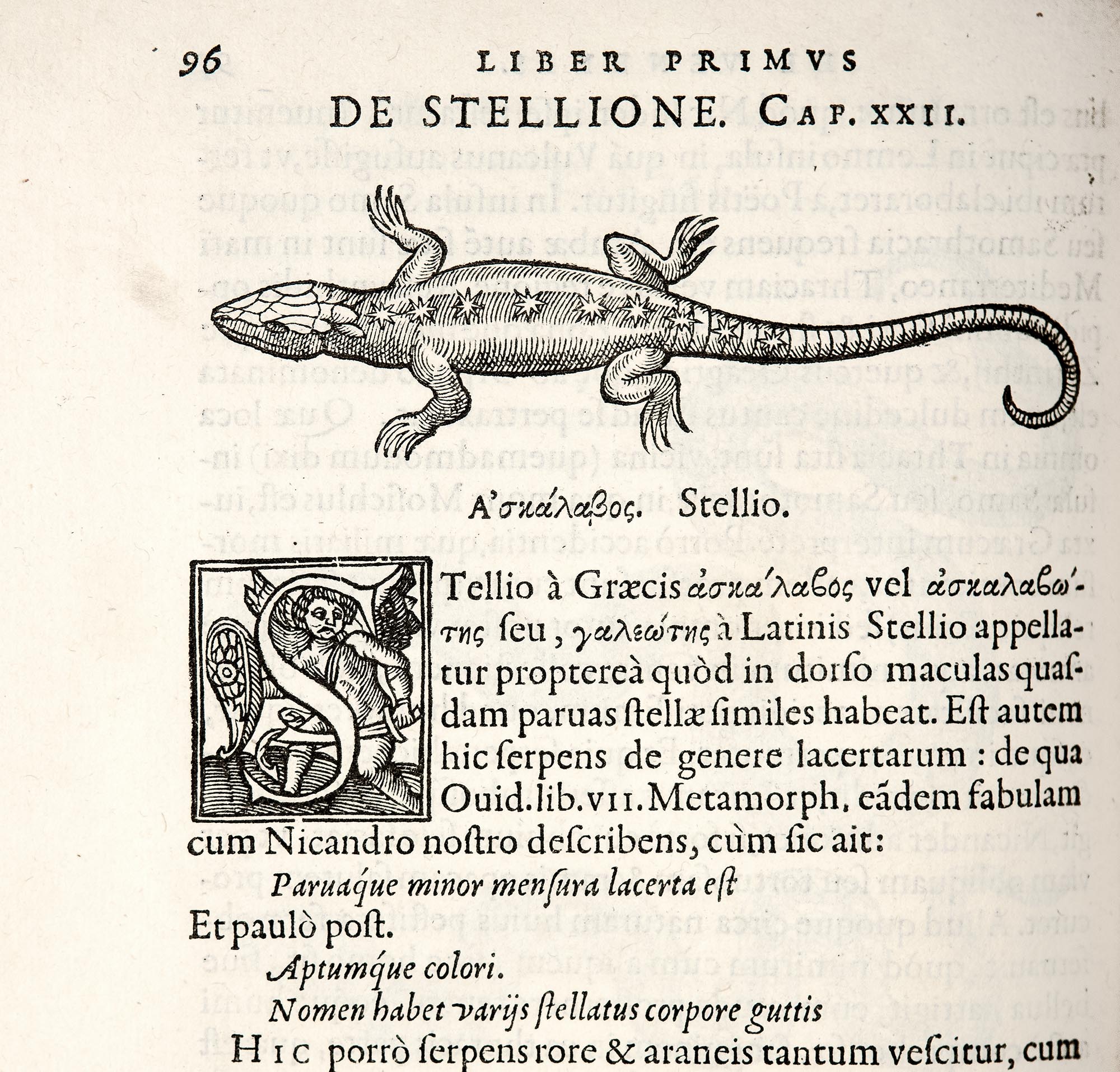
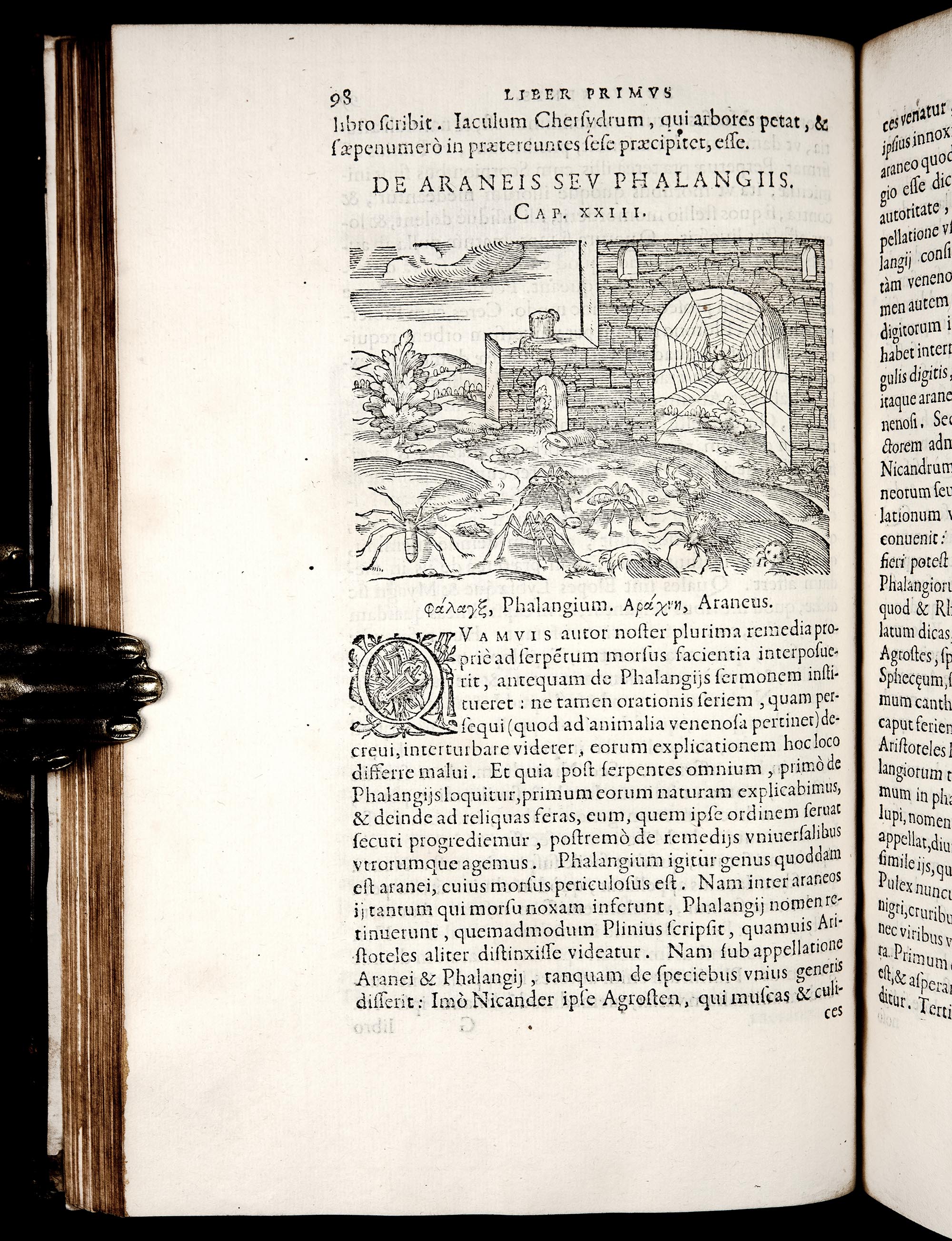
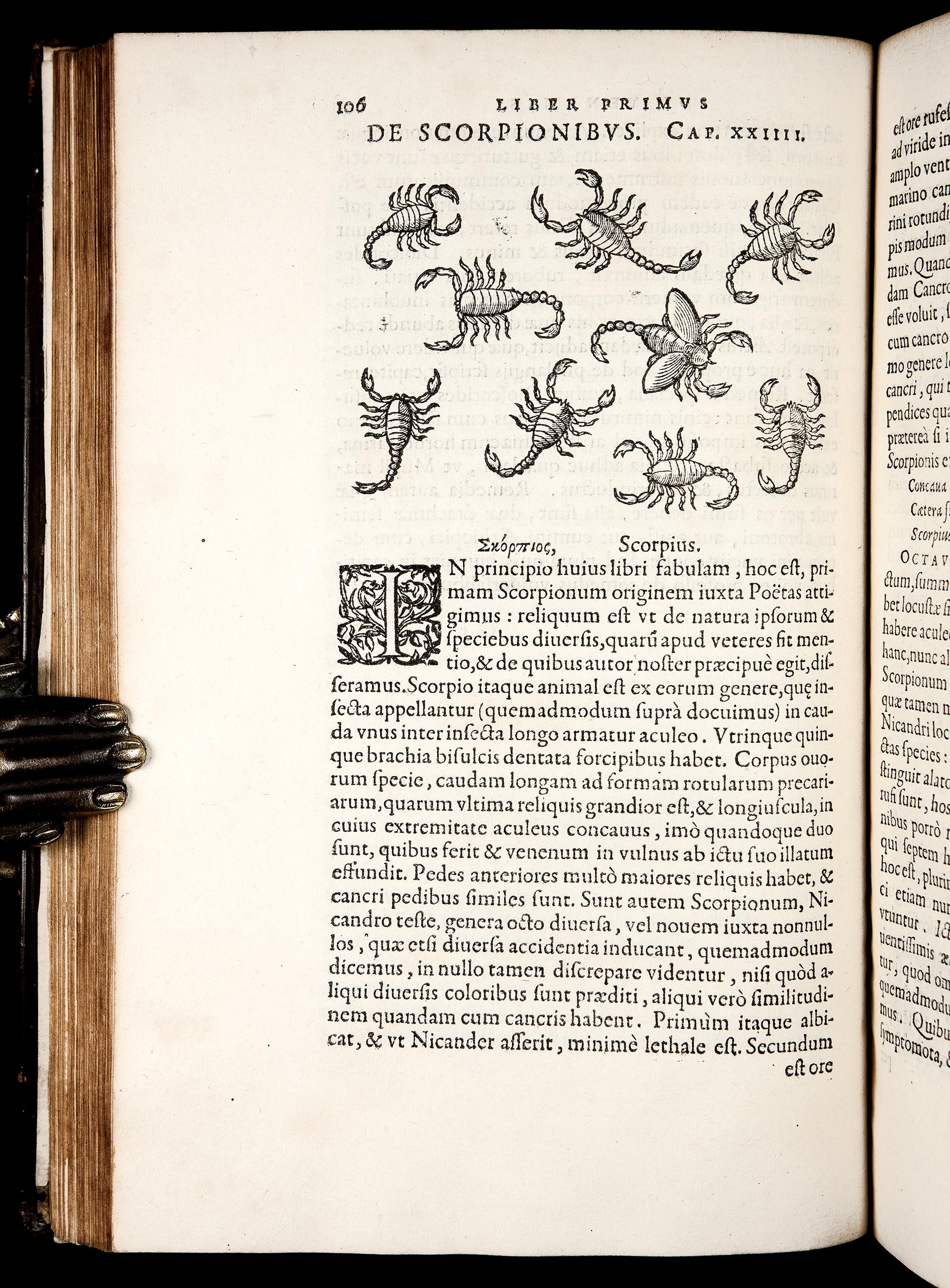
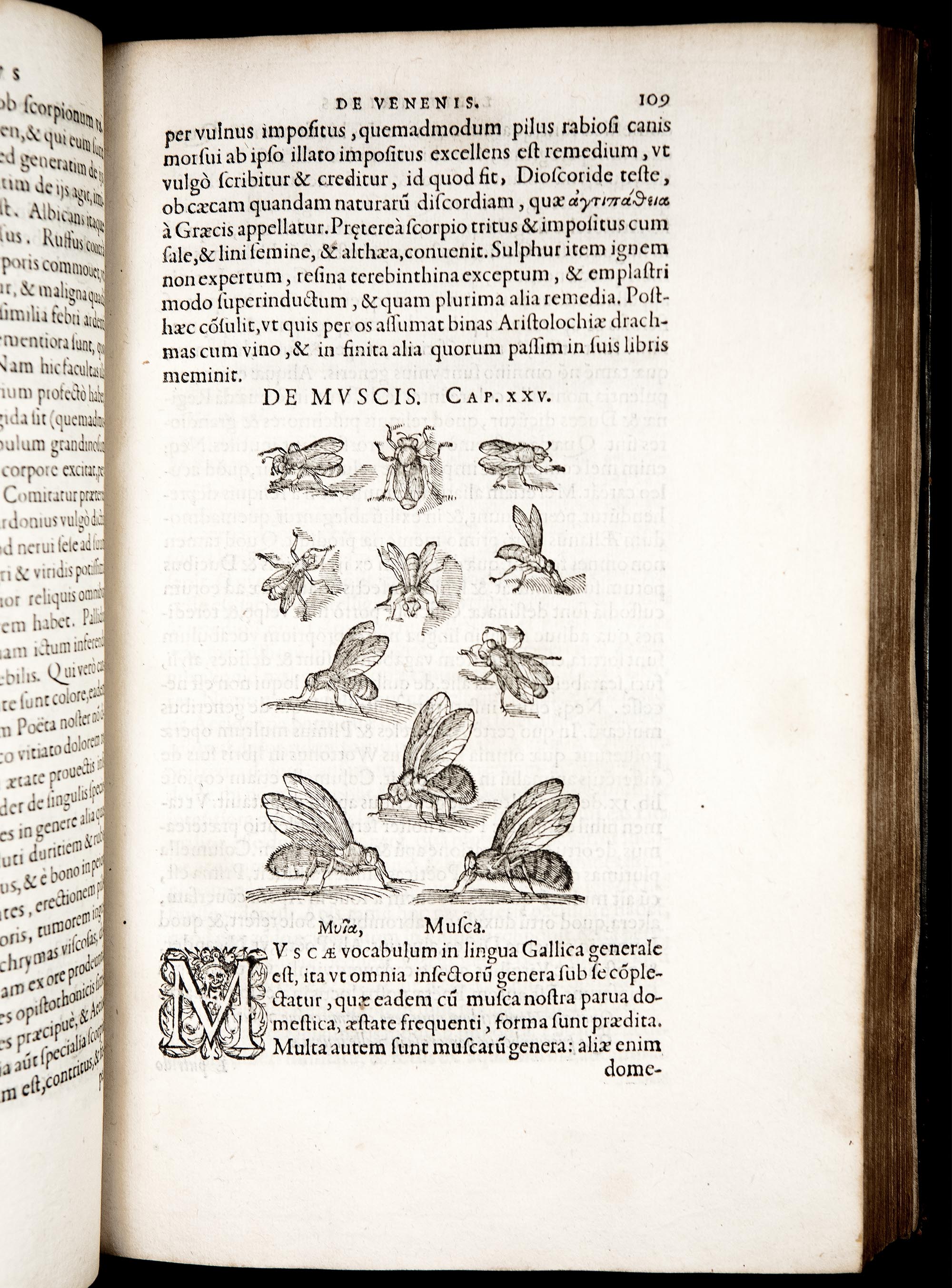
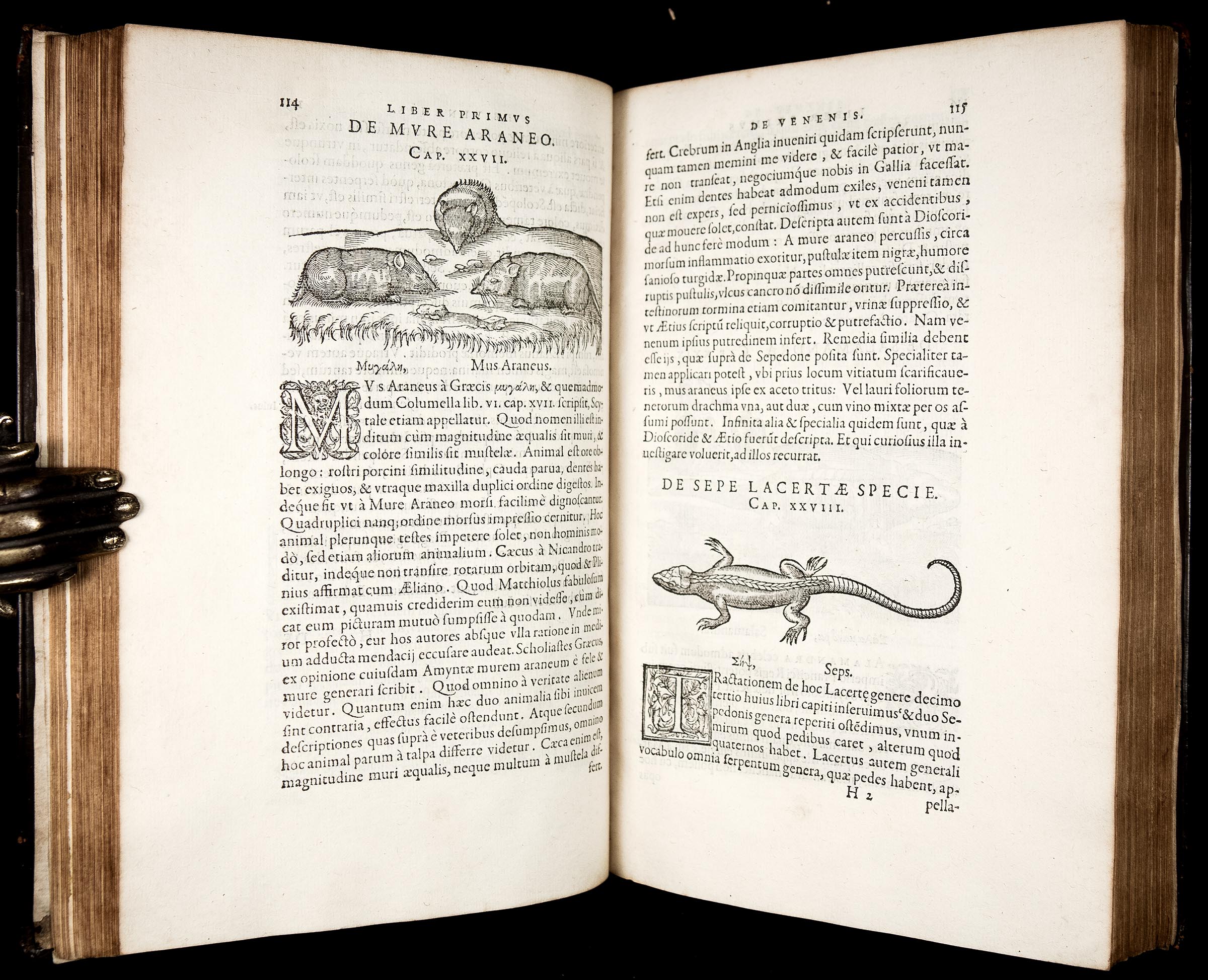
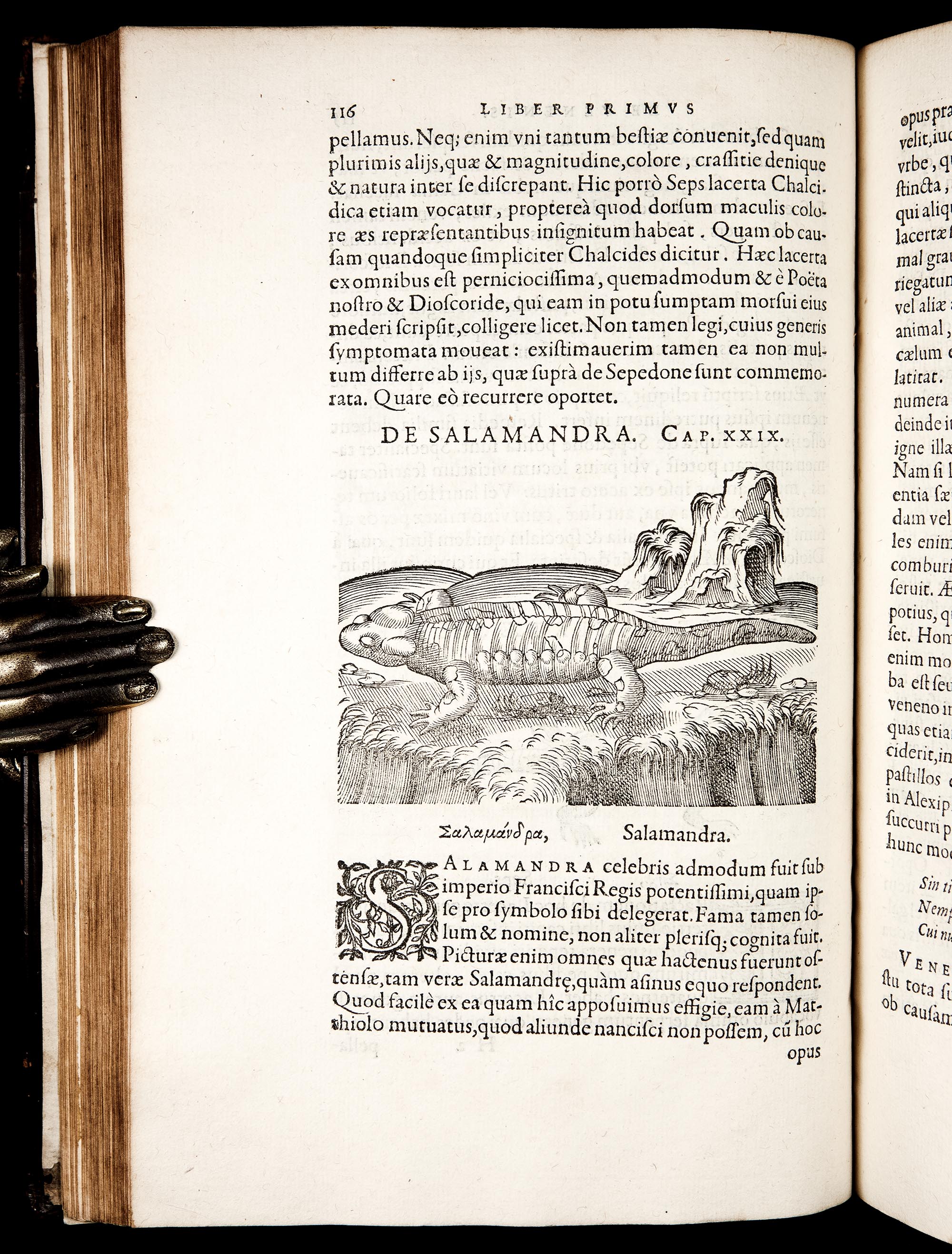
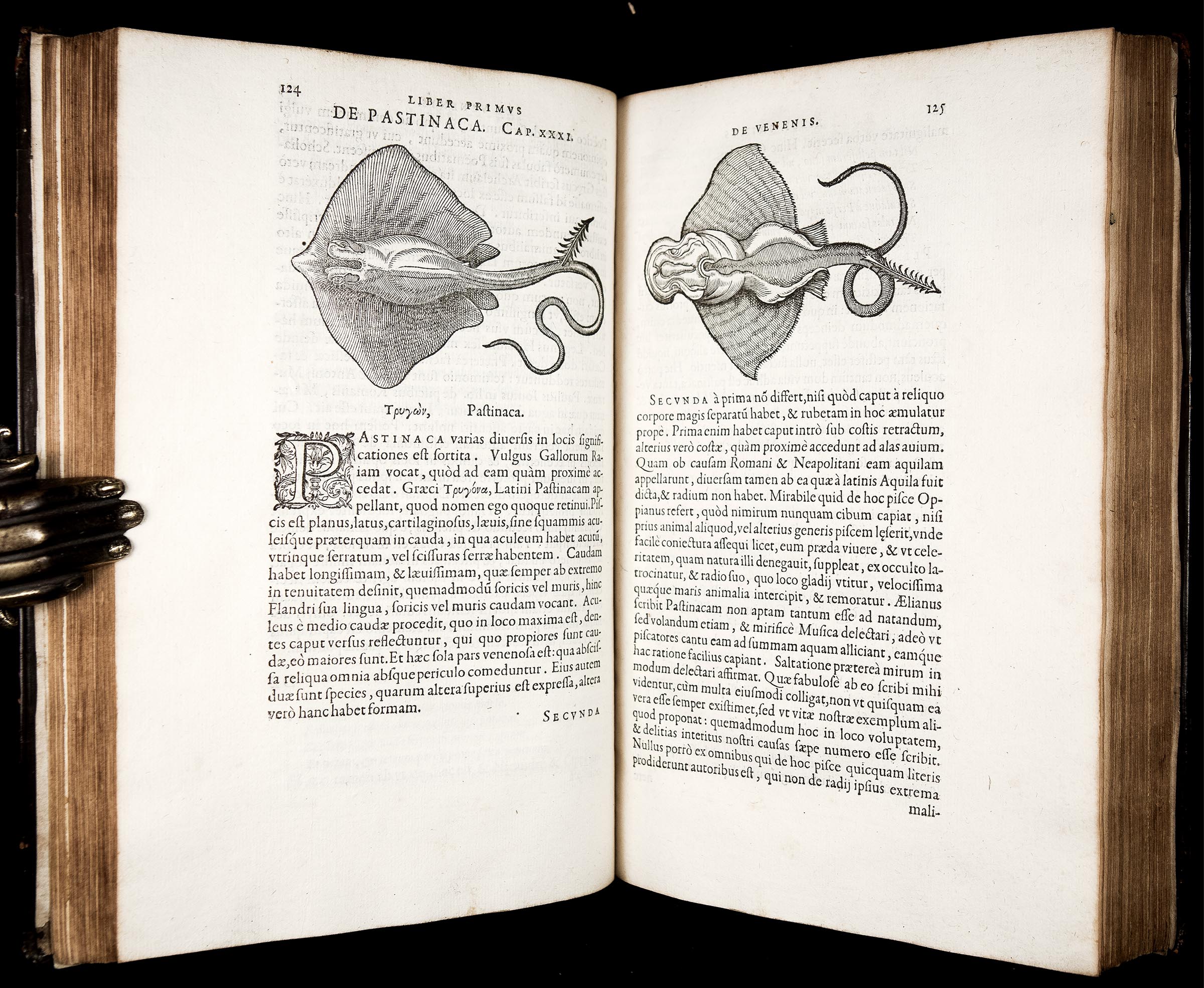
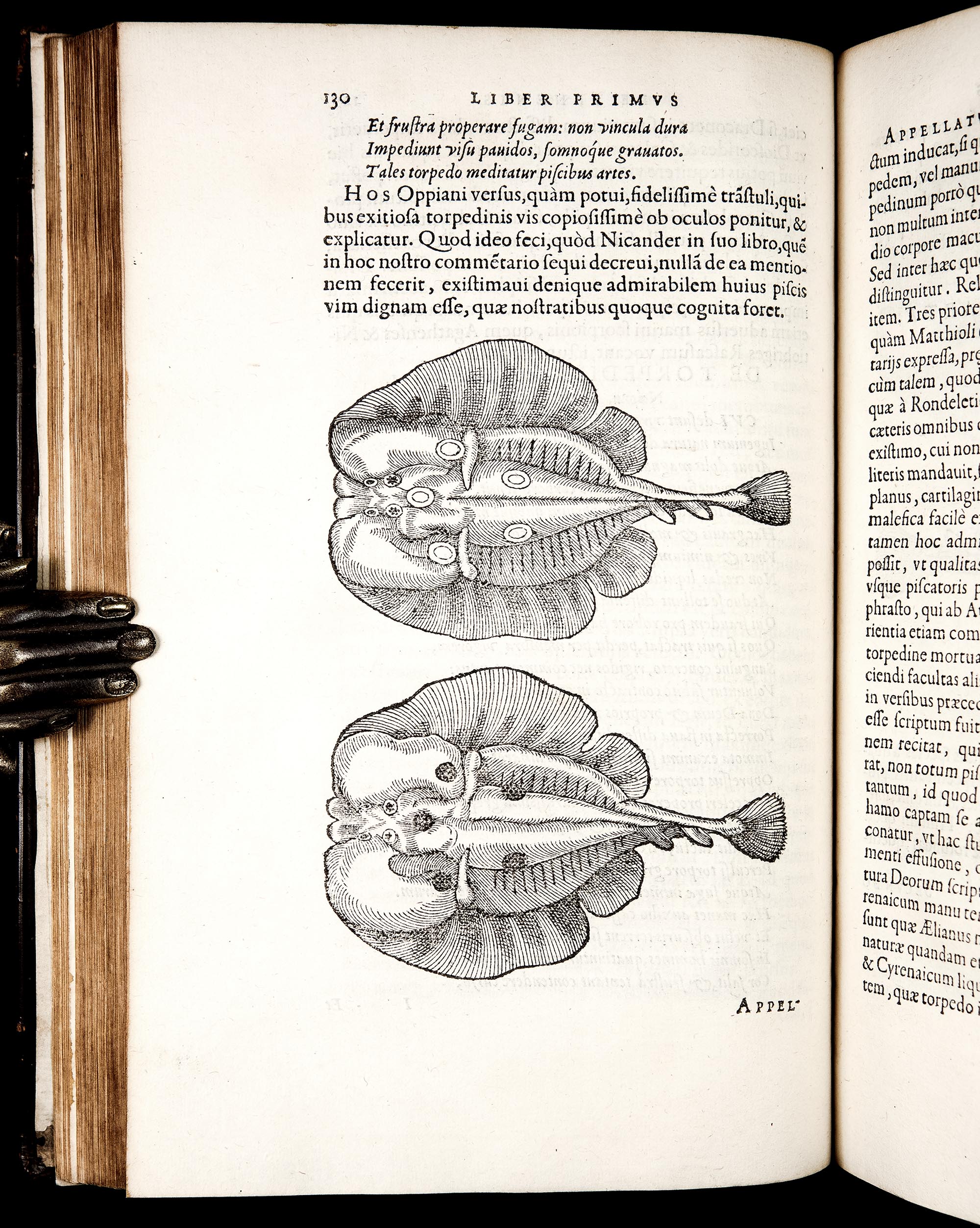
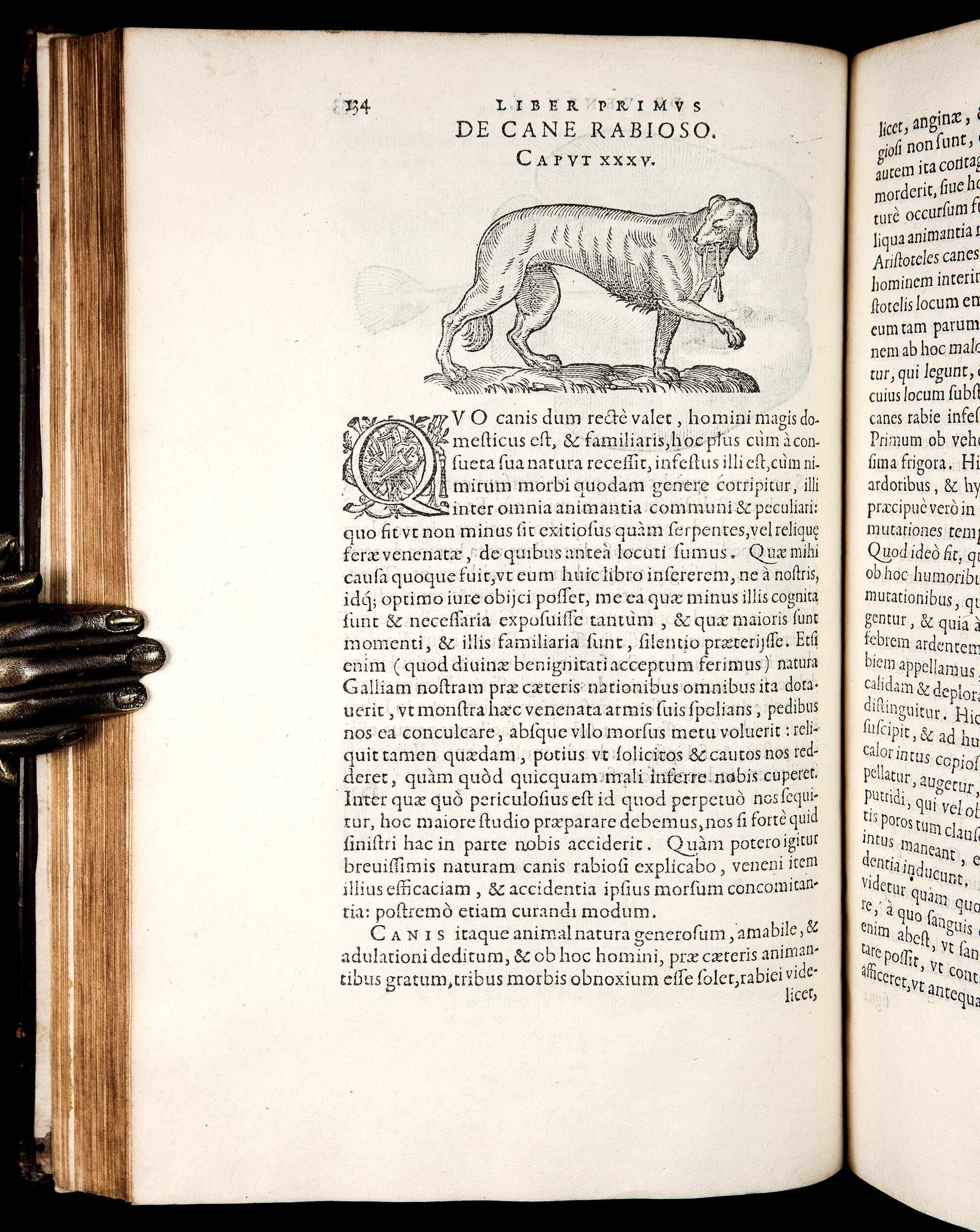
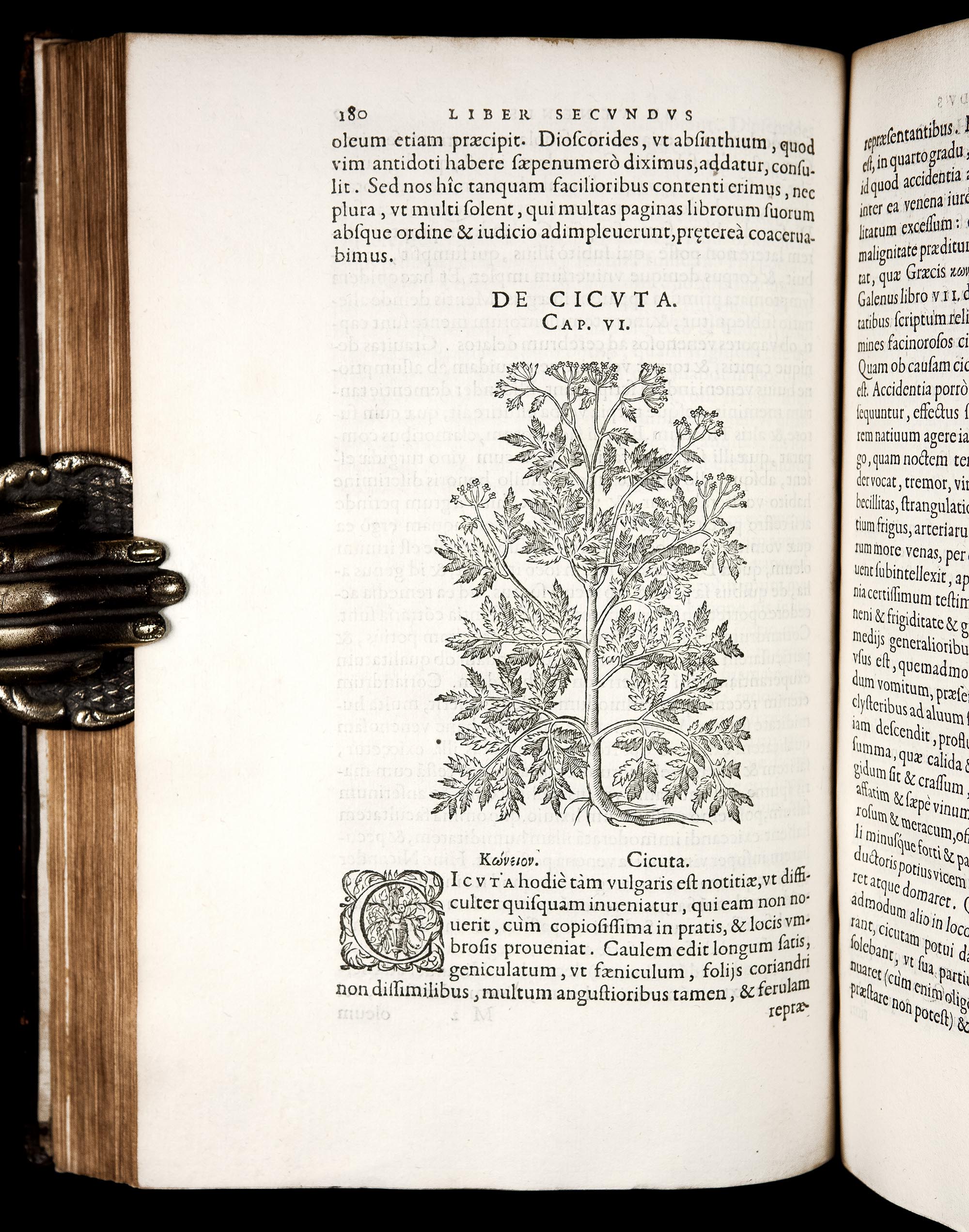
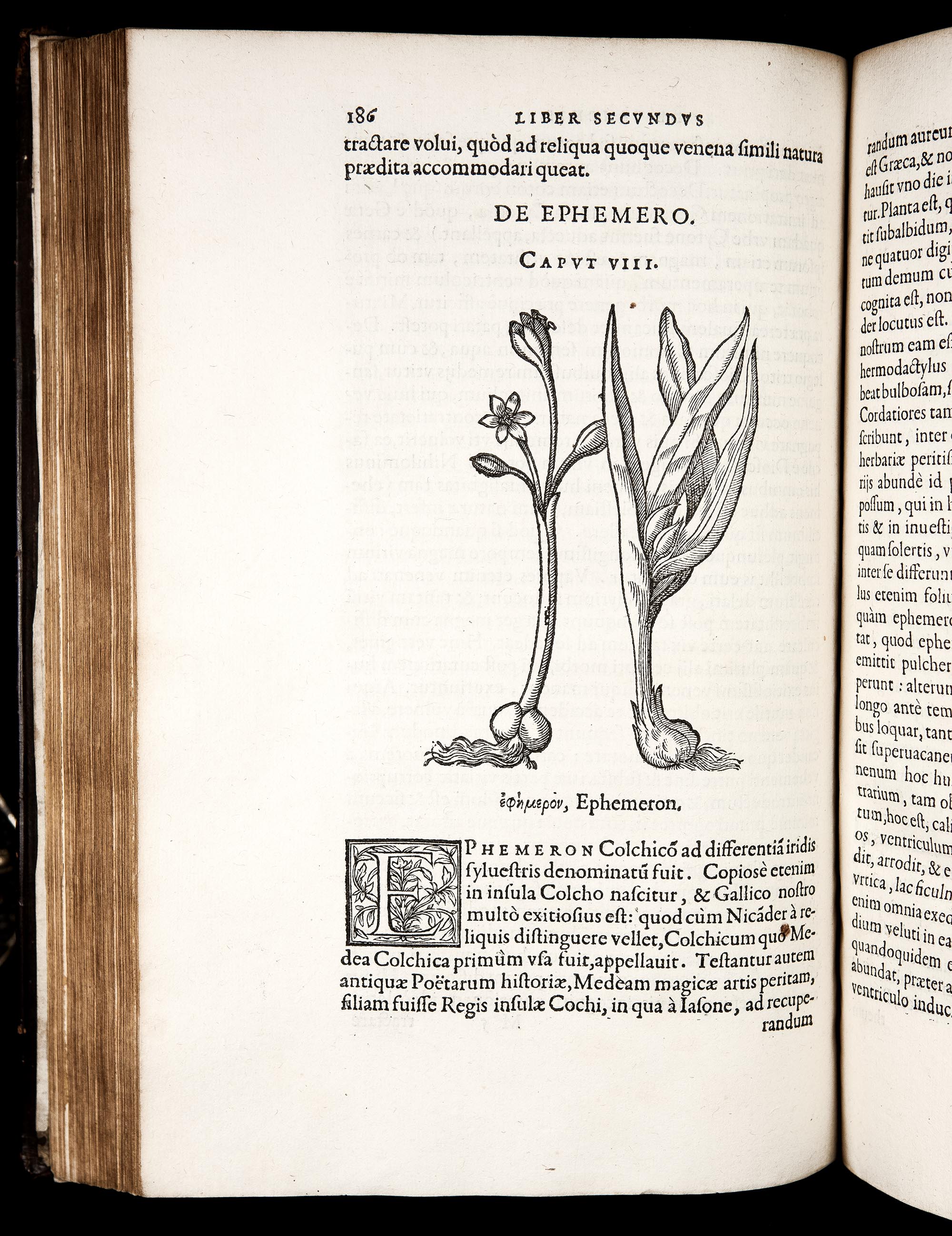
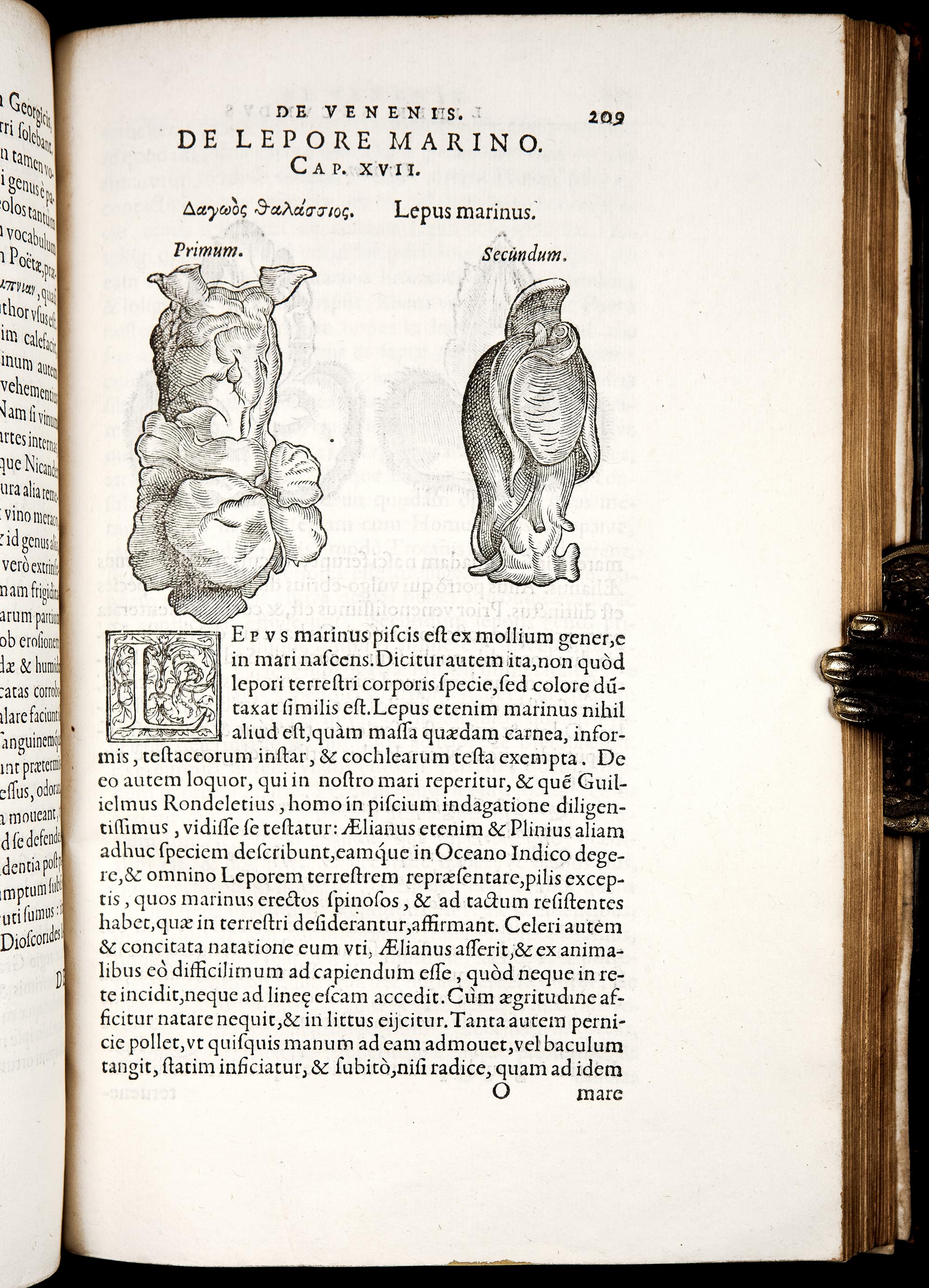
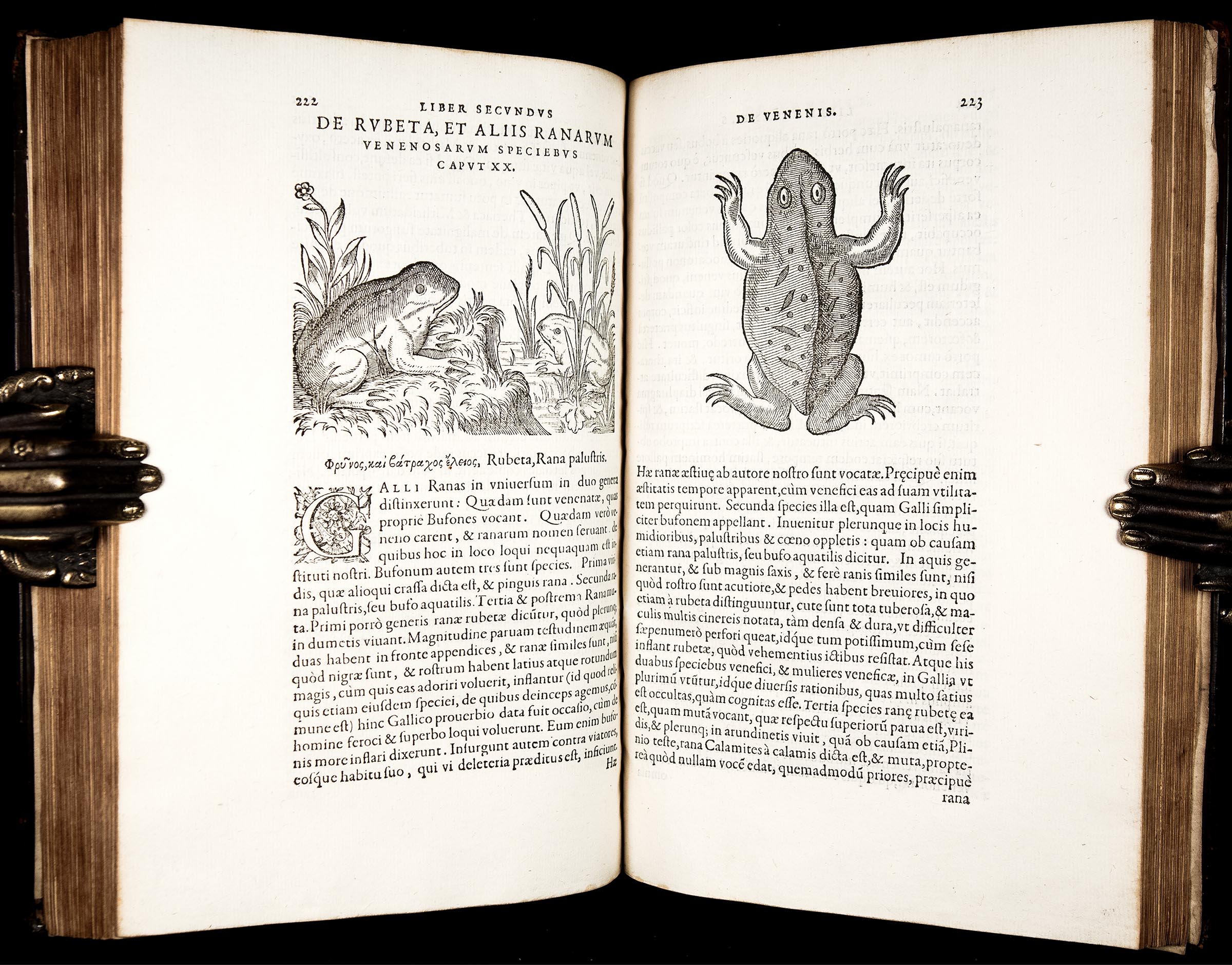
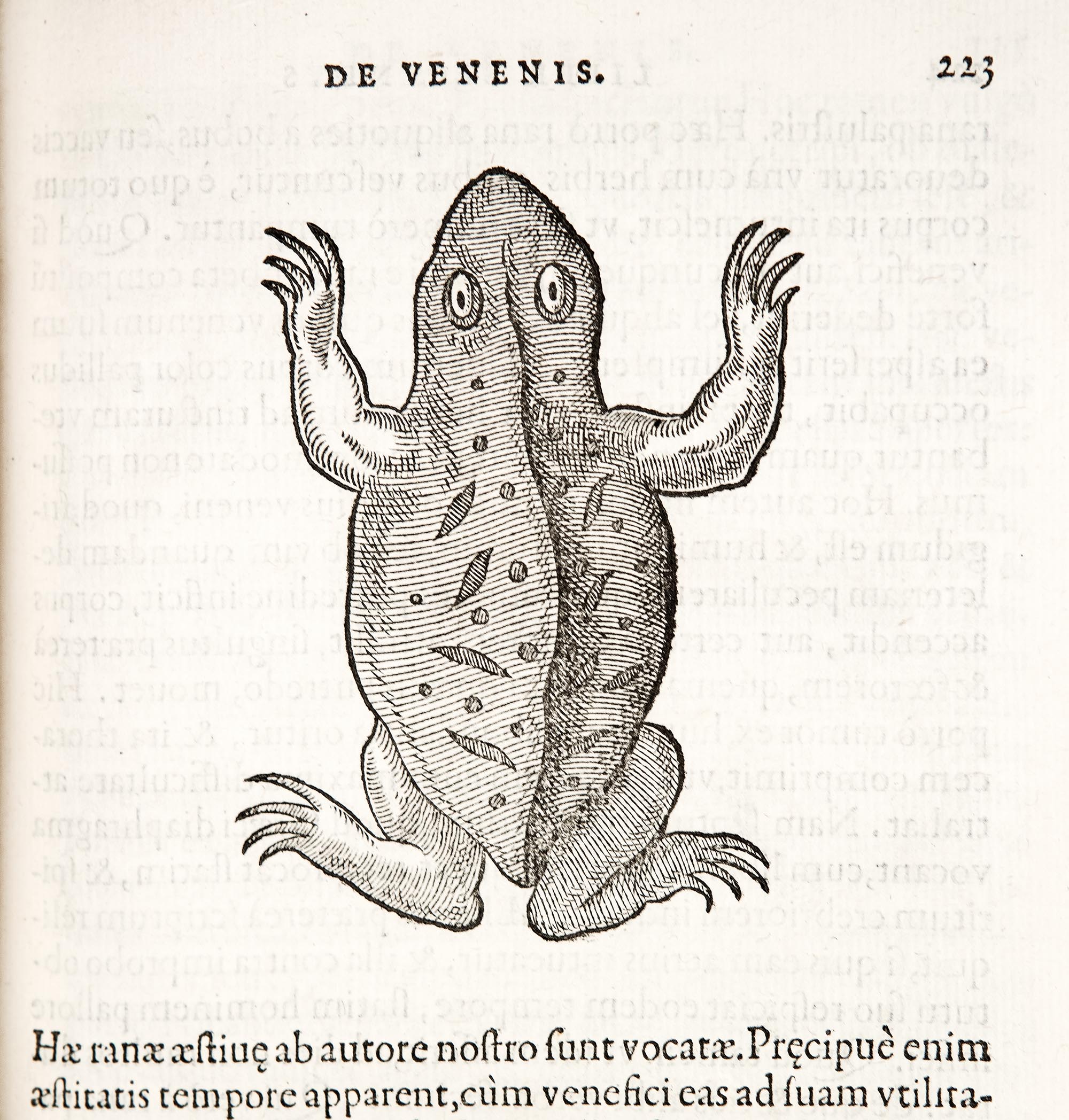
Illustrated with 52 FINE WOODCUTS by Jehan de Gourmont after Geoffroy Ballain, depicting poisonous animals including many species of snakes, the so-called 'pharaoh's rat' (i.e. Egyptian mongoose), lizards, spiders, insects, scorpions, centipedes, shrews, salamanders, fish (such as moray eel, stingrays etc), a rabid dog, mushrooms, frogs & toads, and various poisonous plants.
FIRST LATIN EDITION OF THIS CLASSIC WORK ON TOXICOLOGY. SCARCE!
This influential early book on poisonous animals and plants, especially important because it contains early descriptions and depictions of poisonous snakes and spiders. Grevin's work also deals with poisonous fishes, insects, snakes, frogs, plants, and mushrooms. Initially published in French in 1568, it is here - for the first time - printed in Latin, translated by the Augsburg physician Hieremius Martius.
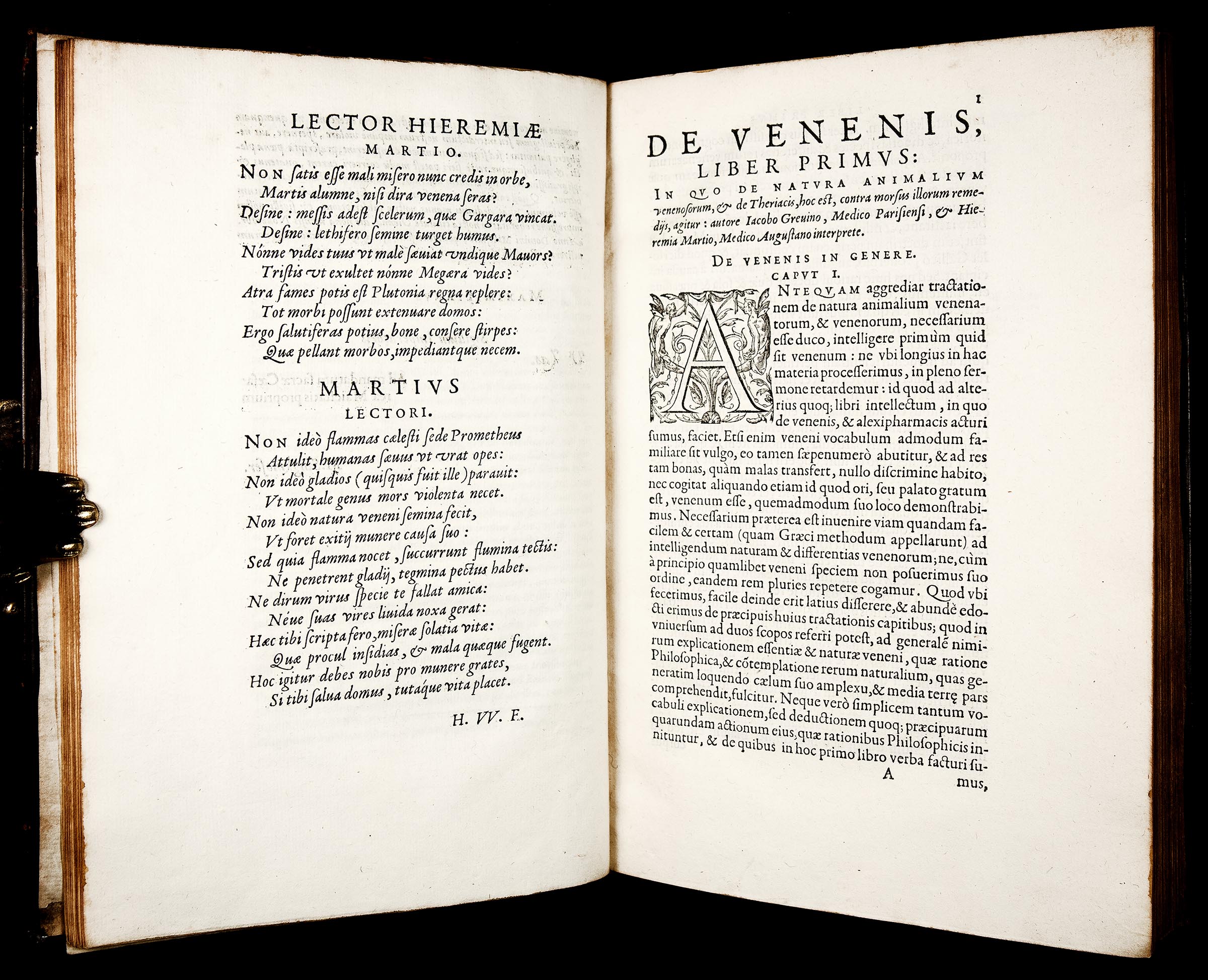
This edition also includes two medical hexametric poems - by the Hellenistic poet and physician Nicander of Colophon (fl. 2nd century BC) in Latin translation.
Jacques Grévin (1538-1570) studied medicine at the University of Paris. There he became a disciple and friend of Ronsard, and was one of the band of dramatists who sought to introduce the classical drama in France. His plays and miscellaneous poems were praised by Ronsard until the friends were separated by religious differences: Ronsard was a staunch adherent of catholicism, and Grévin was a Calvinist. Forced to flee France in 1560 because of his Protestant faith, Grévin took refuge at the Turin court of the Duchess of Savoy (Margaret of France), where he became her physician and counsellor. During his time at Turin court, he wrote a work on antimony, as well as this important treatise on poisons; he also produced a French translation of the famous Vesalius's Anatomy, and of Johann Weyer's treatise on witchcraft De praestigiis daemonum ("On the Illusions of the Demons").
"The great work in biotoxicology of the Renaissance was [written] by Jacques Grevin. […] Grévin treatise is divided into two parts. The first portion concerns venomous animals, and the second- poisonous plants. Included in the animal section are venomous reptiles, rats, salamanders, spiders, scorpions, flies, centipedes, lizards, stingrays, moray eels, weeverfish, electric rays, and the bites of rabid dogs, which at that time were thought to be poisonous. The second portion of his book is concerned with a variety of poisonous plants. In this latter section the sea hare (aplysia) and toads are included.
"Grevin undoubtedly provides the most comprehensive review and critique of his time on the subject of natural-occurring poisons. He discusses the works of ancient Greek and Roman writers on animal and plant poisons, provides a written description and illustration of the organisms, their habits, the nature of their poisons or their venom apparatus, the manner in which these intoxications occur, and their treatment of which these intoxications occur, and their treatment of antidotes. […] Certainly Jacques Grévin can be aptly termed the Father of Modern Biotoxicology." (B. Halstead, Poisonous and Venomous Marine Animals of the World, pp.35-7)
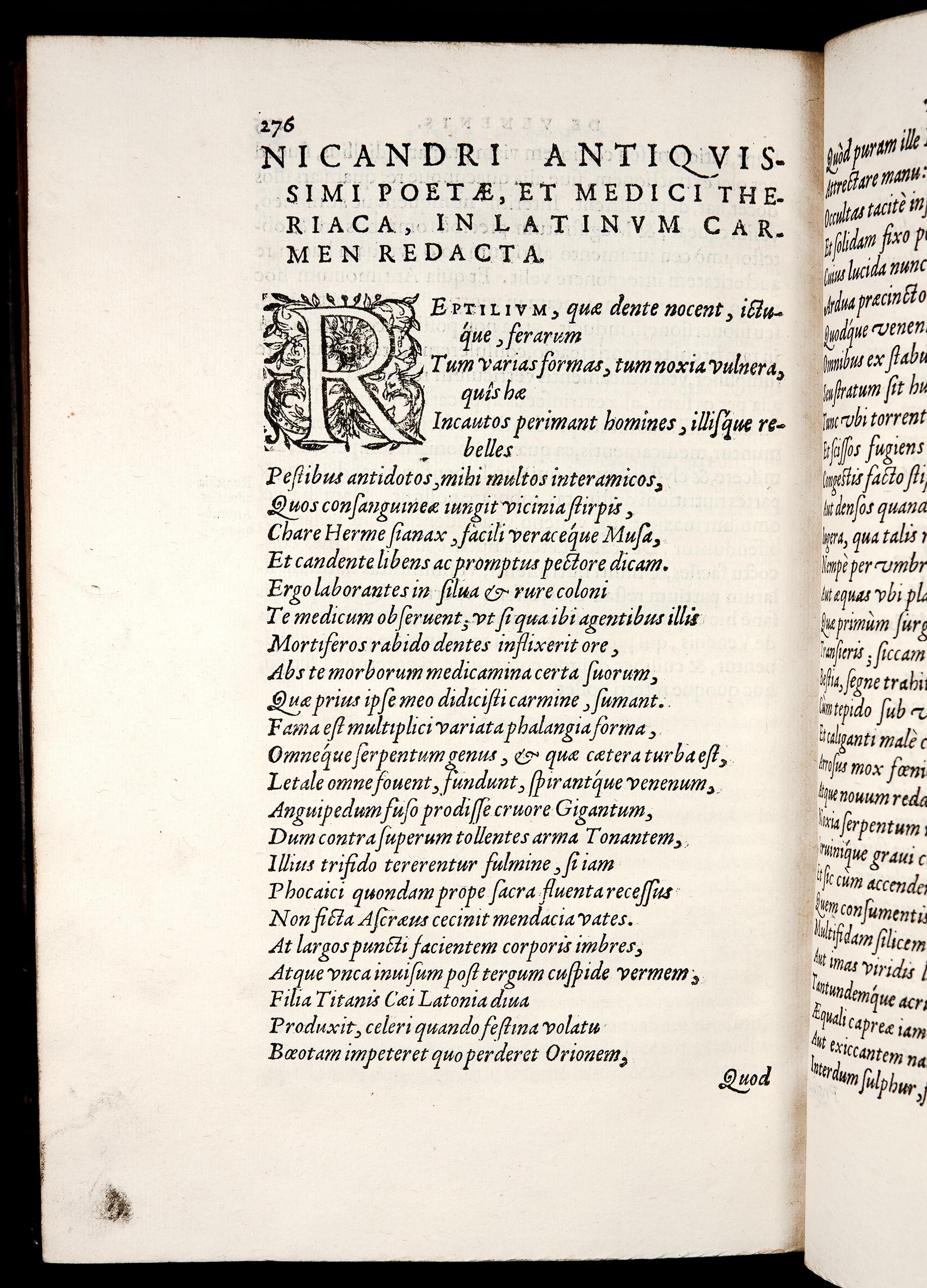
Also included, following Grevin's De venenis, are two poems - Theriaca and Alexipharmaca - by Nicander of Colophon (Greek: Νίκανδρος ὁ Κολοφώνιος), a 2nd century BC Greek poet, physician and grammarian, born at Claros (Ahmetbeyli in modern Turkey), near Colophon, where his family held the hereditary priesthood of Apollo. These are the oldest extant works on the subject of poisons to survive from antiquity (both of which are thought to derive from Apollodorus, who wrote on poisons early in the 3rd century BC).
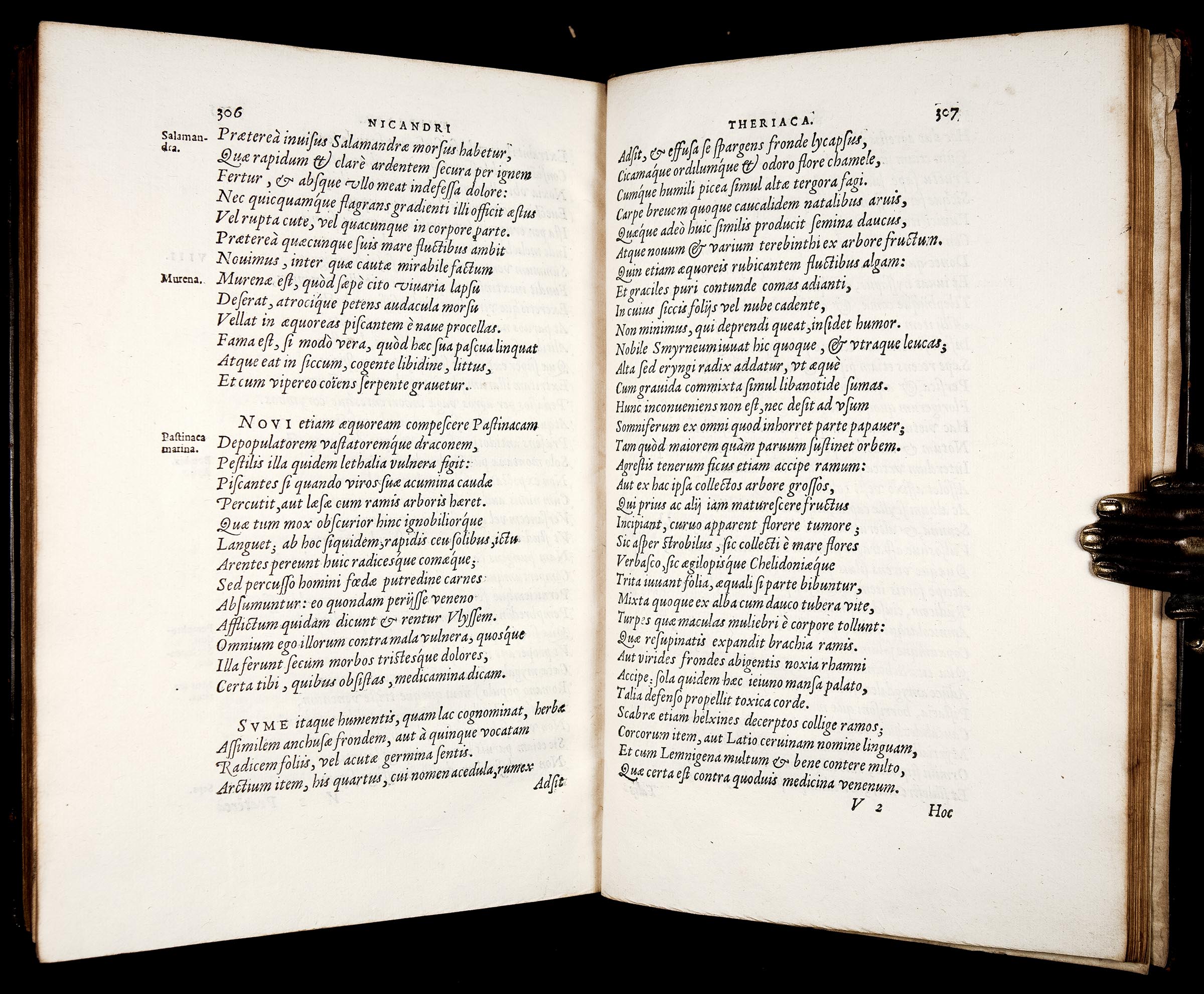
'Theriaca', the longest surviving work by Nicander of Colophon, is a 958-line hexameter poem dealing with the bites and stings of venomous creatures and antidotes to them; It describes the nature of venomous animals, including snakes, spiders and scorpions, and the wounds they inflict. It is here accompanied by Alexipharmaca by the same author, a companion work to the Theriaca, which explored other kinds of poisons and venoms.
Theriaca describes more than a dozen snakes (including the amphisbaena, which has a head at both ends of its body) and the effects of their poisons.
Remedies for snake-bite include a prophylactic, consisting of the flesh of mating snakes, stag's marrow, wax, rose and olive oil to be applied to the skin; root of centaury, a bitter herb named after the centaur Chiron, who was supposed to have used it to cure himself of a poisonous wound; as well as a general panacea compounded of more than two dozen ingredients. In Alexipharmaca, a companion piece to Theriaca.
Nicander enumerates additional animal, vegetable, and mineral poisons, including aconite, white lead, hemlock, and opium, together with their symptoms and specific remedies. The cures are almost always herbal and often include olive oil as an emetic to induce vomiting.
Nicander wrote at least 20 works, but "only his Theriaca (958 hexameters on poisonous creatures and on antidotes for their bites and stings) and Alexipharmaca (630 hexameters on antidotes to poisons) are extant. […] Nicander's influence on later Greek and Latin literature was considerable. Not only did Virgil, Ovid, and Antoninus Liberalis draw on his works, but Lucan, Pliny the Elder, Erotian, Aelian, and Athenaeus of Naucratis also benefited from direct or indirect familiarity with Nicander. […] Galen in his pharmacological works quotes a number of verse passages from Nicander. Papyrus fragments from the 1st to 3rd centuries AD further confirm Nicander's popularity in the Roman empire." (H. Von Staden, 'Nicander' in N. Wilson (Ed.), Encyclopedia of ancient Greece, p.504).
Johnston, Cleveland Herbal, 104; Voet, Plantin Press I, 1267; Adams G-1244; Nissen (ZBI) 1713; Durling/NLM 2174.
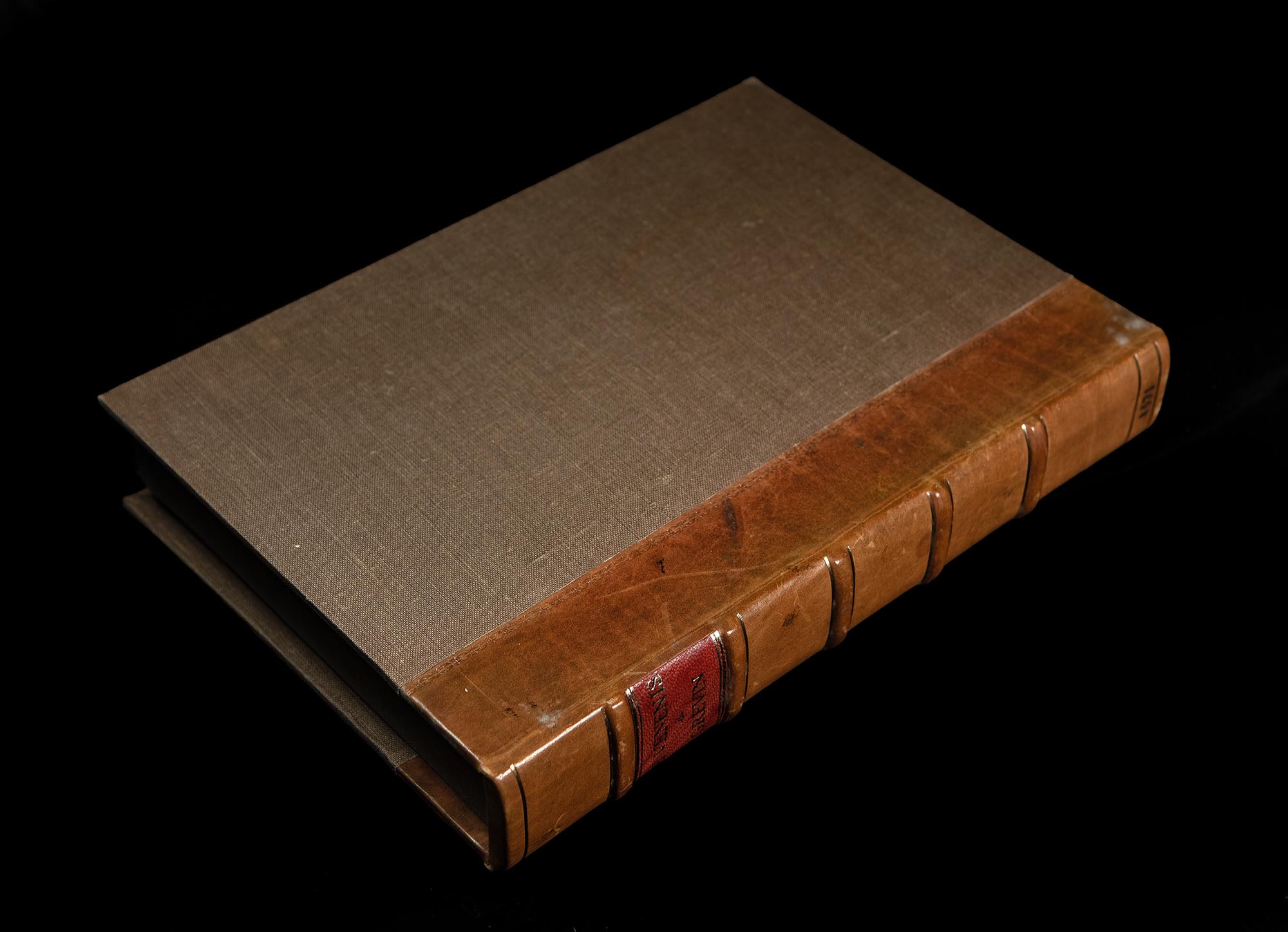
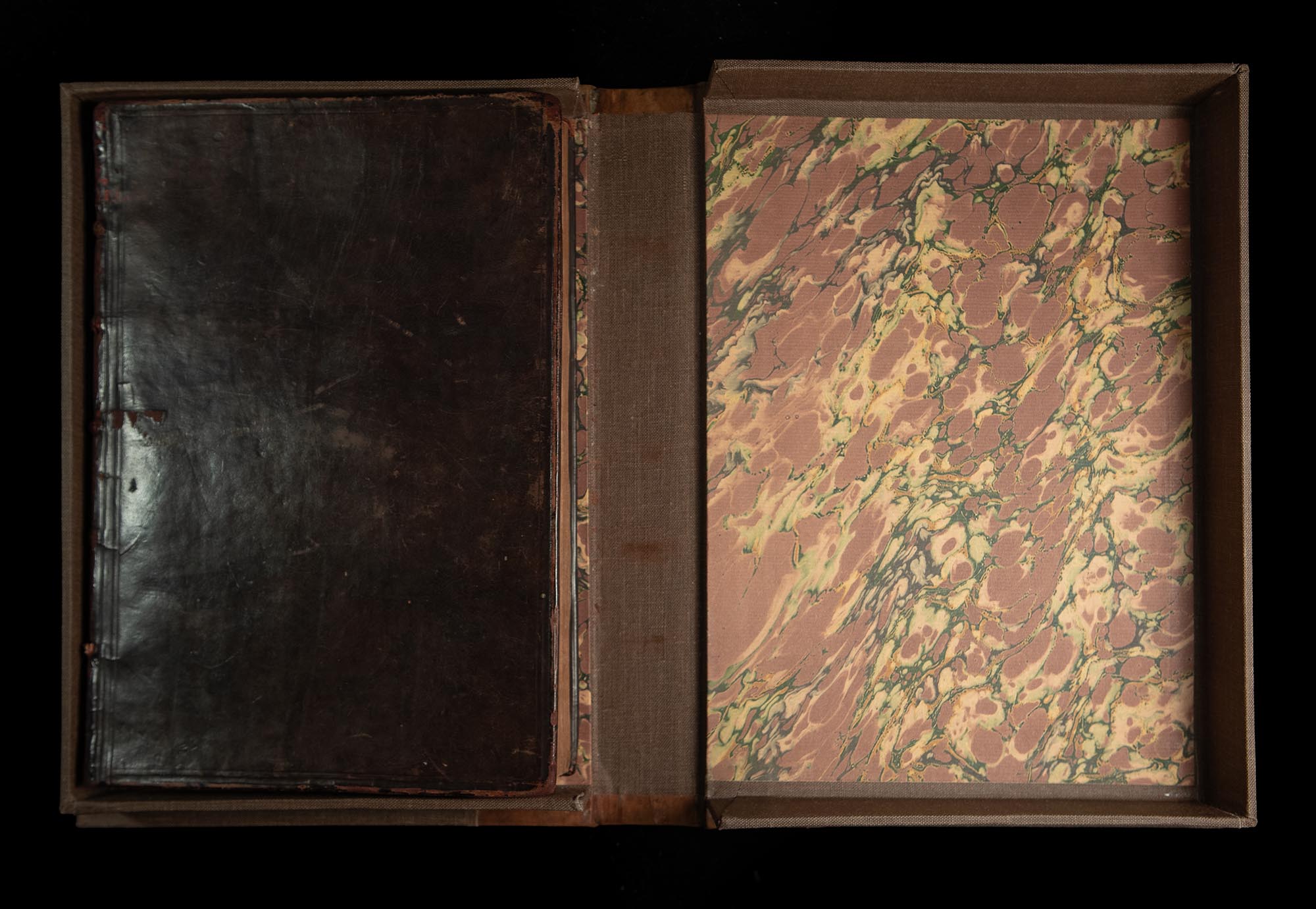
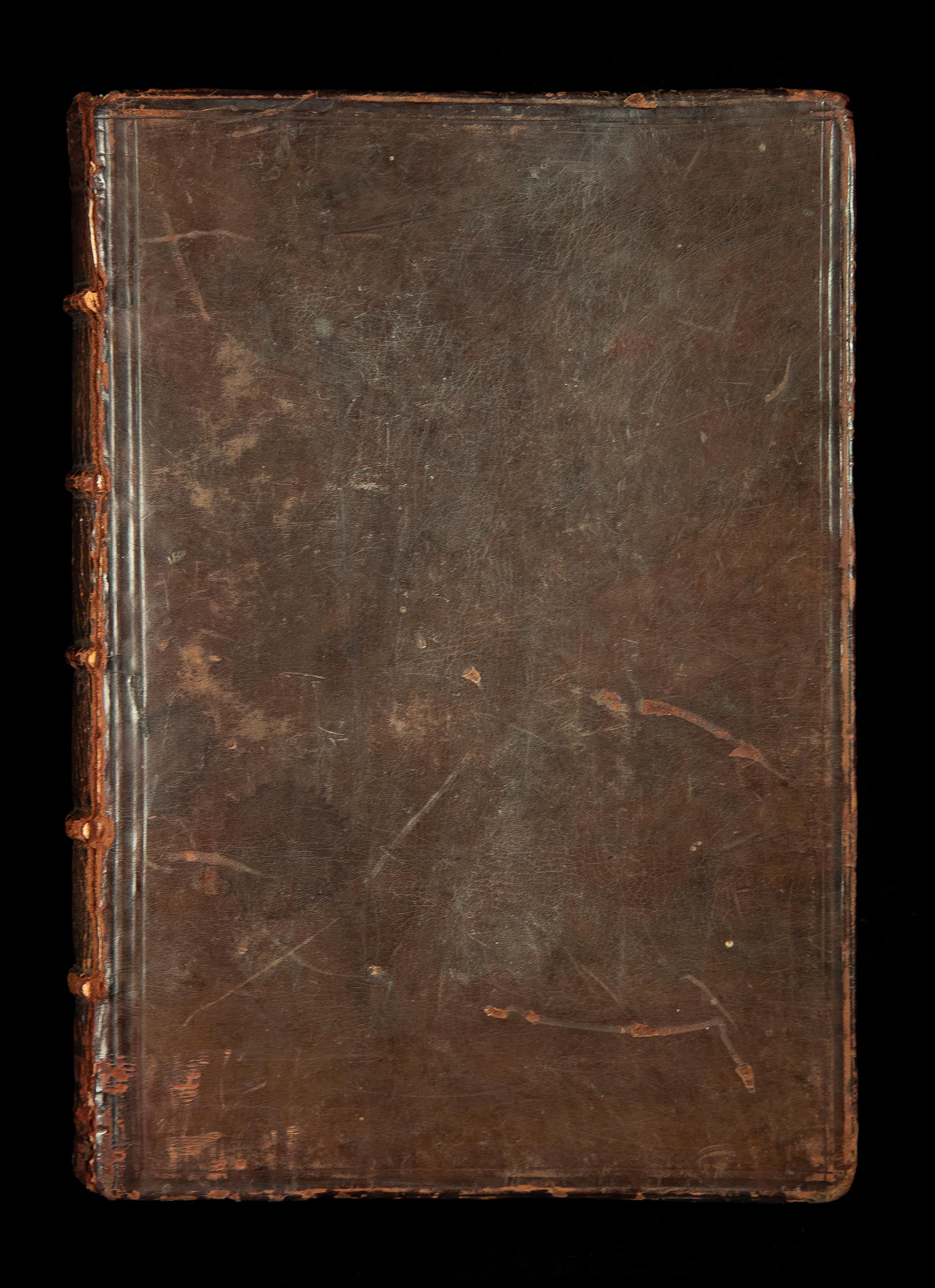
Quarto; leaves measure 24.5 cm x 16 cm, with very wide margins. Bound in contemporary or slightly later full dark-brown calf; housed in a modern solander box (quarter-calf over buckram, spine with raised bands, lettered in gilt).
Pagination: [20], 332, [12] pp. Signatures: *8 **2 A-X8 Y4.
COMPLETE, Including the final blank Y4.
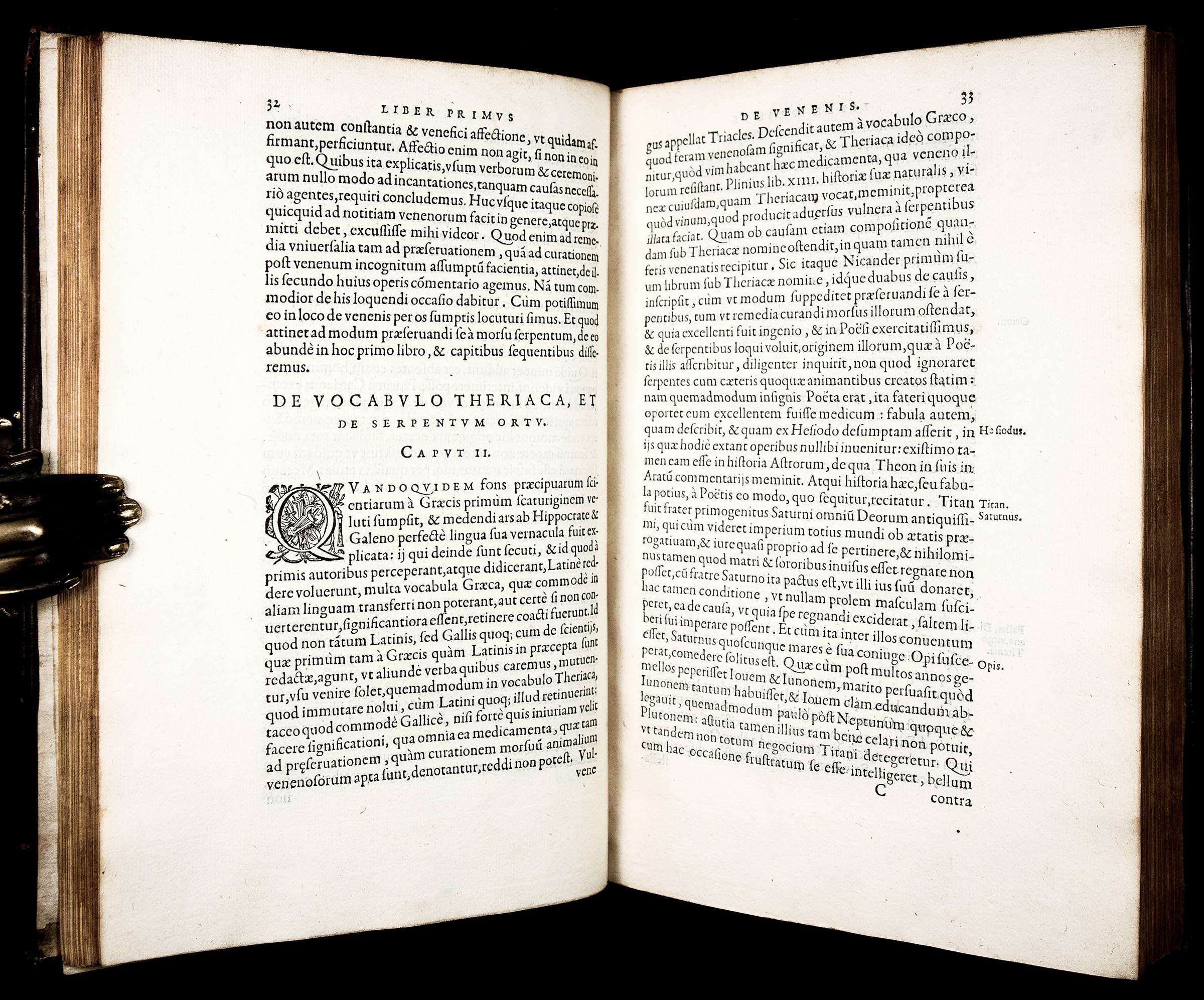
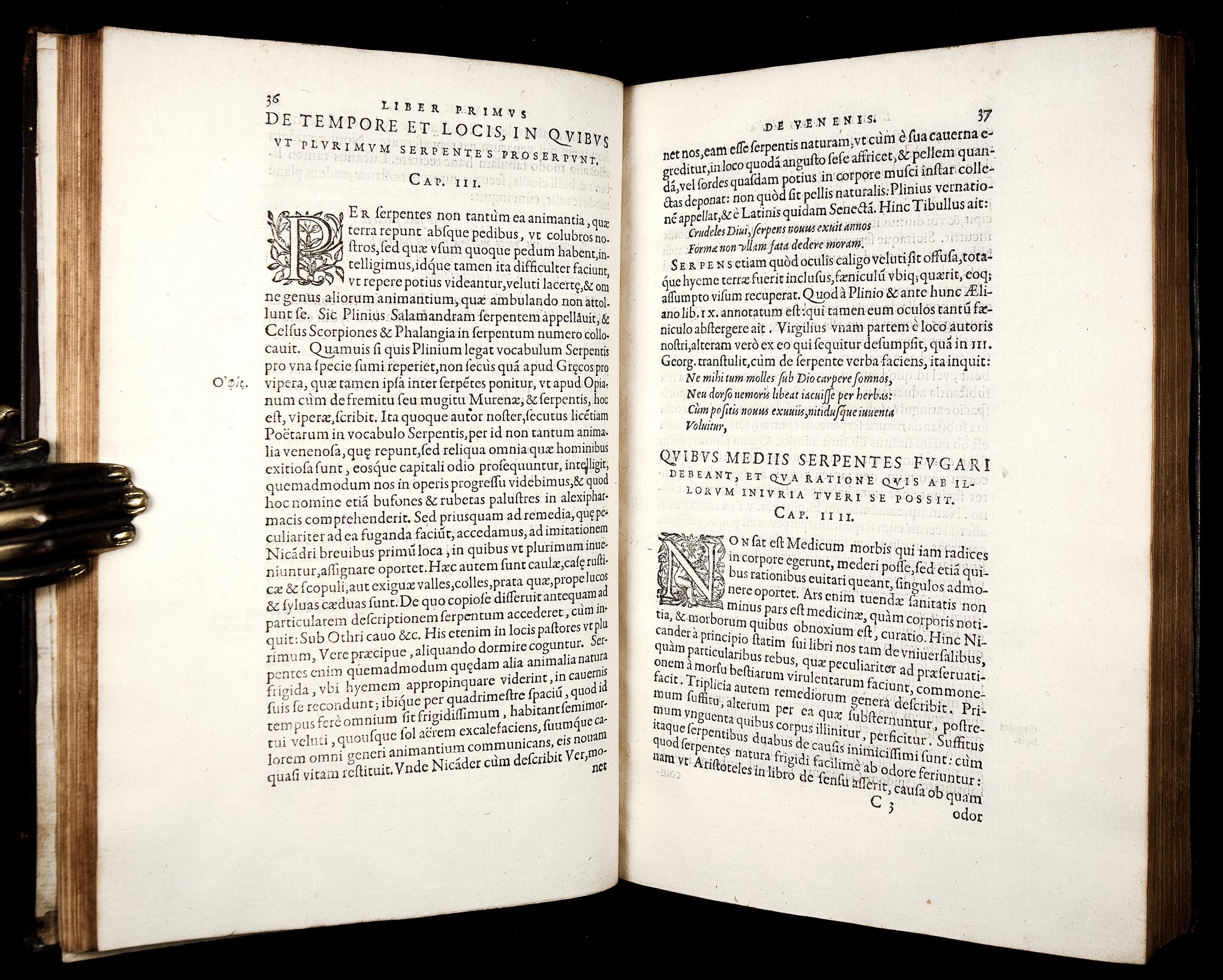
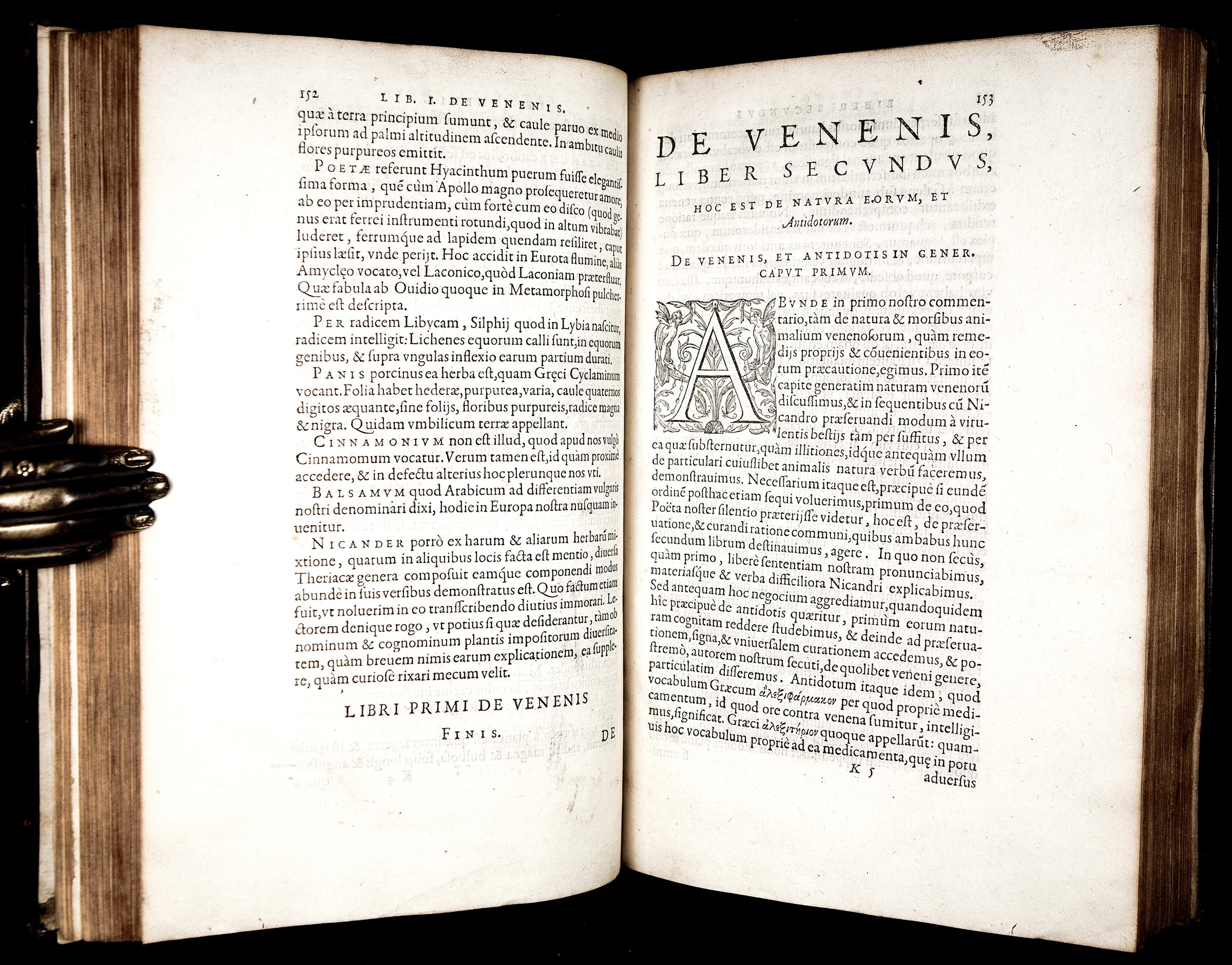
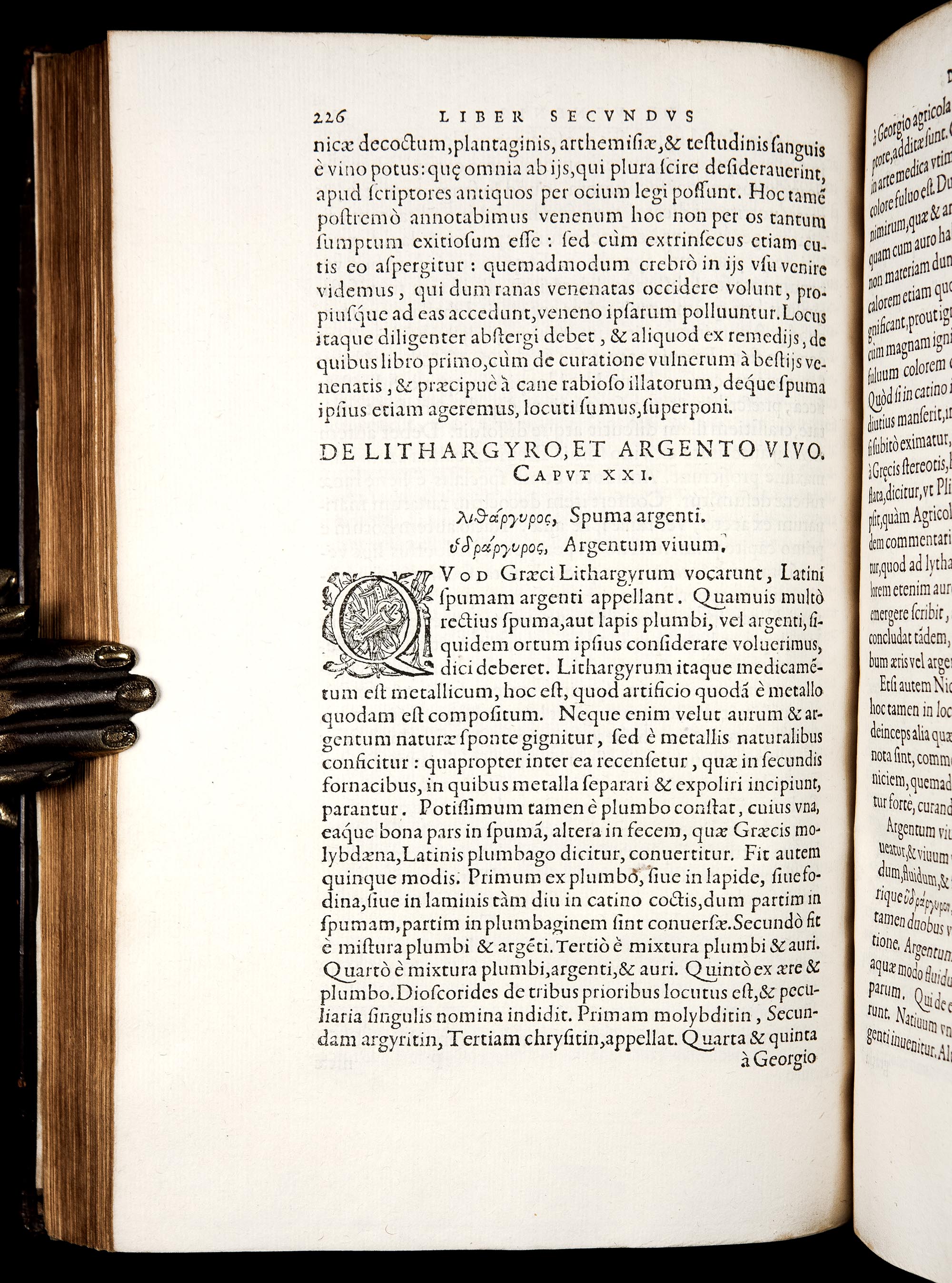
Woodcut Plantin’s device on title page, large ornamental (floreated) and historiated woodcut initials. Illustrated with over fifty zoological and botanical woodcuts in text.
Text printed mainly in roman type; Nicander’s poems and all poetical quotations printed in italic. Printed marginalia in small roman type.
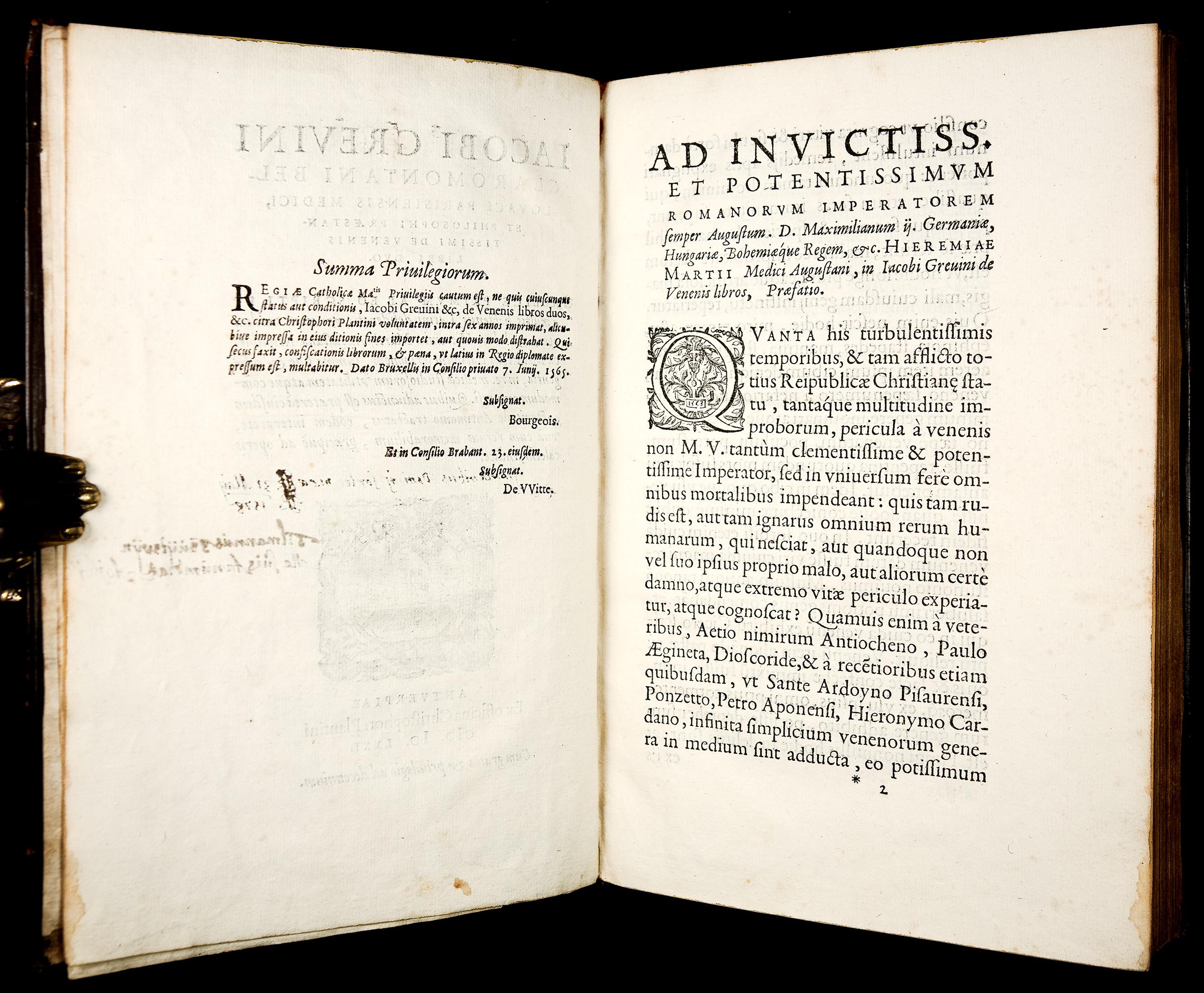
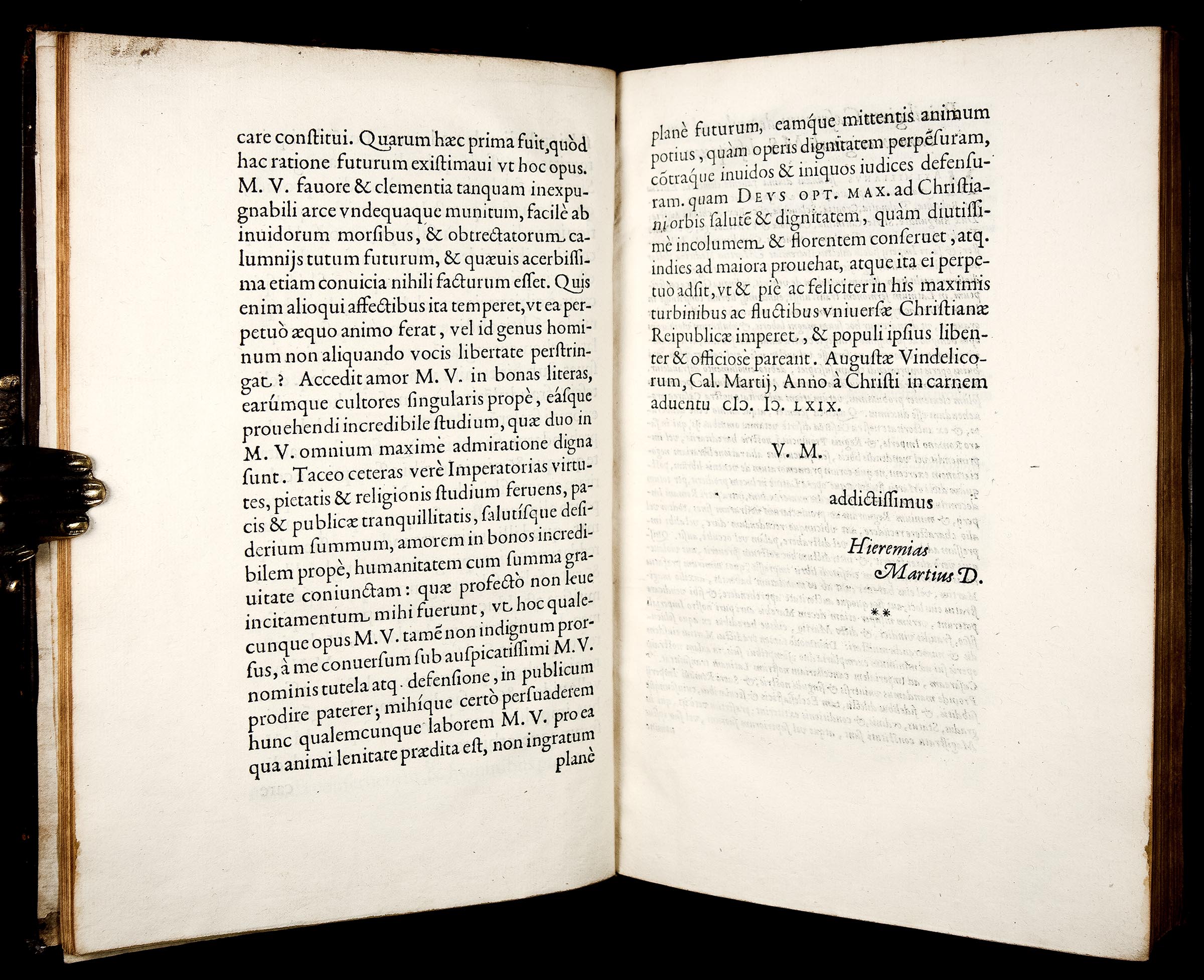
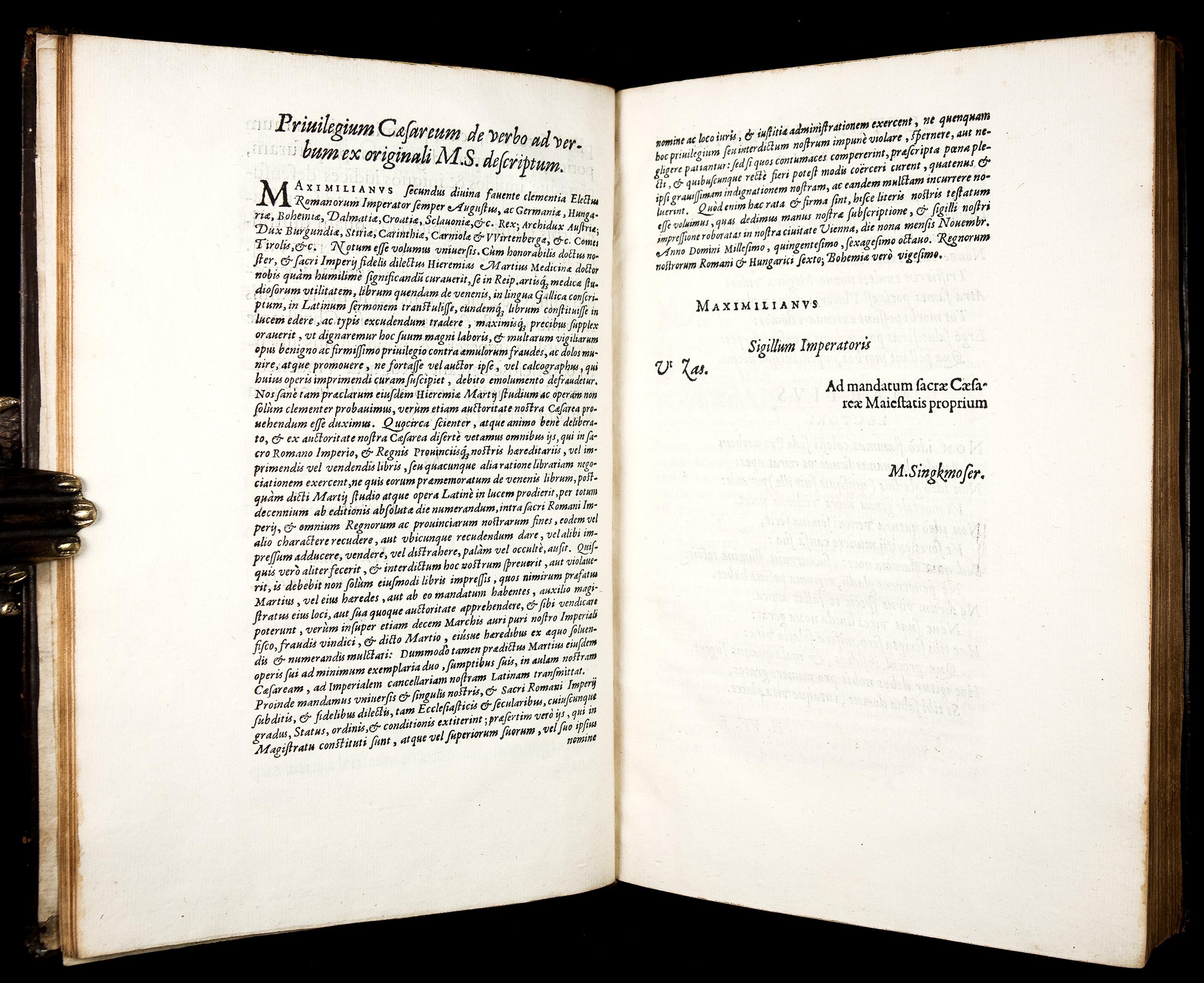
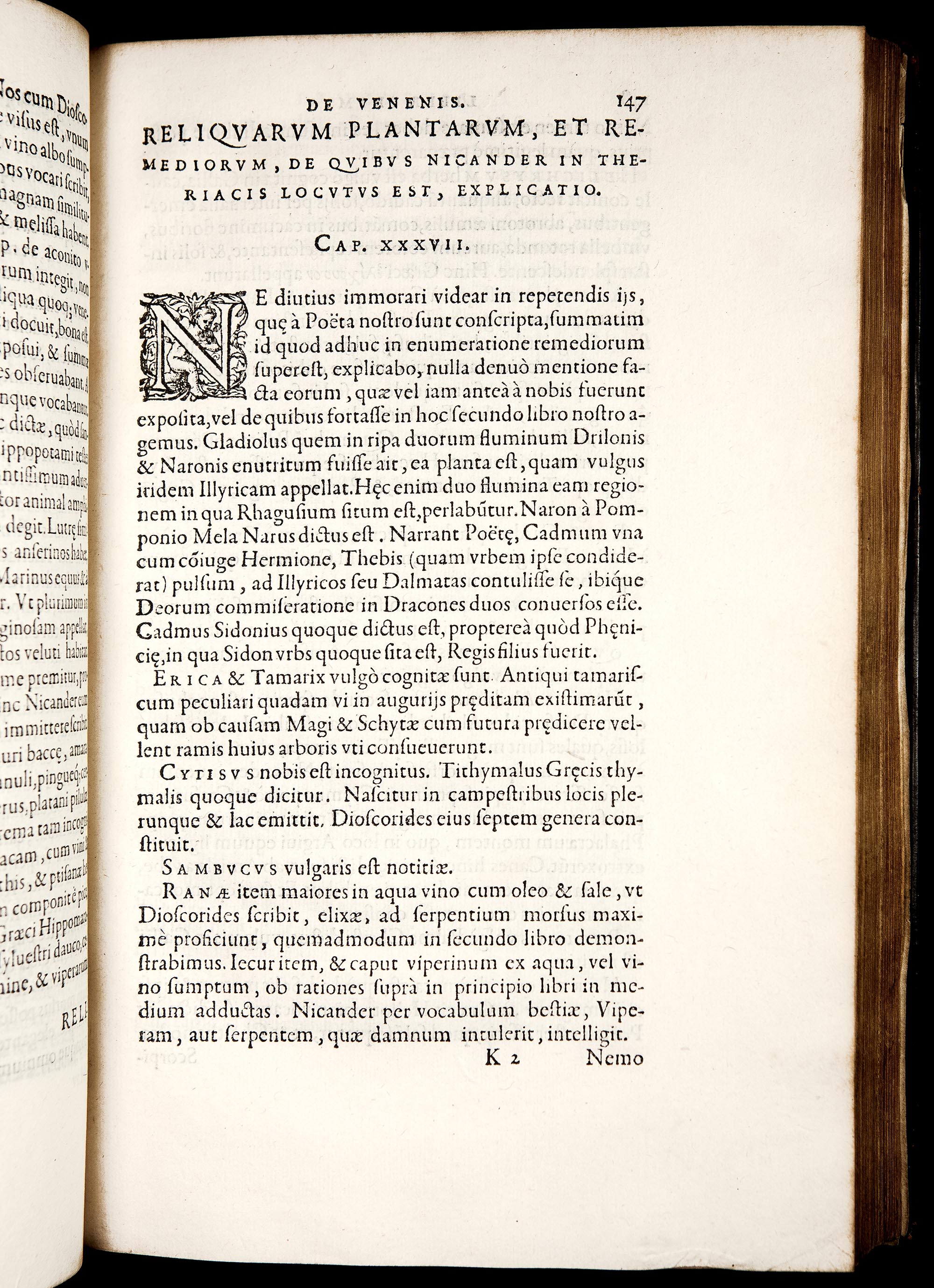
Preliminaries include Summa privilegiorum on verso of title (*1v); a long Preface by Hieremius Martius dedicated to Holy Roman Emperor Maximilian II (*2r-**1r); a statement of imperial privilege (**1v-2r); two prefatory poems by Martius.
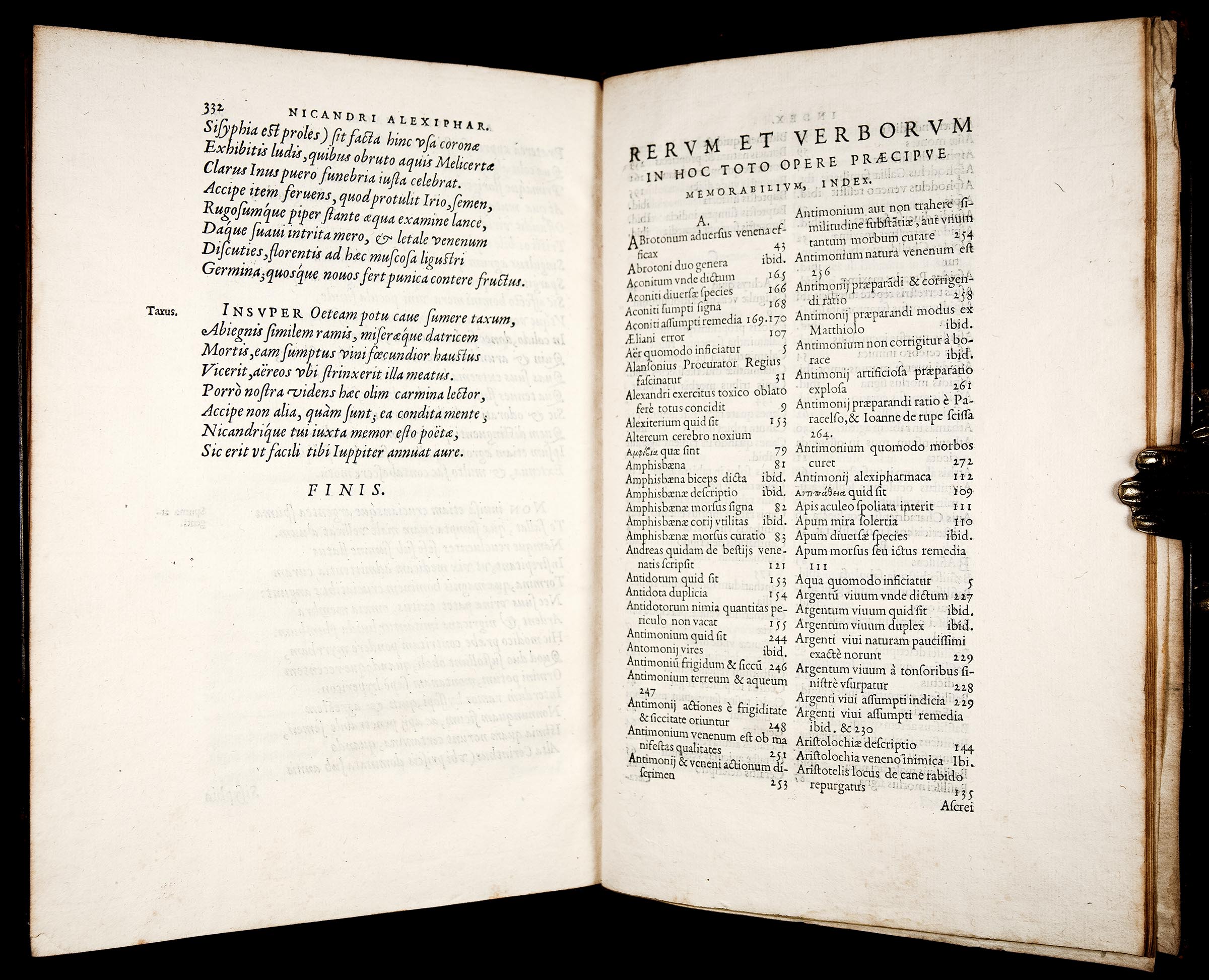
Nicander’s works occupy leaves S2v-X6v.
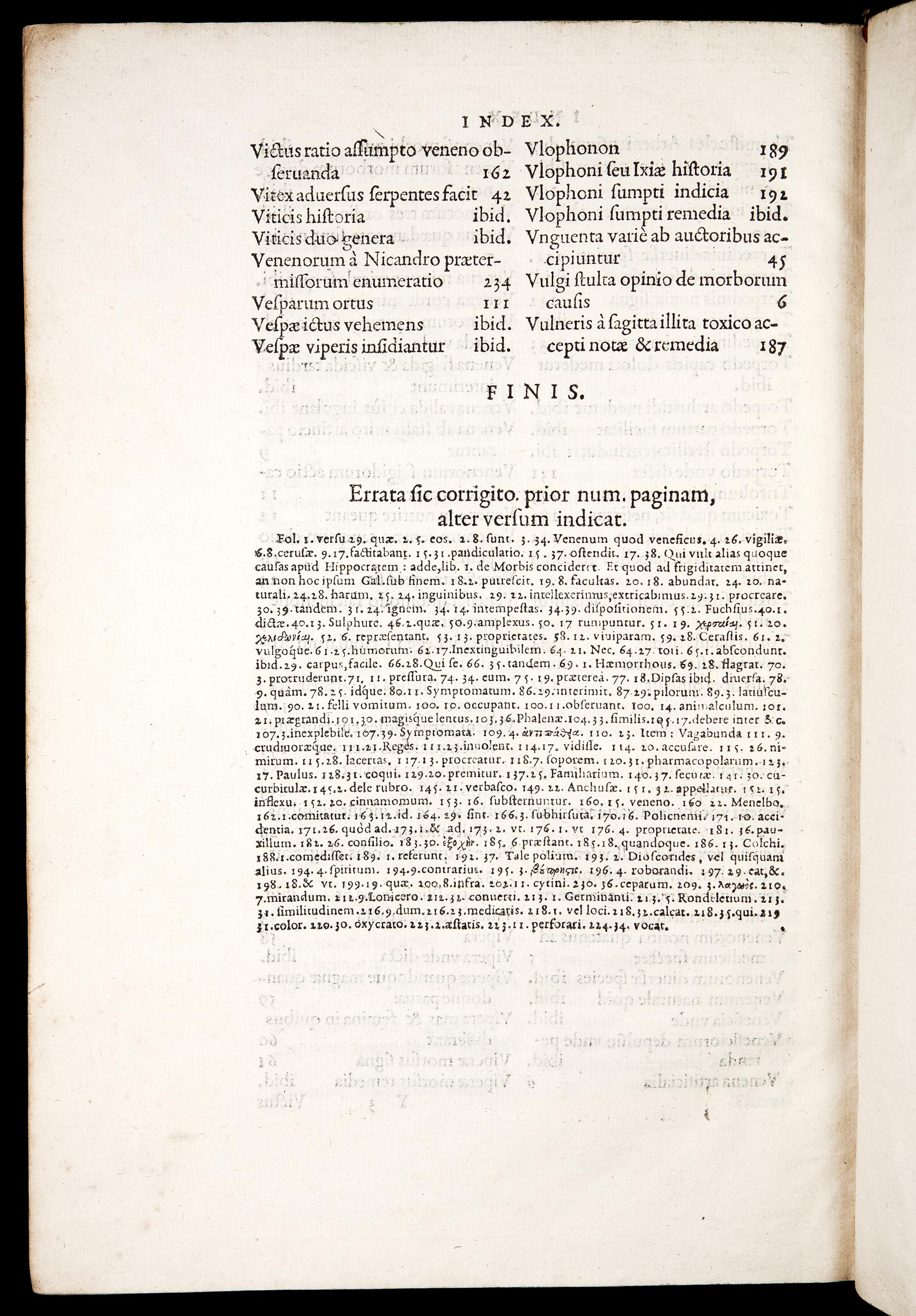
Index at the end of the volume (leaves X7r-Y3v, followed by Errata on Y3v; final leaf Y4 blank.
Johan Radermacher the Elder (1538–1617), a prominent Dutch merchant, humanist, and bibliophile. [With his motto “In manibus Domini sortes meae” inscribed by his hand on title-page followed by his convoluted monogram and dated May 31, 1578.]
Radermacher’s rich book collection was sold by auction on 7 August 1634 at Middelburg, in his son Steven's house; the printed catalogue had been produced by bookseller Johannes Hellenius (Hans van der Hellen): Catalogus miscellaneus variorum ac insignium imprimis Latinorum, Italicorum, […] librorum D. Ioannis Radermacheri, Middelburgi, 1634. Our copy of Grévin’s De venenis is included in this catalogue under Medici in Quarto: No. 3.
“Radermacher had the habit of using the motto 'In manibus Domini sortes meae'. He wrote those words on 18 June 1580 in the lost first part of his mother's bible. The same words can be found on the title page of Otfridi Evangliorum (1571), which is held in Leiden University Library […]. Also in Die Cronica van der hilliger Stat van Coellen (1499).” (Karel Bostoen, The Radermacher Sale Catalogue: Introduction; see johanradermacher.net/introduction.)
Ownership inscription (on title page) of Tilmannus Truytwyn dated 1646. Tilmannus Truytwyn, aka Tilmann Trutwyn or Trutwin (d.1676) from Roermond (Limburg, Southern Netherlands) was “a very well known Flemish anatomist who lived in Florence [and] was converted [to catholicism] at the point of death ‘with all the holy sacraments of the Church’.” (Stefano Miniati, Nicholas Steno's challenge for Truth, p. 207). He studied medicine at the University of Leyden (graduating in 1649), then moved to Italy, where he taught at the University if Pisa, and became a friend and collaborator of Francesco Redi, a famous Italian physician, and biologist, considered the founder of experimental biology. In 1660’s Redi procured for Trutwyn the position of the anatomist at the court of Ferdinando II de' Medici, Grand Duke of Tuscany. Tilmann lived the last ten (or more) years of his life at Florence, where he died. At Grand Duke’s court, working alongside Redi - who called him "most diligent anatomist" - Trutwyn performed exploratory dissections of animals (often publicly). In addition, The Grand Duke himself was apparently very interested in anatomy and physiology of venomous snakes and insects; those were delivered in abundance for Trutwyn to conduct experiments and toxicological studies on. Most of these experiments are said to have been conducted directly at court, behind closed doors, with his Serene Highness present. It seems quite likely that Trutwyn consulted his copy of Grevin’s De venenis during his extensive experimental exploration of venomous animals. (see P. Finotello, Quando a Firenze Ruggivano i Leoni)
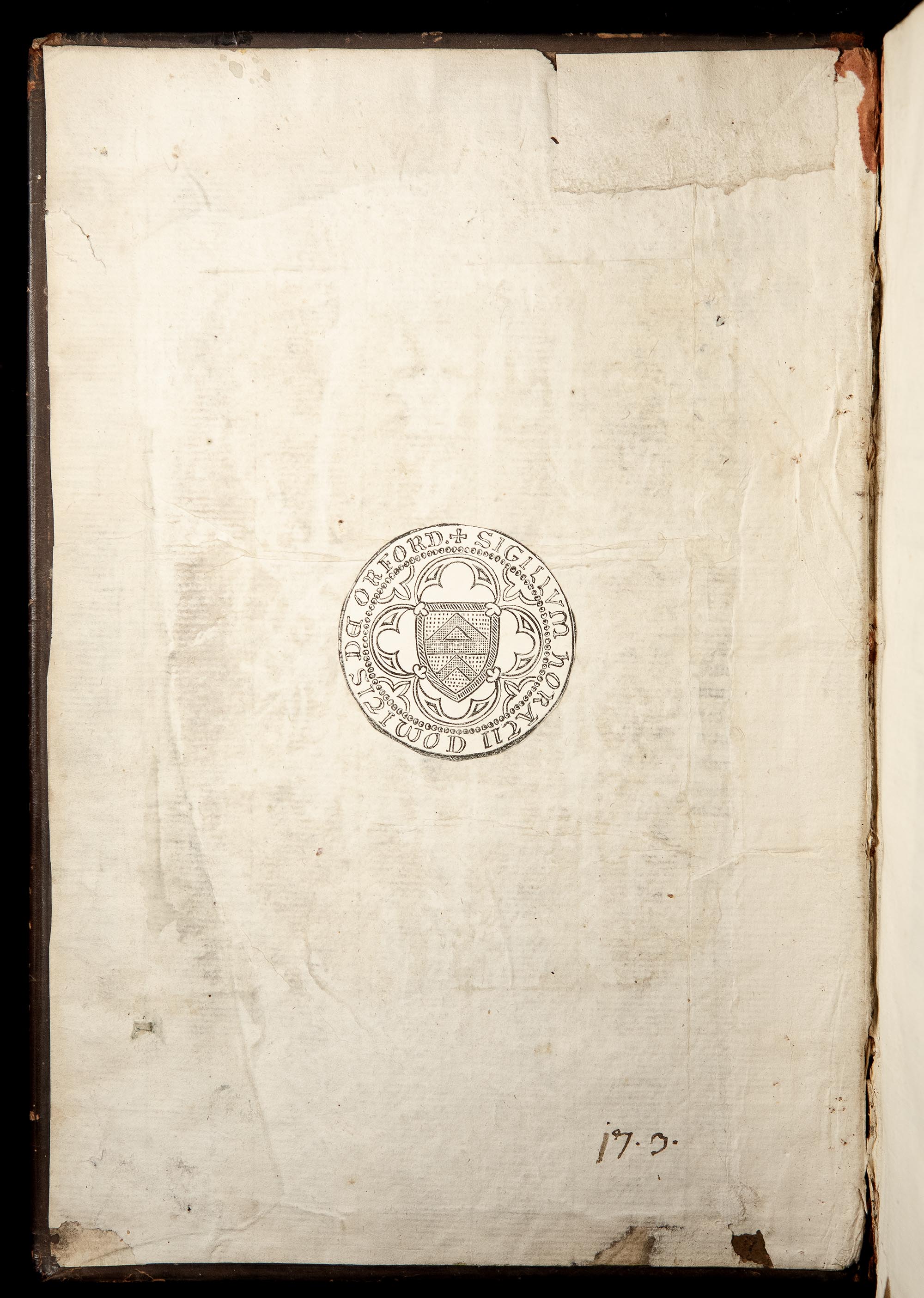
Horatio Walpole, 4th Earl of Orford (1717 – 1797), an English writer, historian and Whig politician. Famous as the author of the first Gothic novel, The Castle of Otranto (1764). [With his armorial seal bookplate on front pastedown legended: “Sigillum Horatii Comitis de Orford”.] It is quite likely that Walpole bought the book during his 1740-1 visit to Florence, where the previous owner died.
Very Good. Complete. Binding slightly rubbed, some edge-wear; joints partially split, but securely attached by binding cords (binding tight). Internally near fine, with only very light occasional marginal soiling. A couple of early ownership inscriptions to title-page. A very attractive, clean, bright, solid copy, unwashed and unpressed, with very wide margins (considerably larger than the copy described in Johnston's Cleveland Herbal, Botanical, and Horticultural Collections).