Vulgate Ps. 31:3 - 37:9
Illuminated manuscript on vellum.
Text in Latin.
Offered here is a substantial 14-page continuous fragment from a celebrated, well-documented Italian Renaissance manuscript Psalter, written by the renowned humanist scribe Pietro Ursuleo linked to the Aragonese court and the circle of Matteo Felice.
Our fragment contains a complete, uninterrupted text of the Psalms from 32:3 38:9, as numbered in Hebrew and English bibles (numbered 31 to 37 in the Vulgate), thus comprising 5 complete psalms, 1 near-complete and 1 partial psalm.
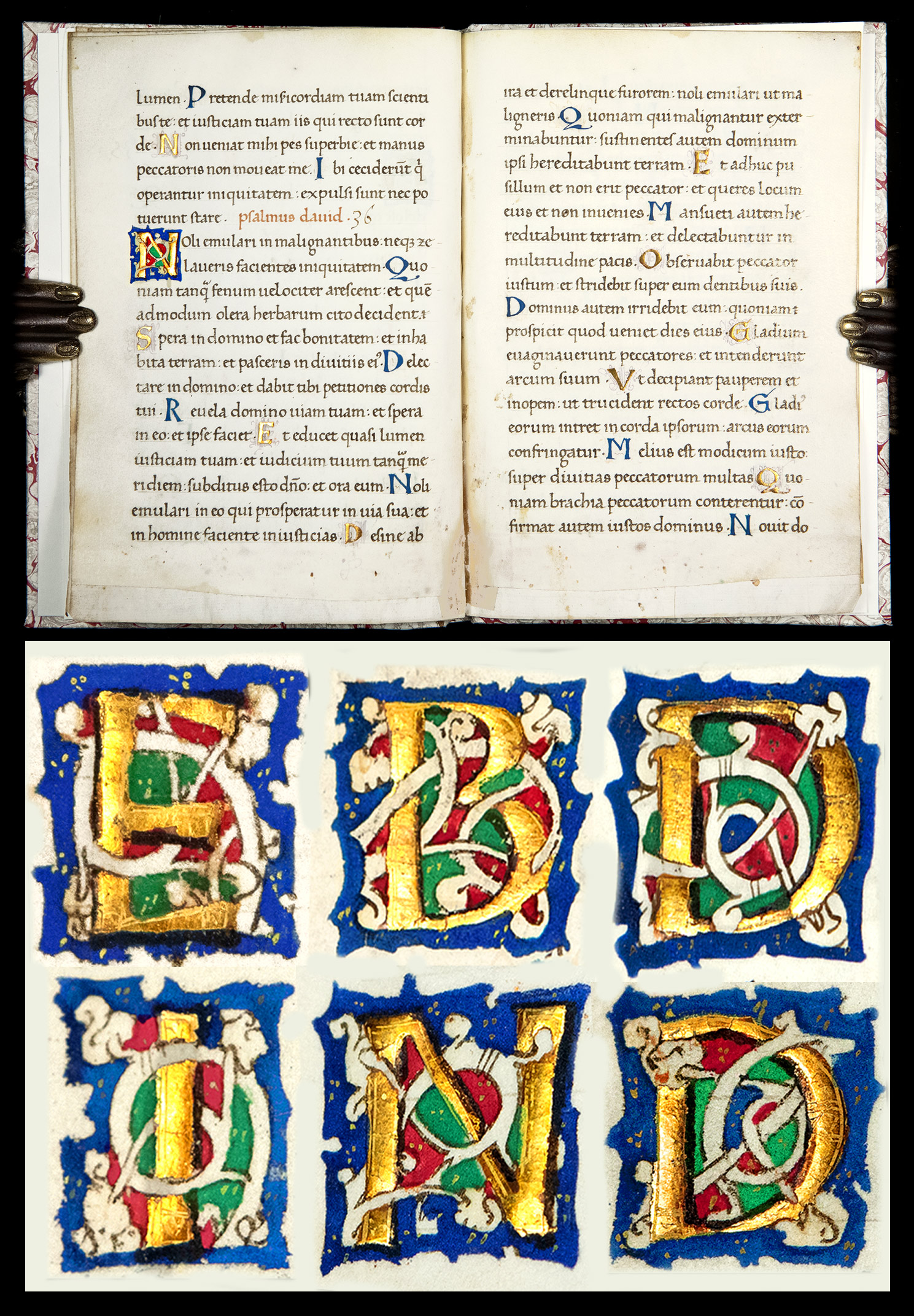
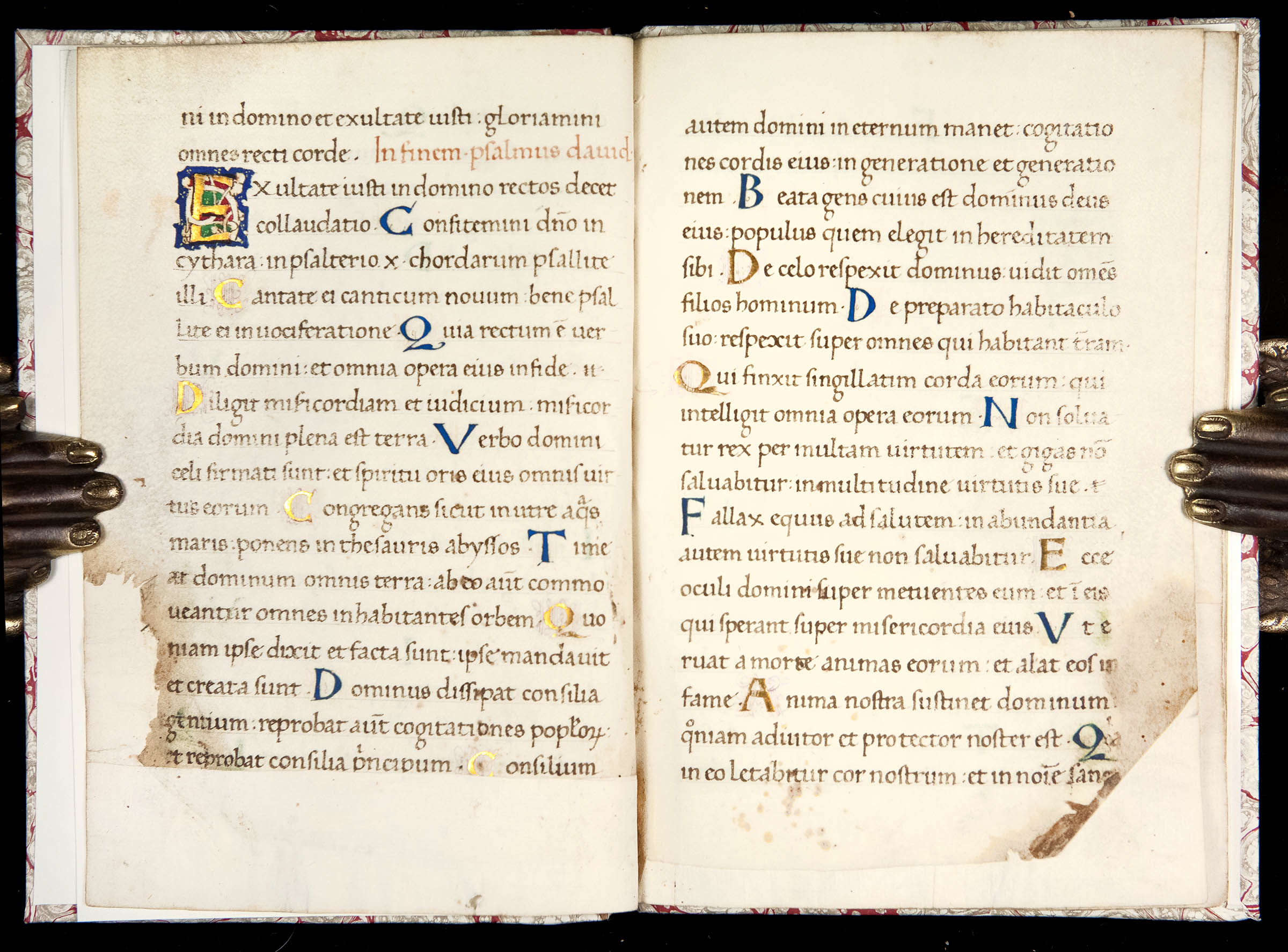
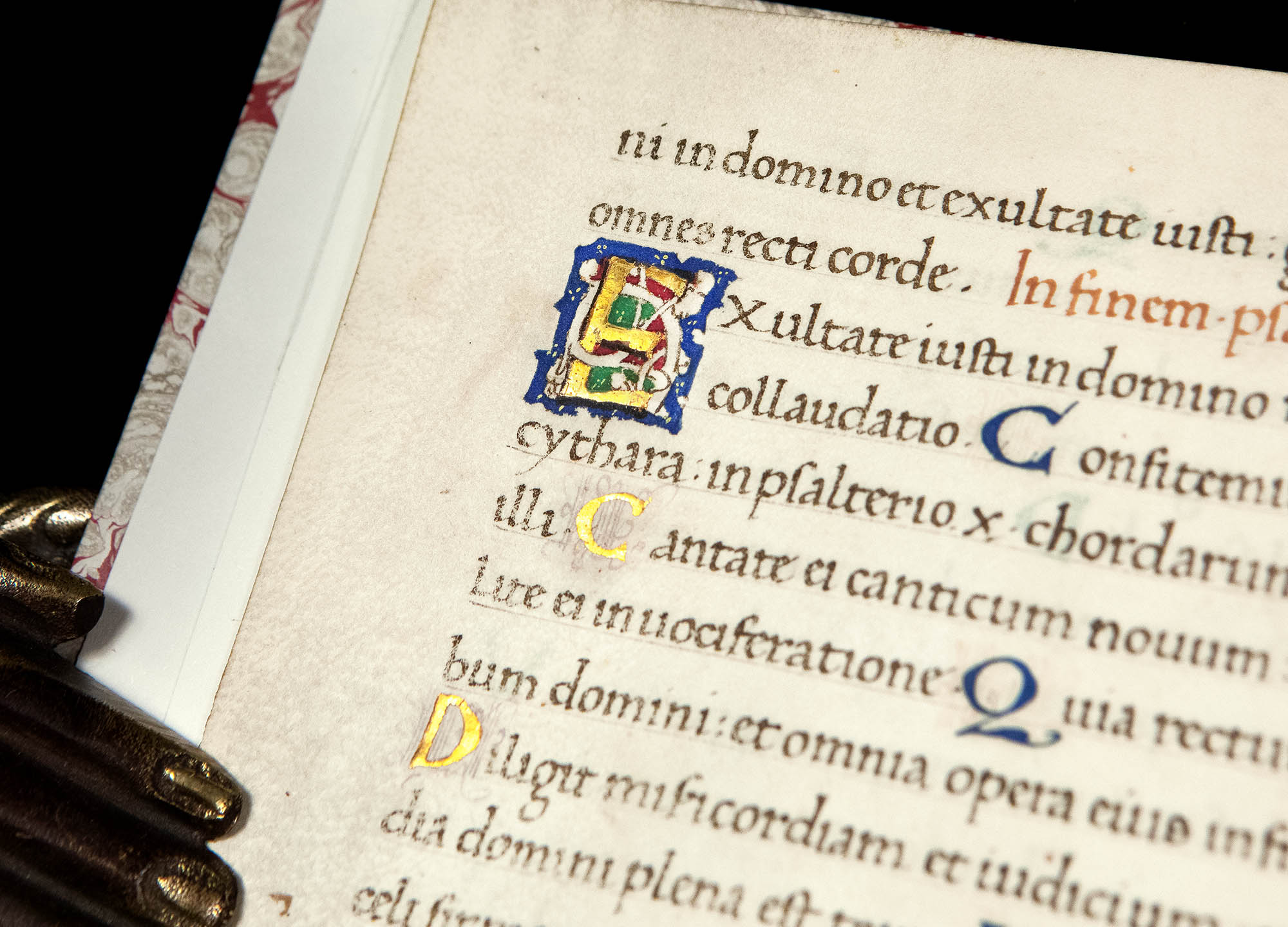
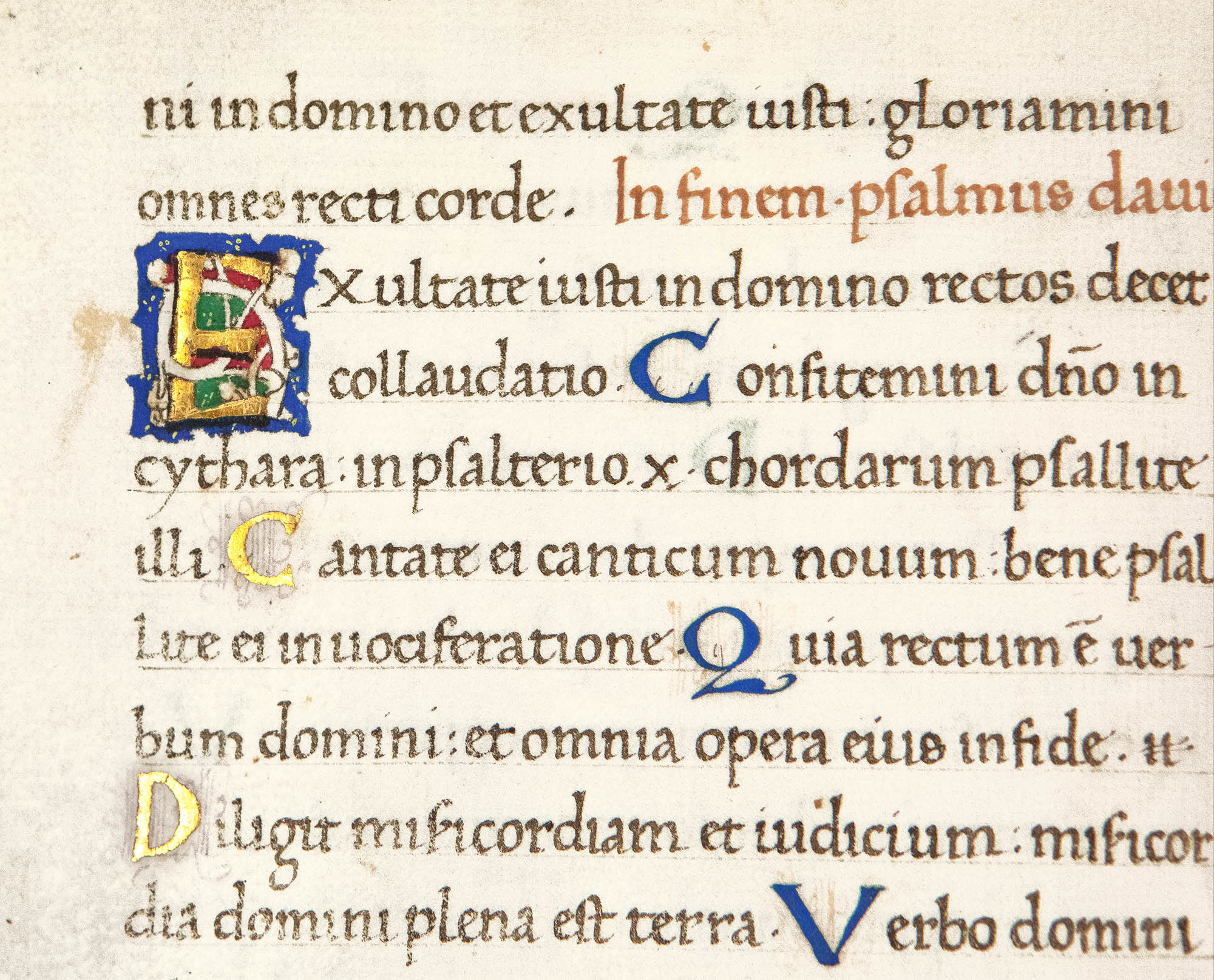
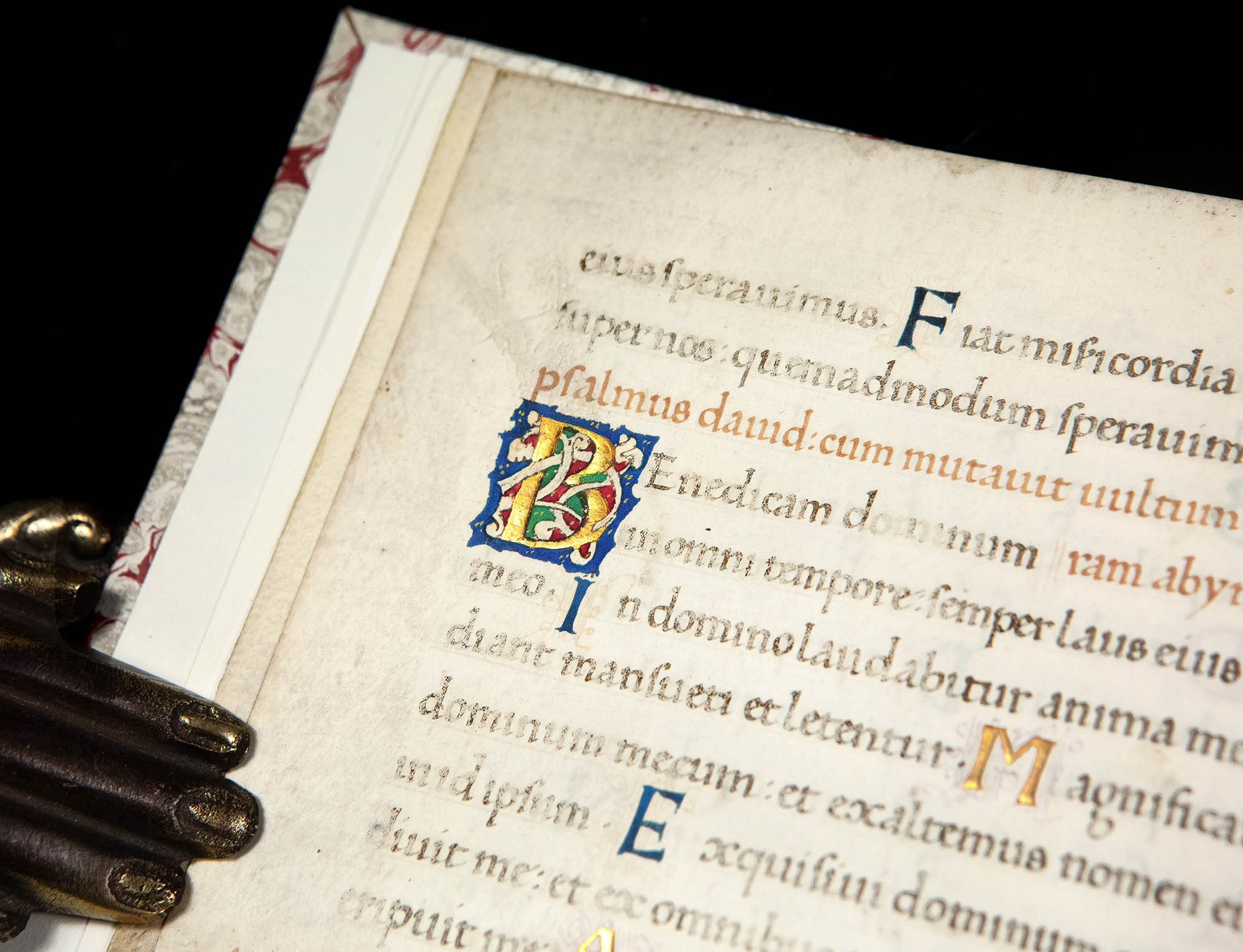
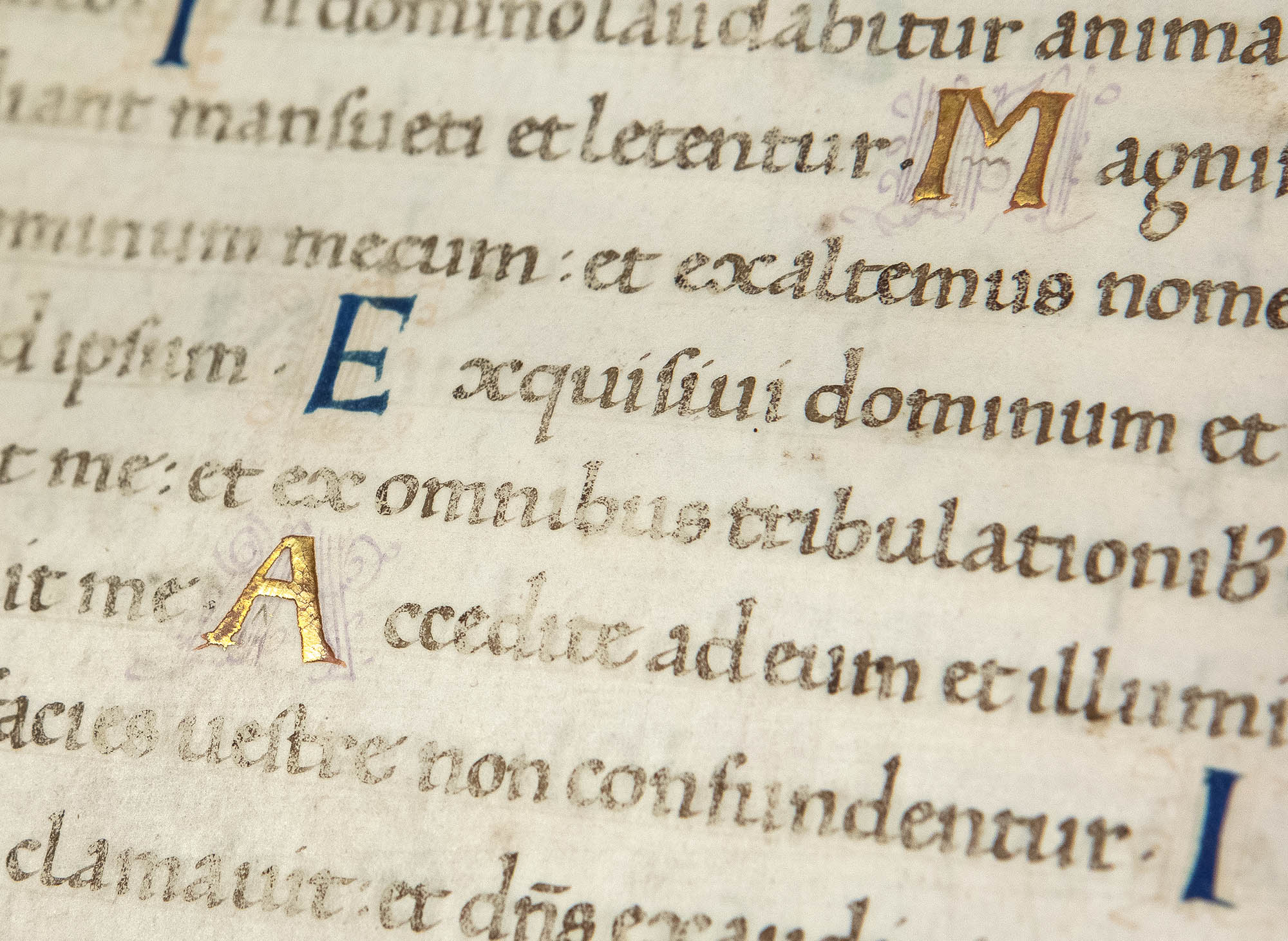
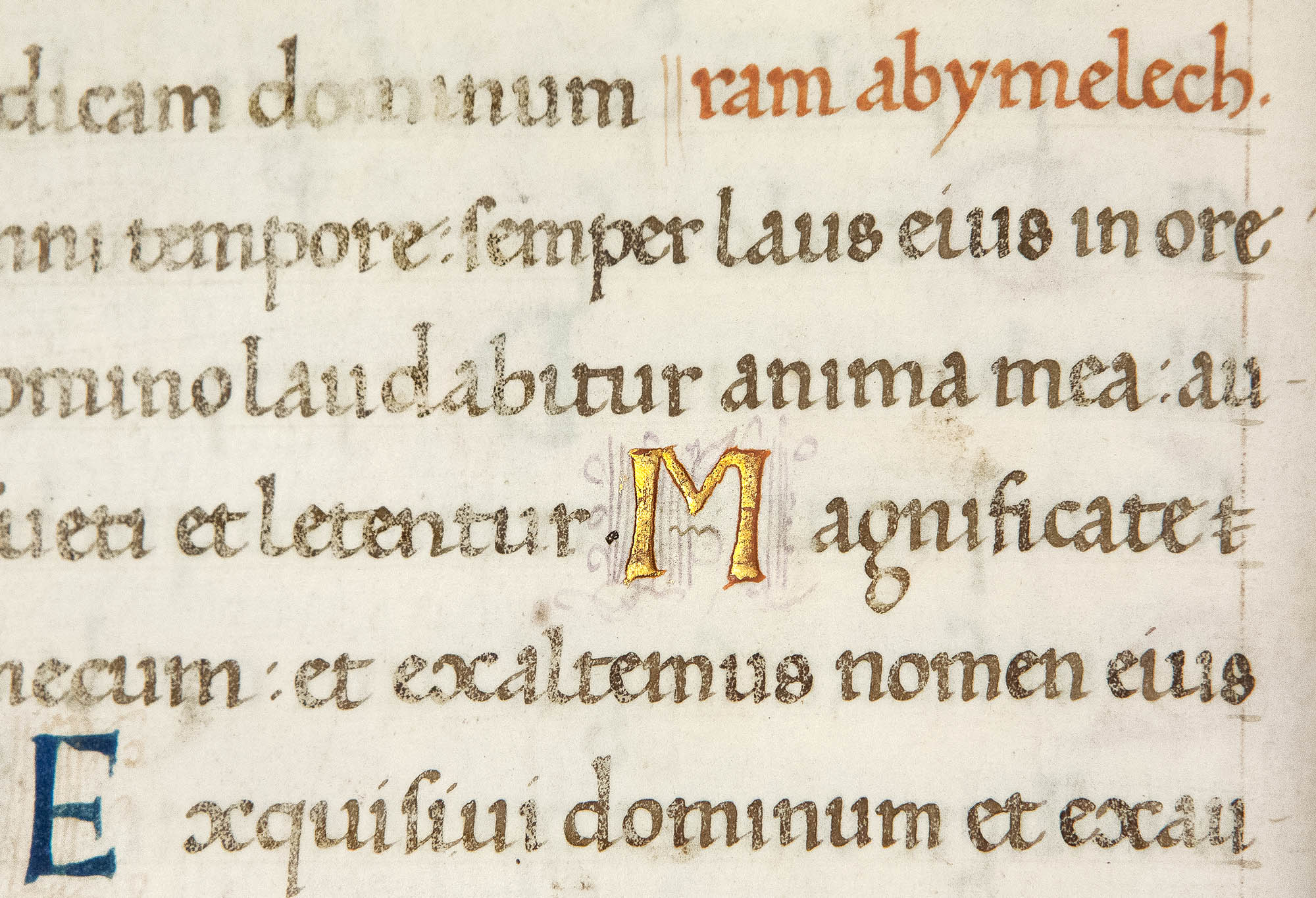
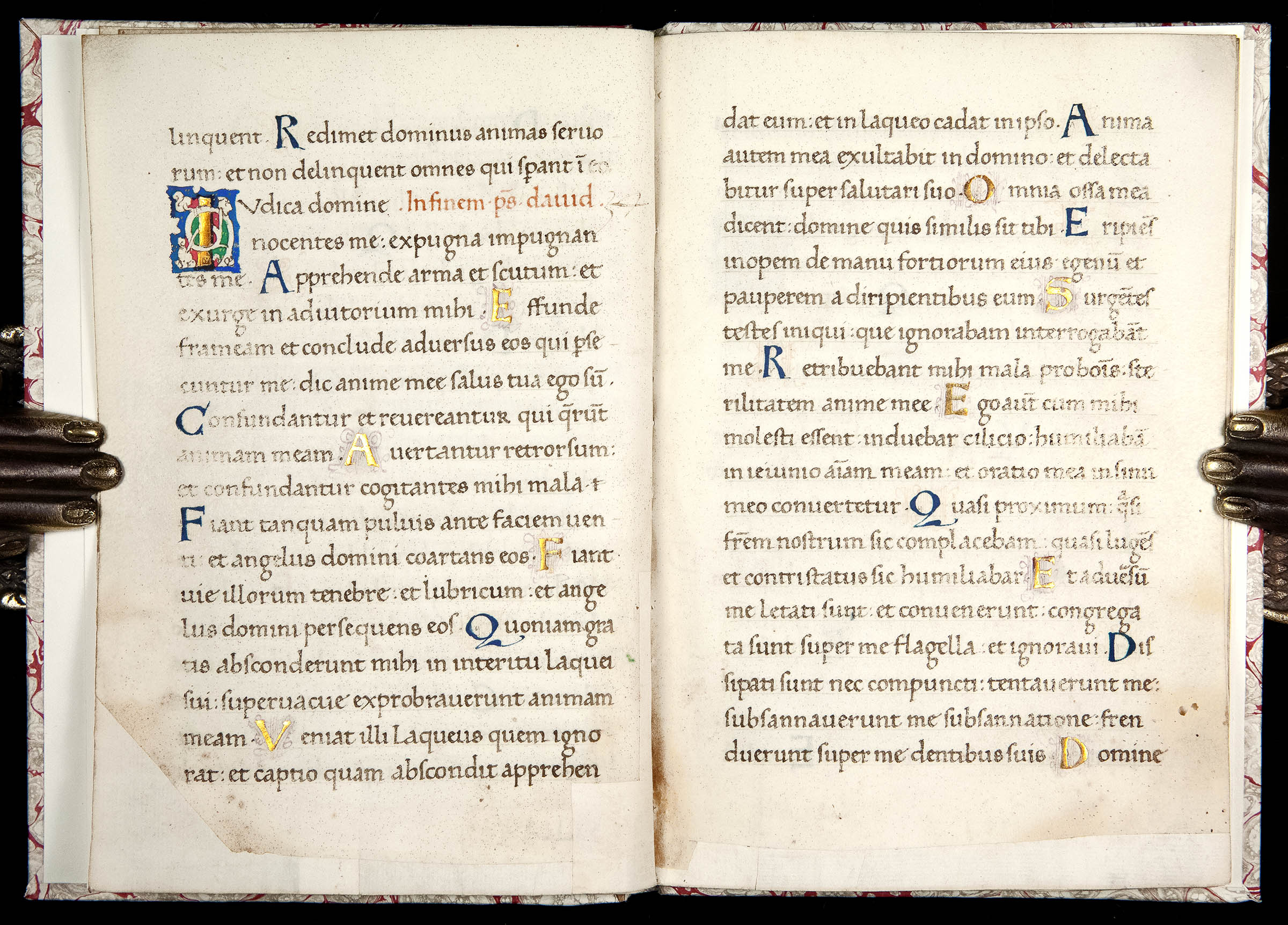
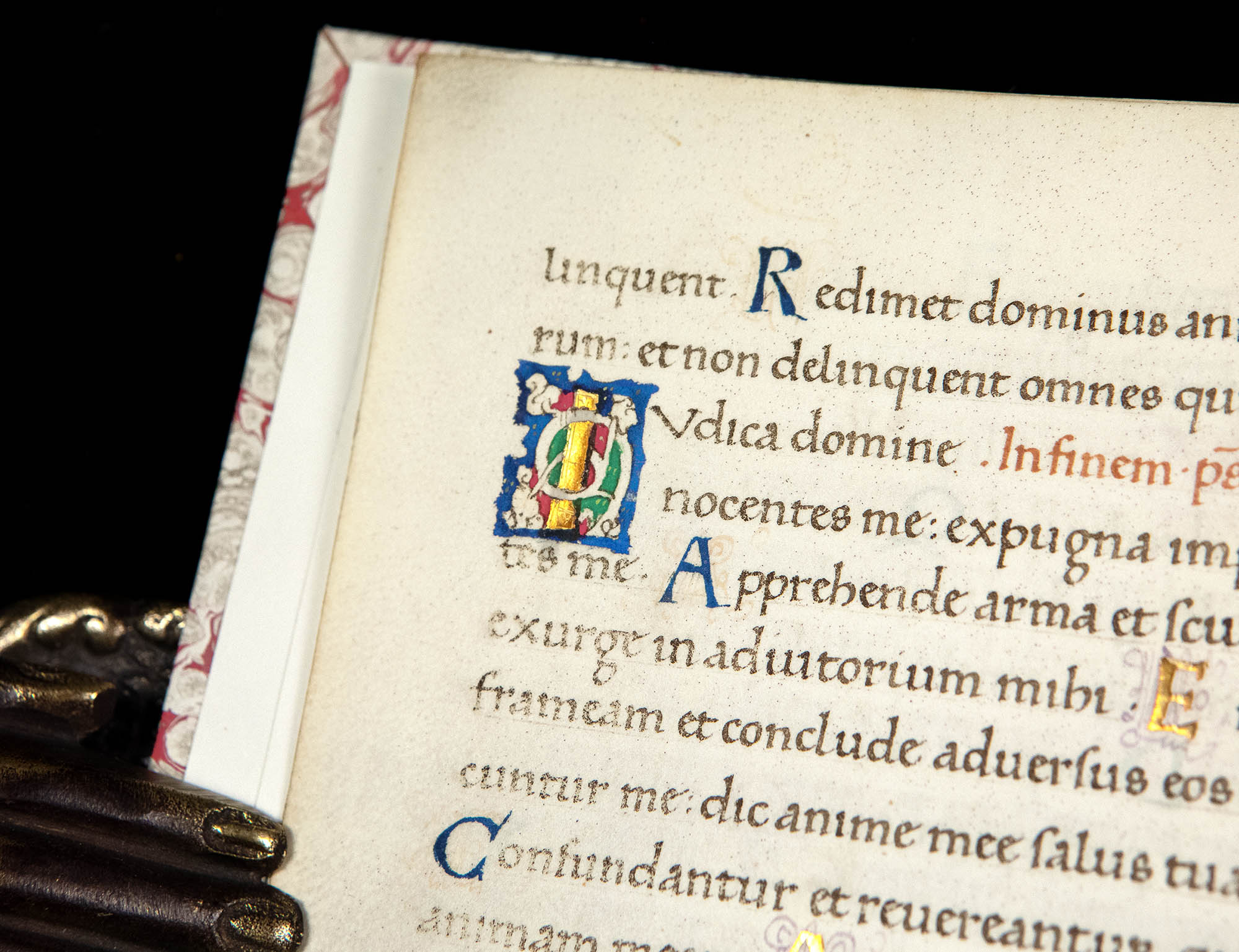
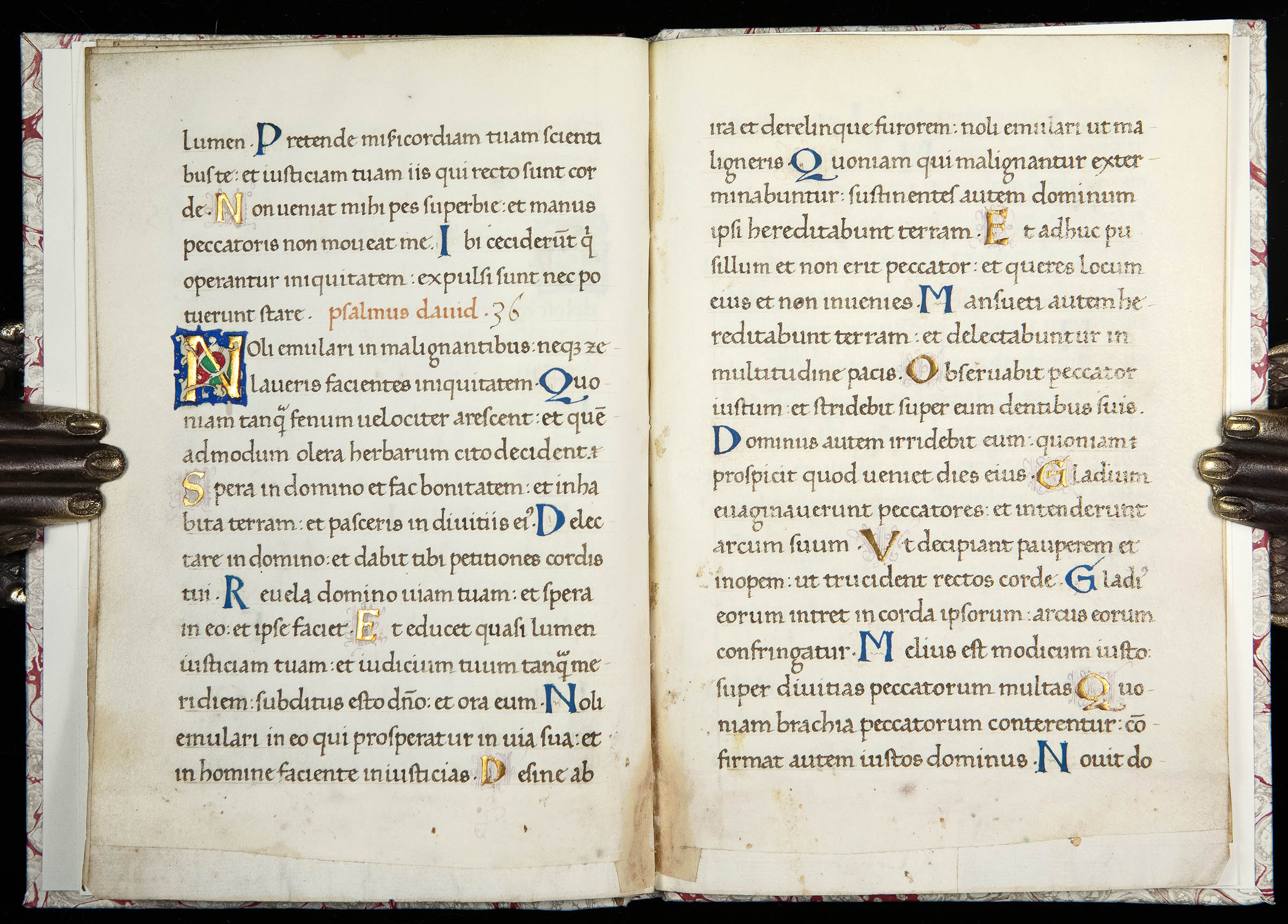
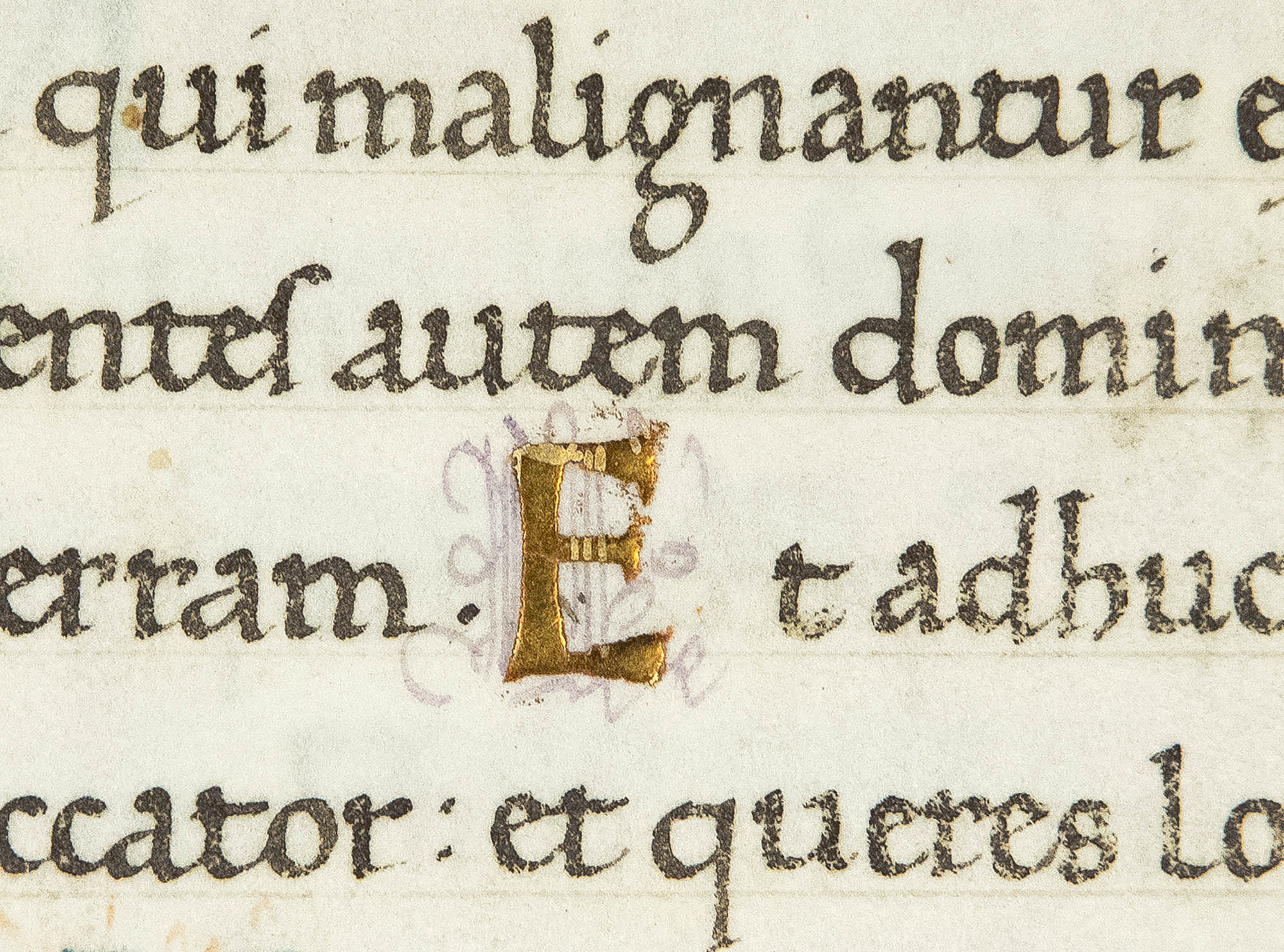
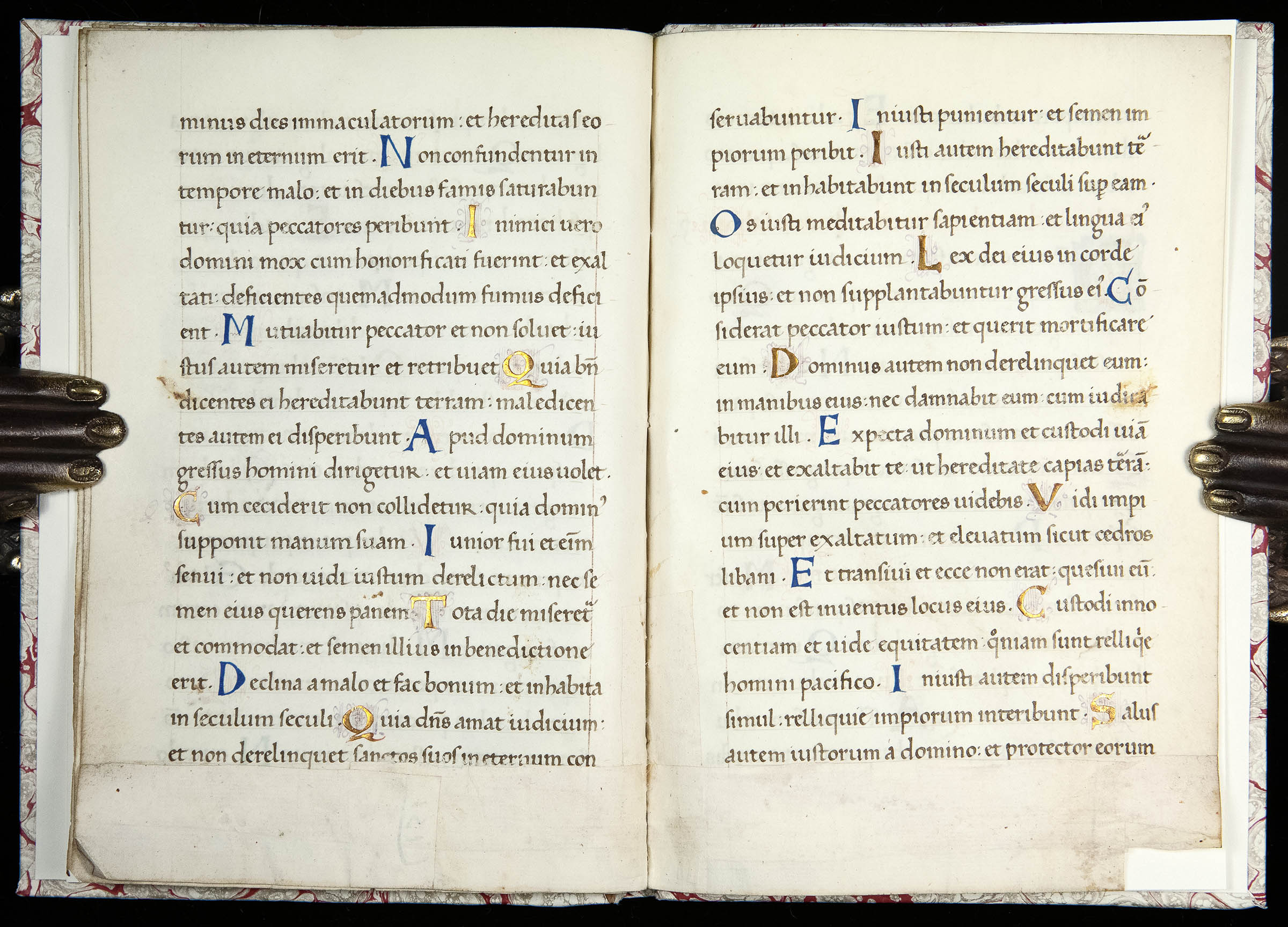
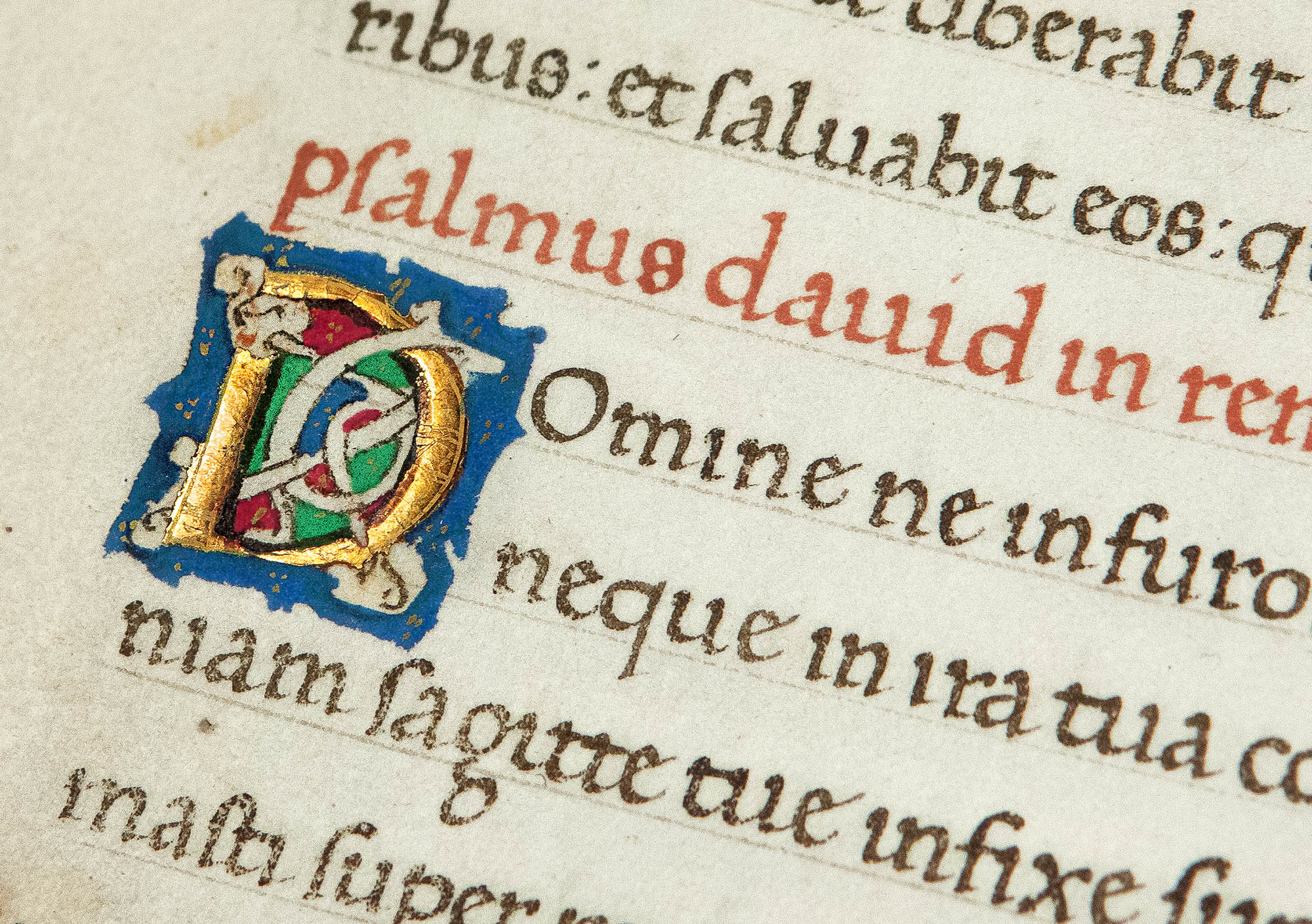
The manuscript is embellished with six exquisite two-line illuminated initials in bianchi girari ("white vine") style, as well as numerous verse capitals in text supplied intermittently in gold and blue. The illumination is attributed to Matteo Felice or a member of his workshop.
The scribe Pietro Ursuleo of Capua, a Neapolitan cleric who rose to the episcopacy of Satriano (r. 1474–1483) within the Kingdom of Naples. Ursuleo belonged to a small but significant cohort of humanist clerics who combined pastoral office with scribal production. He is best known for a pair of Psalters, whose production is linked to the Aragonese court and the illuminator Matteo Felice and his workshop, though the painter’s exact role remains debated. Alfonso V of Aragon (Alfonso I of Naples) conquered the Kingdom of Naples in 1442, turning the city into a vibrant Renaissance center for art, humanism, and music until the early 16th century.
Ursuleo became a professional scribe around 1448 and worked extensively for the Aragonese Court in Naples collaborating frequently with prominent Italian illuminators like Matteo Felice, Cola Rapicano, and Cristoforo Majorana. In the late 1460s, he relocated to Rome. Even after climbing the ranks of the church hierarchy, he continued to copy manuscripts for Pope Sixtus IV. He wrote in an elegant, precise humanist script, as seen in this Psalter. He was elected bishop of Satriano in 1474, serving until 1483, and appointed Archbishop of Santa Severina on Feb. 22, 1483, shortly before his death in April of the same year.
The parent manuscript of this fragment formed part of a twin commission produced for a patron in Ravenna. Its companion volume, a Psalter with Passion readings, is now preserved complete at Trinity College, Cambridge (MS O.7.46) and bears Ursuleo’s signed colophon. A corresponding colophon from the present manuscript was identified by Albinia C. de la Mare in 1982 in the National Library of Australia (Nan Kivell Calligraphic Collection, MS 4052/3/107), confirming the original unity of the group.
The manuscript appears to have remained intact until the early 20th century, when it was apparently broken up by the London dealer James Tregaskis. Other individual leaves from this remarkable manuscript are now held in important institutional collections such as Victoria & Albert Museum and the National Library of Australia, etc.
This fine fragment contains, among others, the complete Latin text of the important 37th Psalm (Fret not thyself because of evildoers…). In the Vulgate Latin Bible it is known as Psalm 36: Noli aemulari in malignantibus … The psalm is thought to have been composed by king David in his old age, and is originally in the form of an acrostic Hebrew poem. It is a consolatory response to the theological ‘problem of evil’, which the Old Testament often expresses as a question: why do the wicked prosper and the good suffer?
The 37th Psalm forms a regular part of Jewish, Catholic, Lutheran and Anglican liturgies. Many hymns are based on it; it has been set to music, by Baroque composers such as Heinrich Schütz as well as romantic composers such as Anton Bruckner. The phrase Mansueti autem hereditabunt terram ("The meek shall inherit the land/Earth”) from this psalm is echoed in Matthew 5:5: “Blessed are the meek, for they shall inherit the earth.”
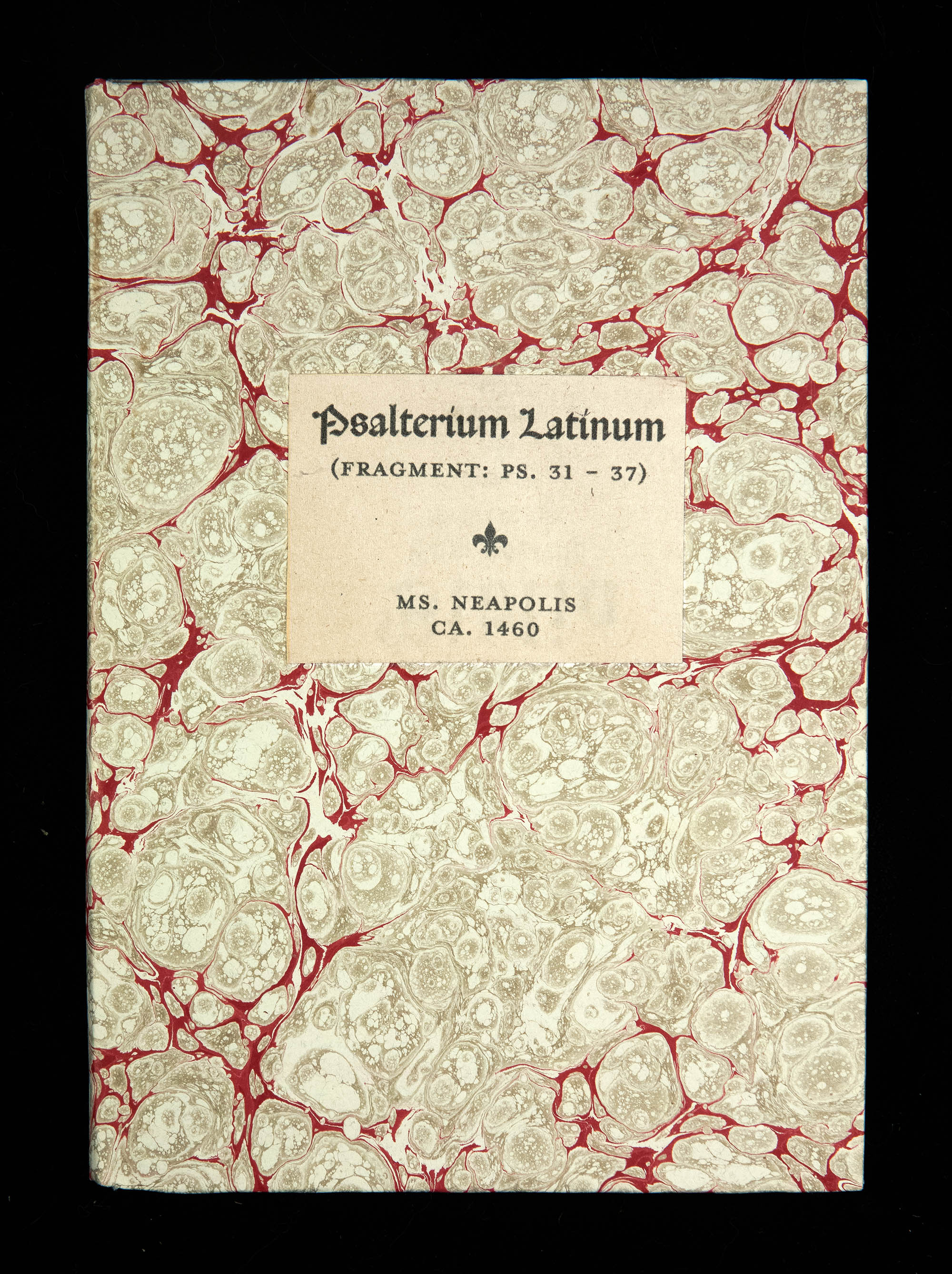
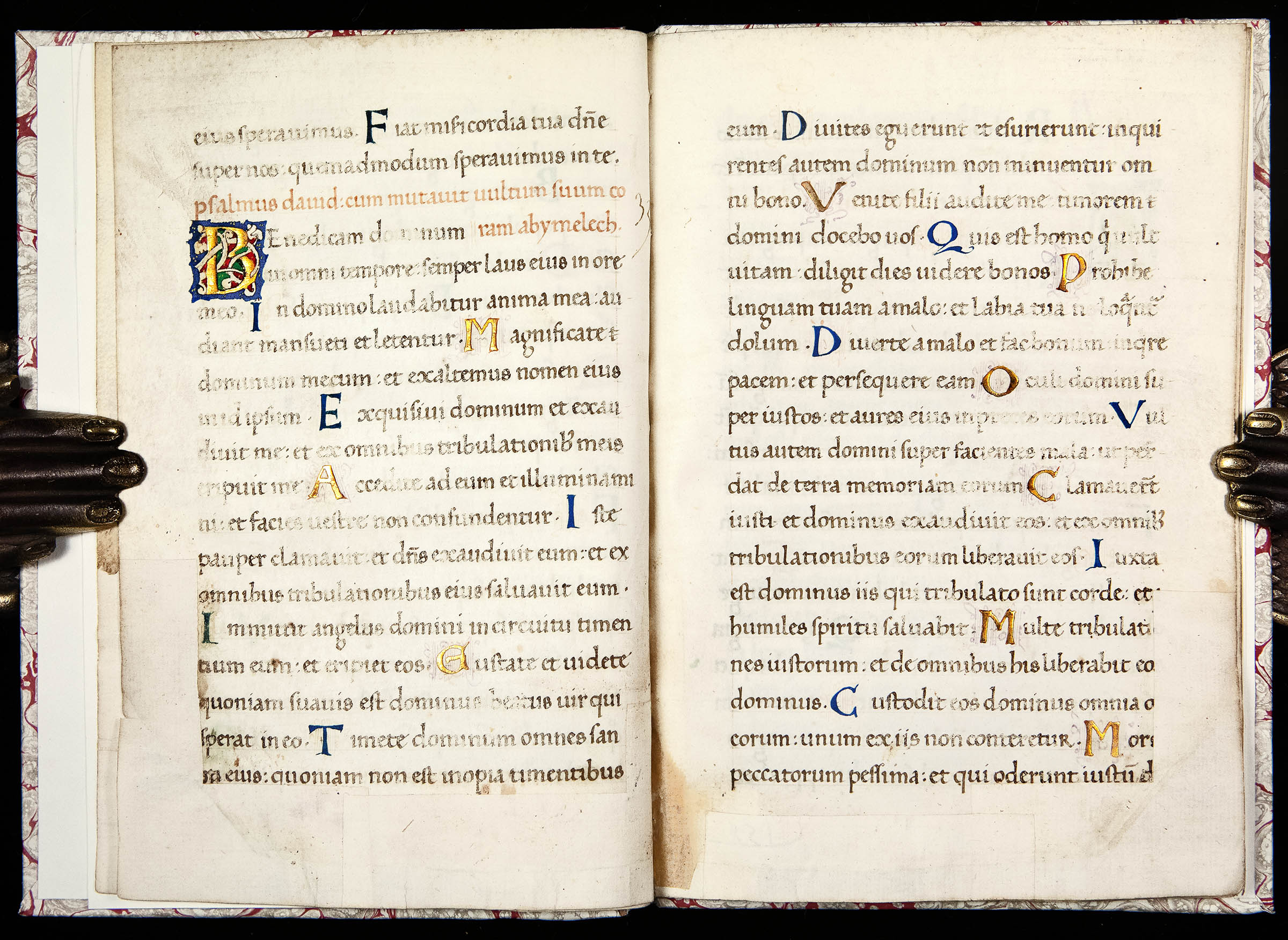
An individually bound fragment of an illuminated manuscript on vellum; leaves measure approx. 17 cm x 12 cm, bound in modern marbled boards with paper label to front cover.
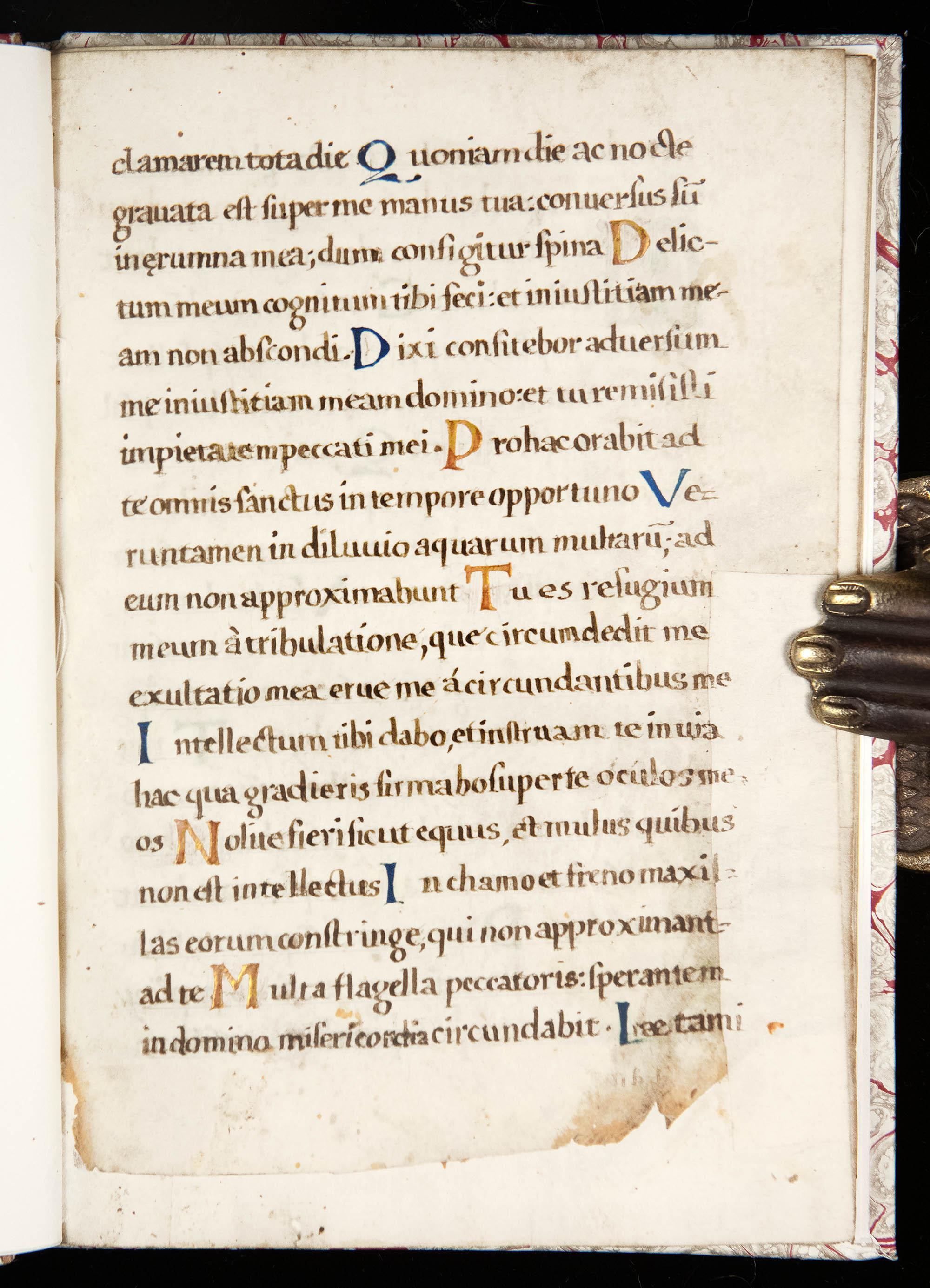
7 leaves (i.e. 14 pages), comprising continuous uninterrupted text from Vulgate Psalmus 31:3 up to Psalmus 37:9. (Text beginning on recto of f.1 with “clamarem tota die”, and ends on verso of f.7 with “rugiebam a gemitu cordis [mei]”.
Written in formal humanist script in single column, 19 lines per page.
With 6 fine 2-line illuminated initials in bianchi girari (white vine-stem) style in burnished gold, green and orange on a blue ground; as well as over a hundred one-line versal initials in alternating blue and burnished gold within simple purple penwork decorations.
Headline of each psalm written in red.
The parent manuscript of the fragment was originally written in Naples ca. 1460 for a patron in Ravenna by the humanist scribe Pietro Ursuleo, and probably illuminated by Matteo Felice or a member of his workshop, as one of two sister volumes (the other now Trinity College, Cambridge, MS O.7.46).
Later owned by John Boykett Jarman (1782–1864), a prominent London goldsmith, jeweler, art connoisseur, and collector of rare medieval manuscripts. In August 1846, a severe storm flooded Jarman's London home, resulting in water damage to his celebrated manuscript collection. This is a presumed cause of the marginal damage seen in our fragment as well.
The manuscript was sold, as part of Jarman’s collection at Sotheby, Wilkinson & Hodge, in London, 13-14 June 1864, lot 161.
In early 20th century the MS Psalter, still complete (then comprising 169 leaves) was acquired by a prominent London bookseller James Tregaskis (1850–1926), who initially offered it intact in several catalogues in 1912-3; then, after it remained unsold, he began dispersing it by individual leaves. The parent volume was subsequently broken up and widely dispersed, with portions recorded in modern scholarship.
Good antiquarian condition. First three leaves with some localized marginal discoloration (caused by old damp-staining). Marginal paper repairs or reinforcements to bottom and sometimes outer margins (a bit awkward but mostly harmless); slightly more extensive on f1,2 where they touch a few letters. Occasional light soiling. Occasional mild wrinkling to vellum. Occasional light fading to ink (e.g. on f.2 verso and f.3 recto), but ink generally stable and legible. Illumination of the initials is intact: with gold and colors bright and vibrant. Despite the minor, mostly marginal damage (sustained in a 19th-century flood), this is still quite presentable, attractive, substantial fragment of a celebrated Renaissance manuscript comprising complete Vulgate text of 5+ psalms,