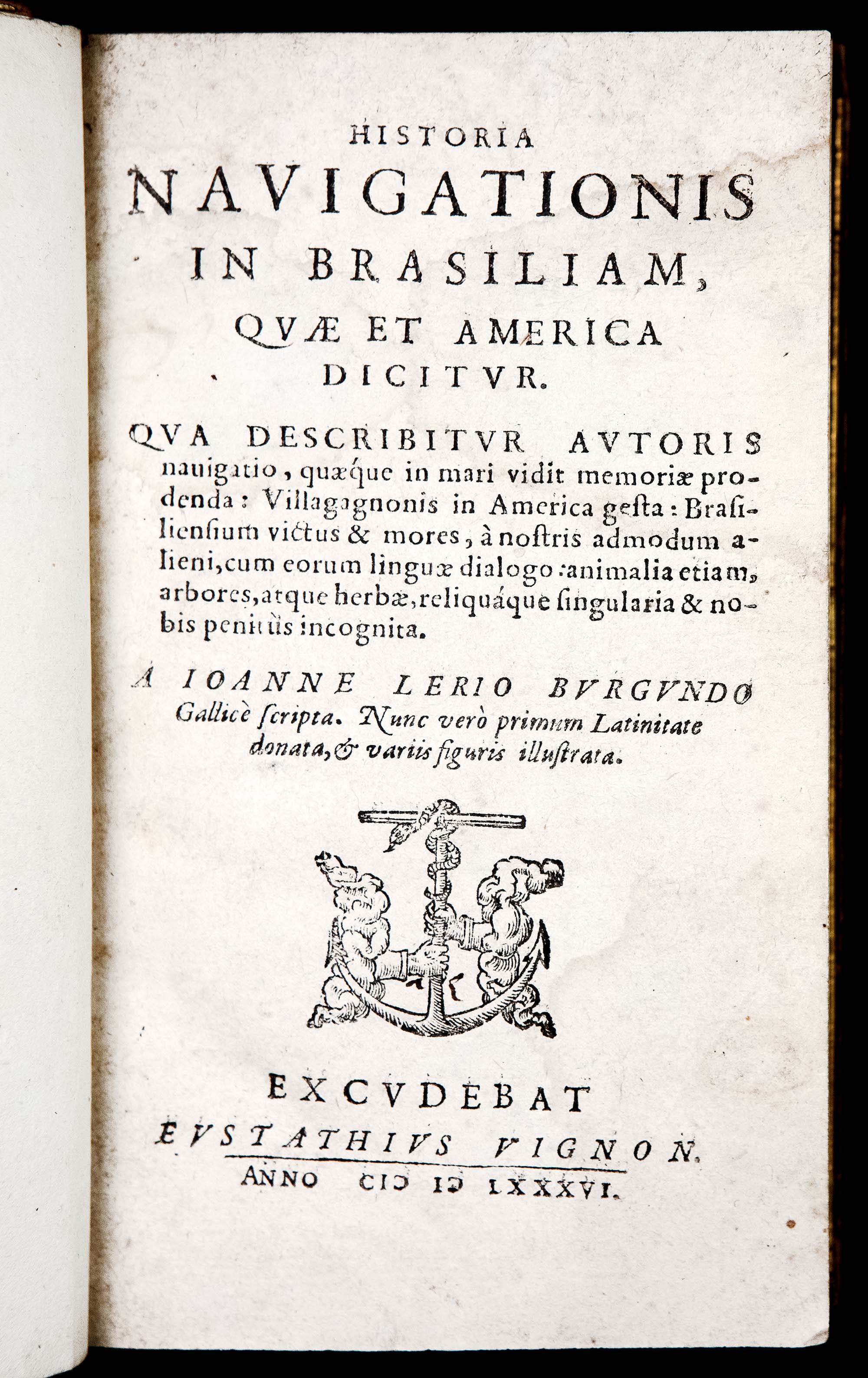
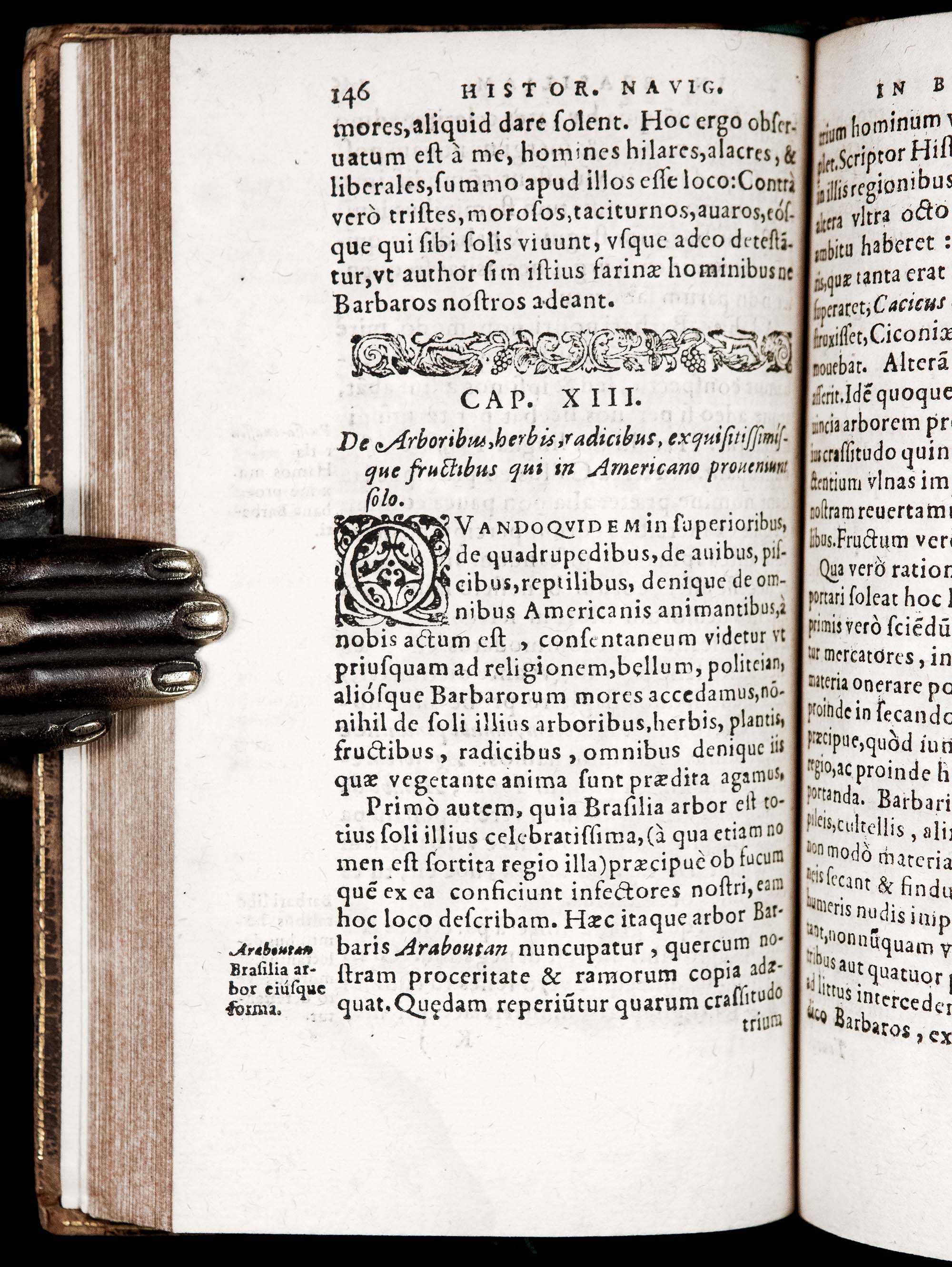
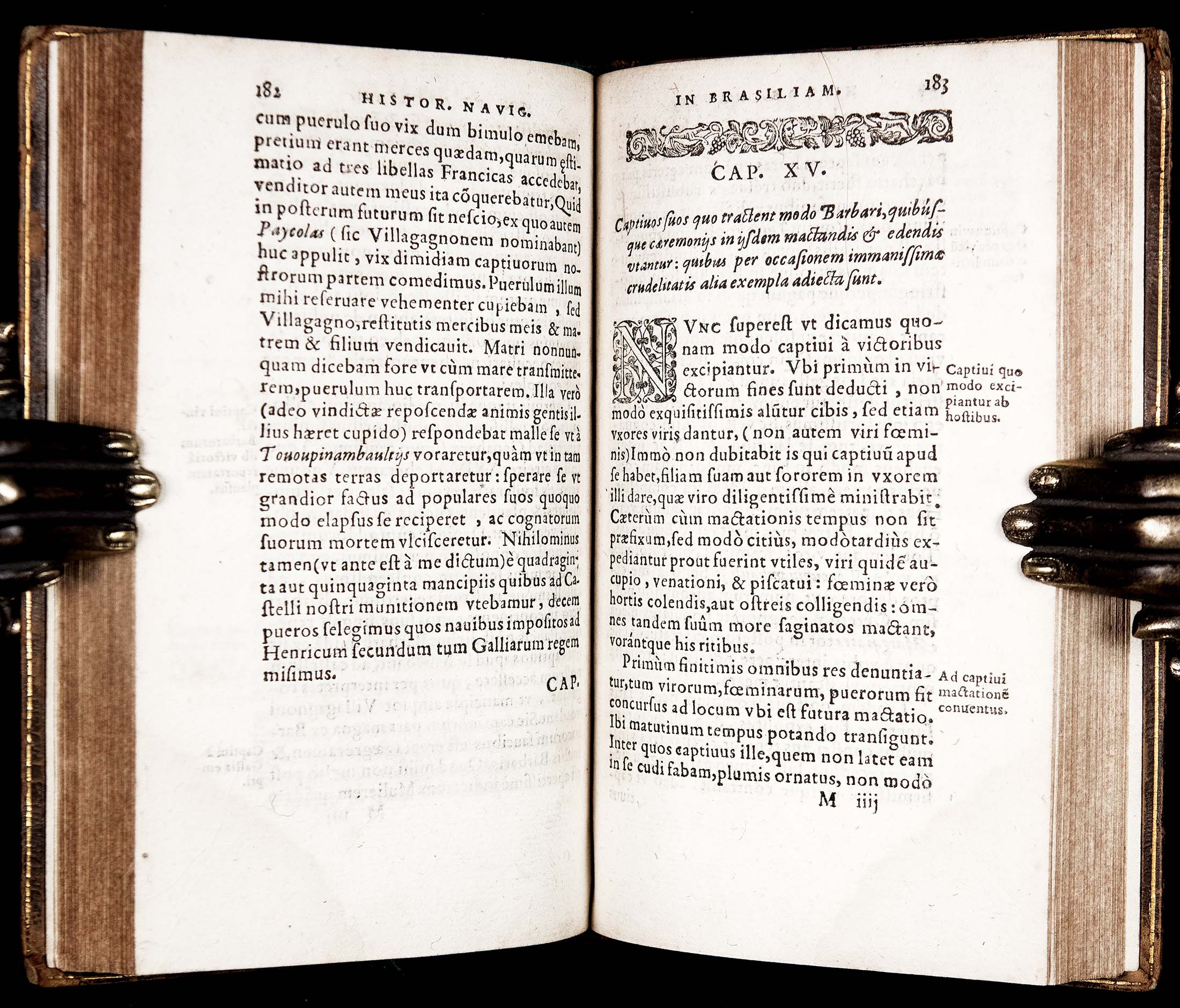
Geneva, Eustache Vignon, 1586.
First Latin Edition.
Translated from the original French by Léry himself.
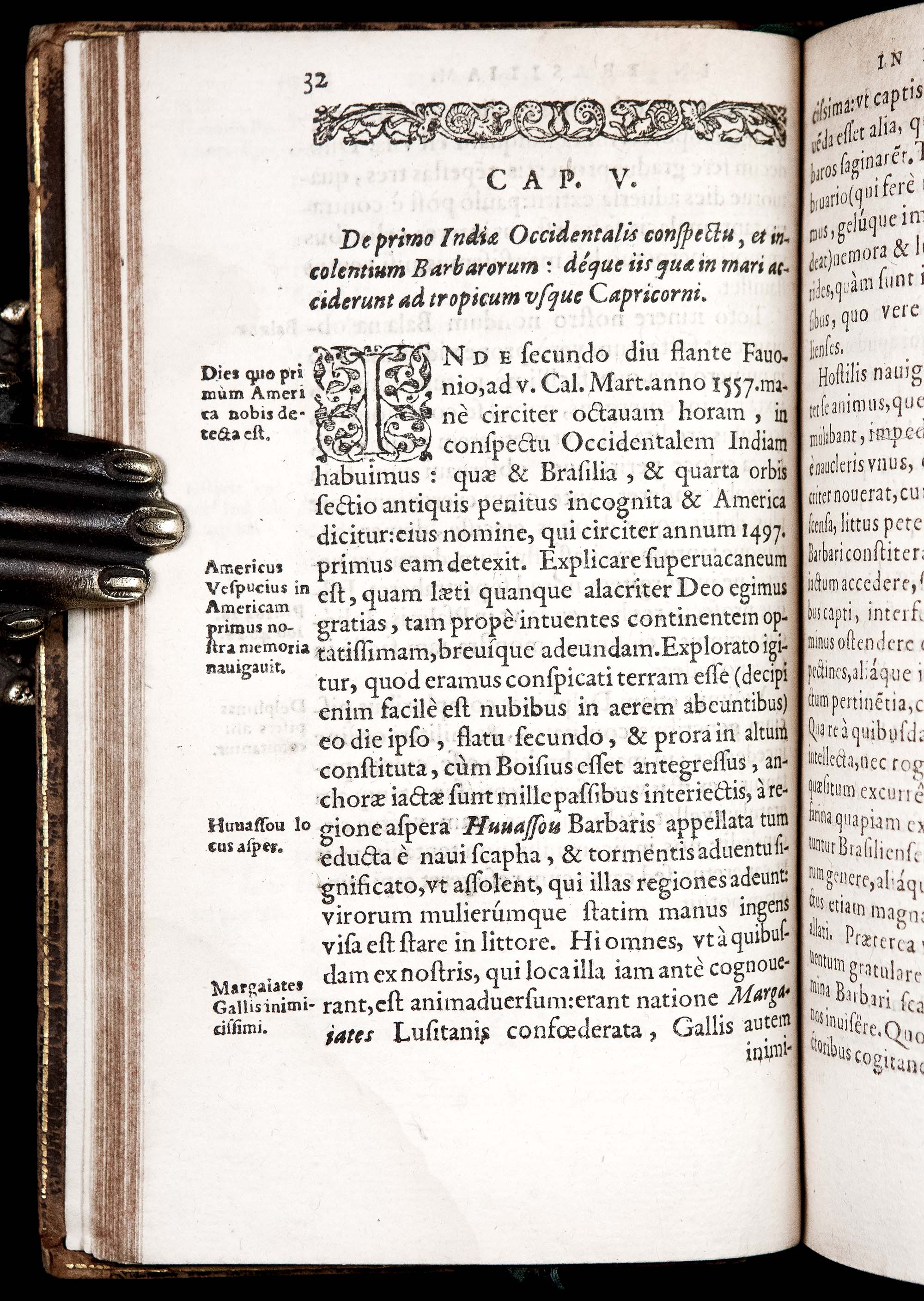
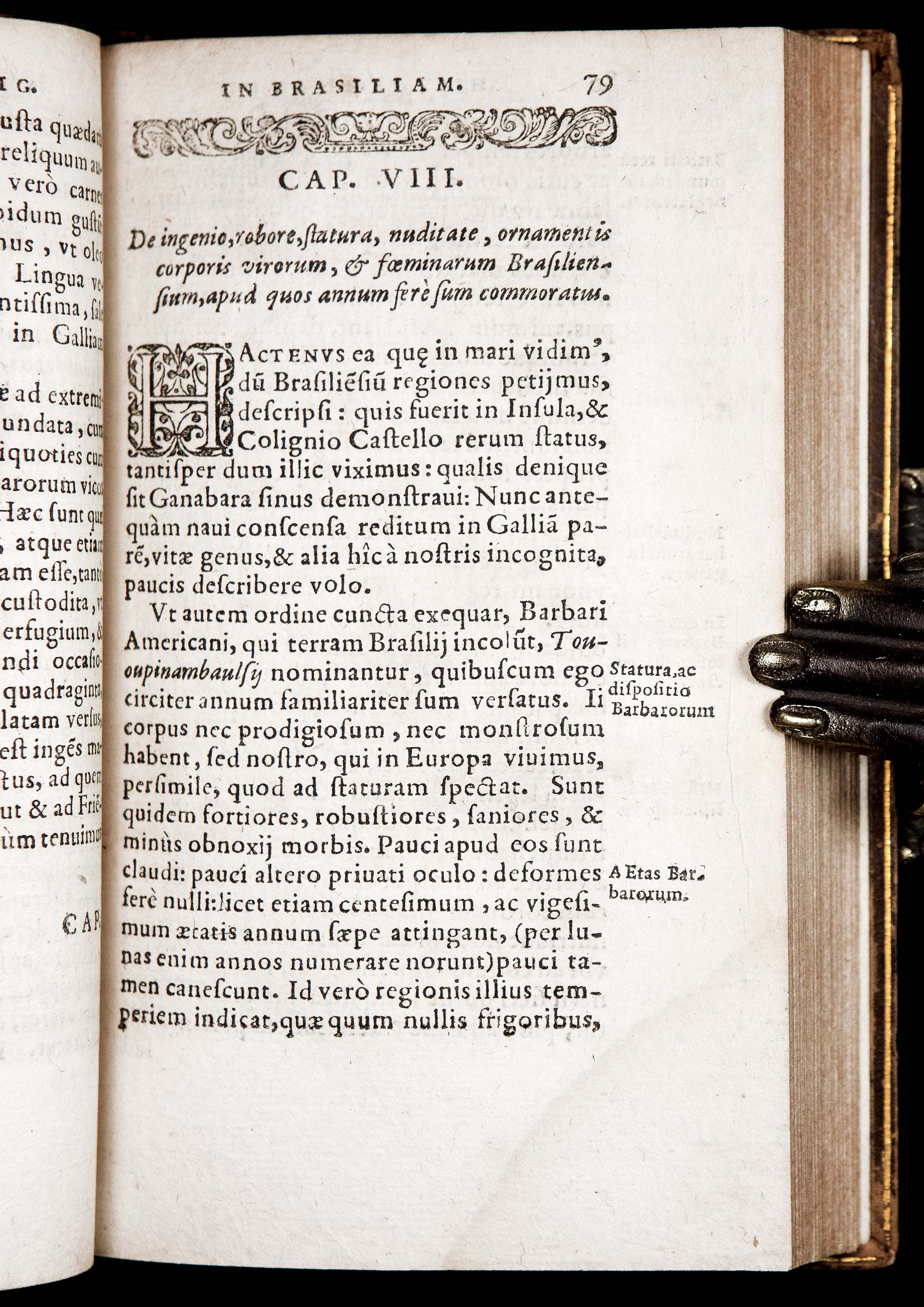
This is an important early account of Brazil, containing detailed descriptions of its natives, flora, and fauna, by a Protestant minister who traveled there in 1556 to join a colony on an island in the bay of Rio de Janeiro. He and other Huguenots were persecuted by the founder of the colony, Villegagnon, and were forced to return to France. This 1586 Latin edition includes details of the persecution which were suppressed in the French editions.
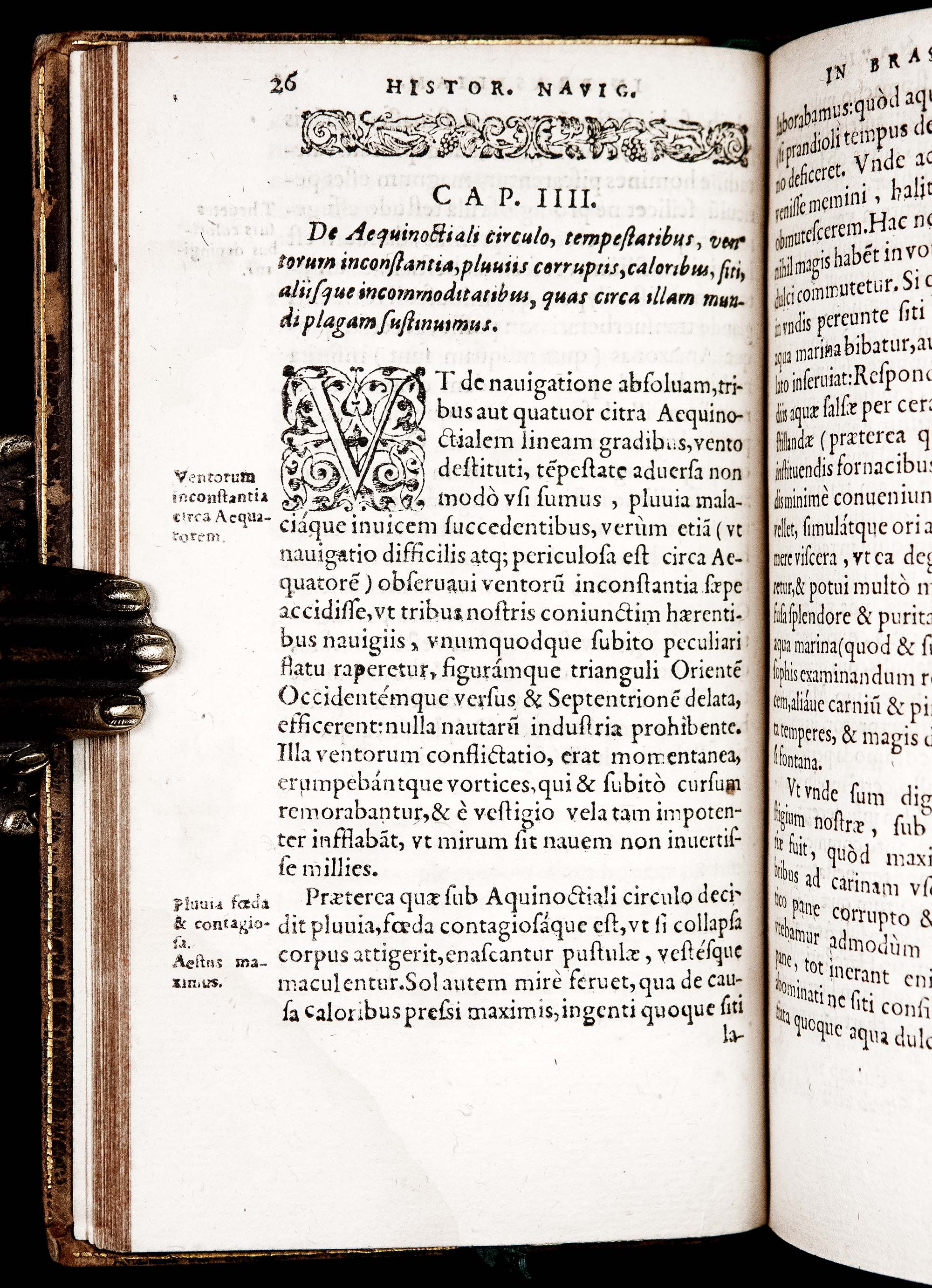
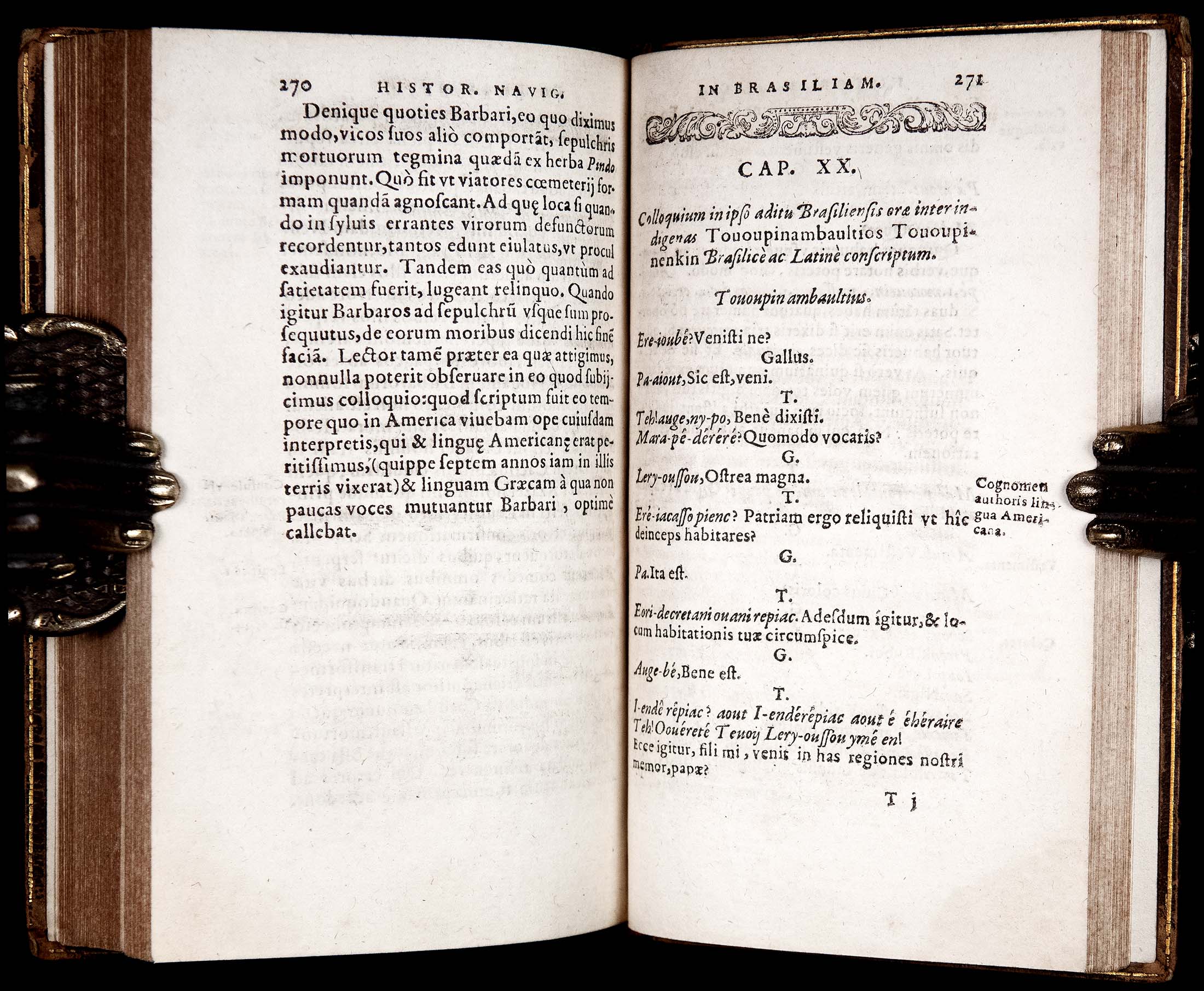
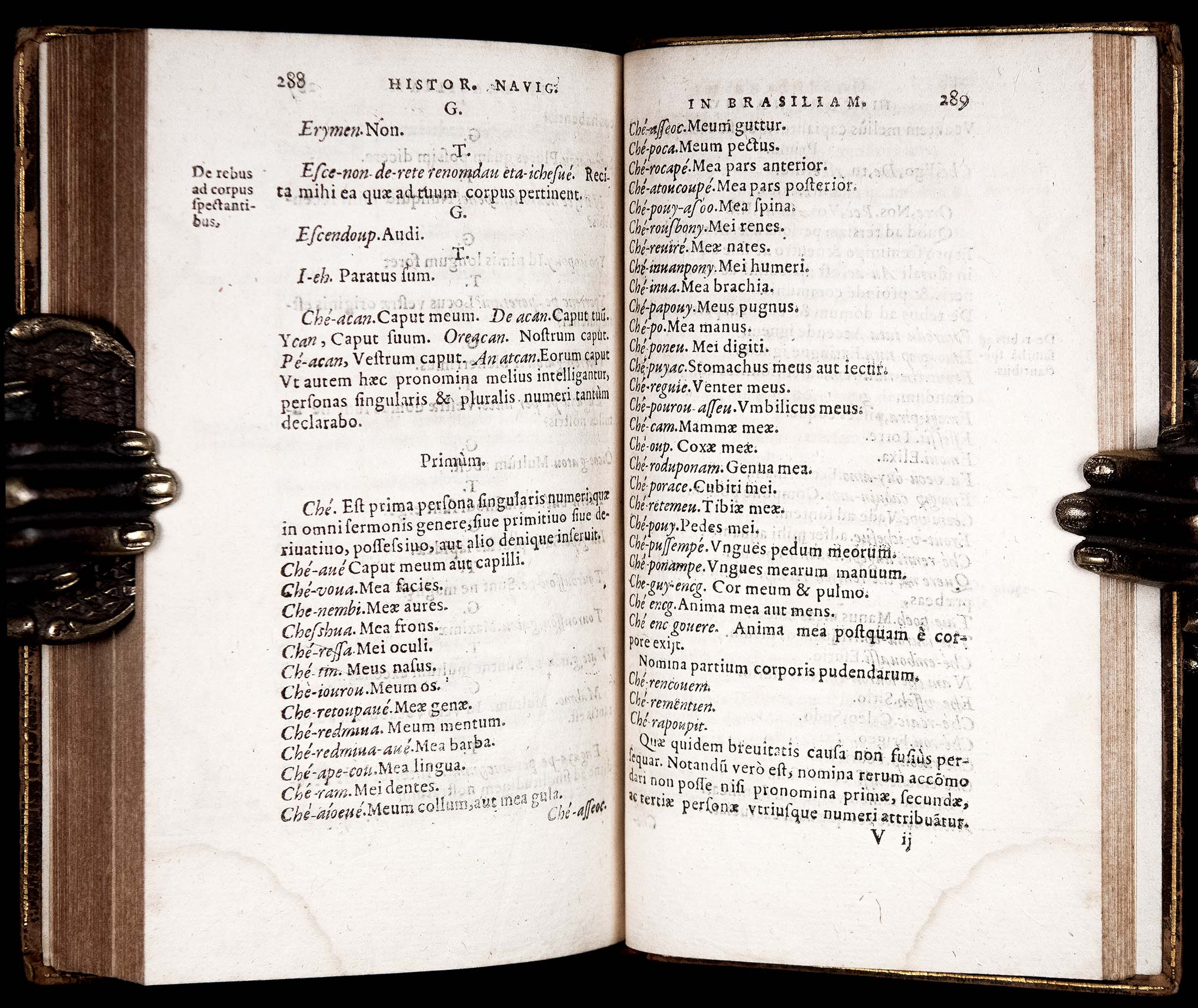
Léry‘s work "is full of curious observations about fish, tropical temperatures, atmospheric phenomena of the Equator, and so forth. Besides an account of events, Lery described Brazilian flora, fauna and the Indians. He published [Chap. 20] a dialogue between a Frenchman and a Tupi, which is a document of great linguistic value". (Borba de Moraes)
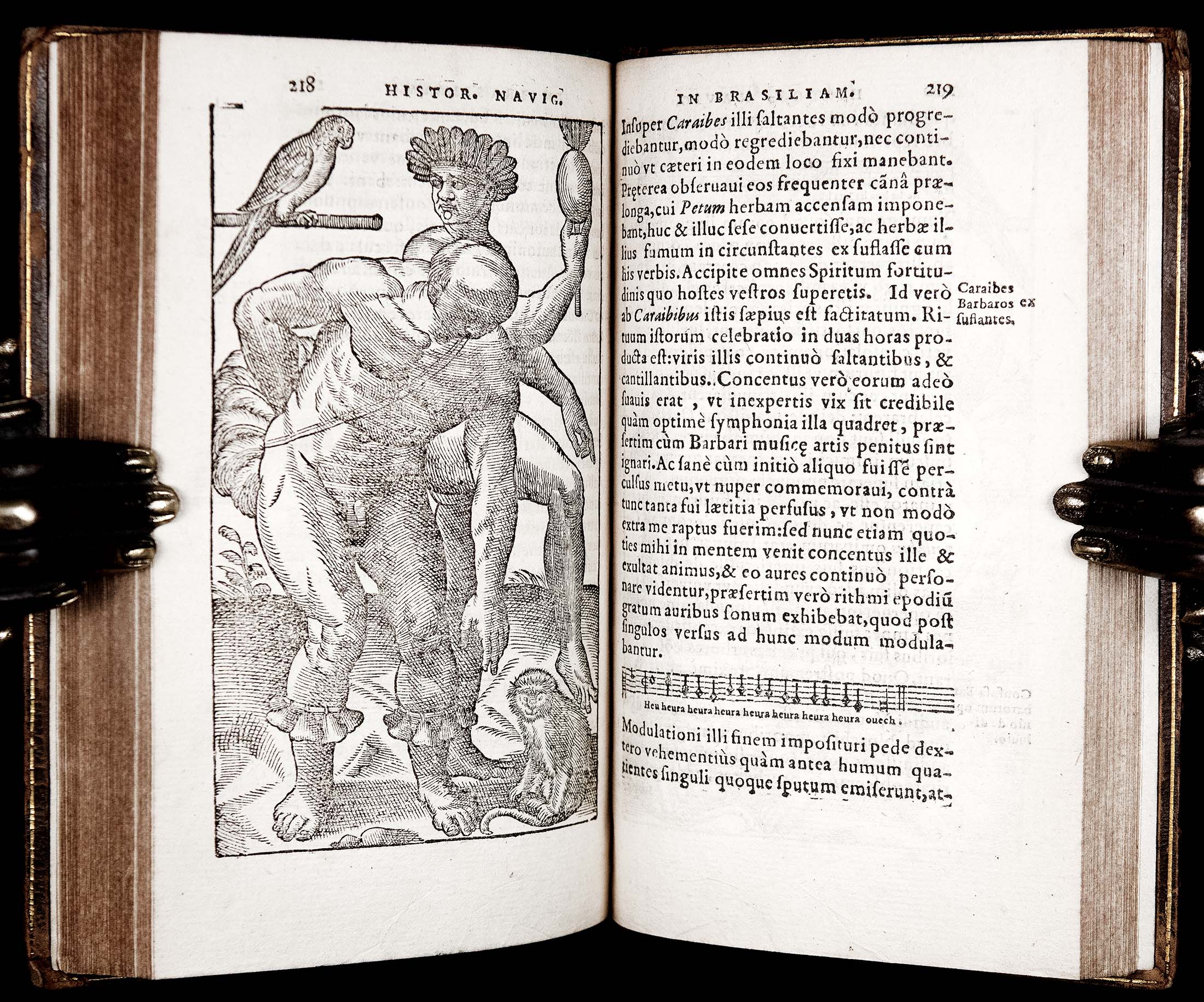
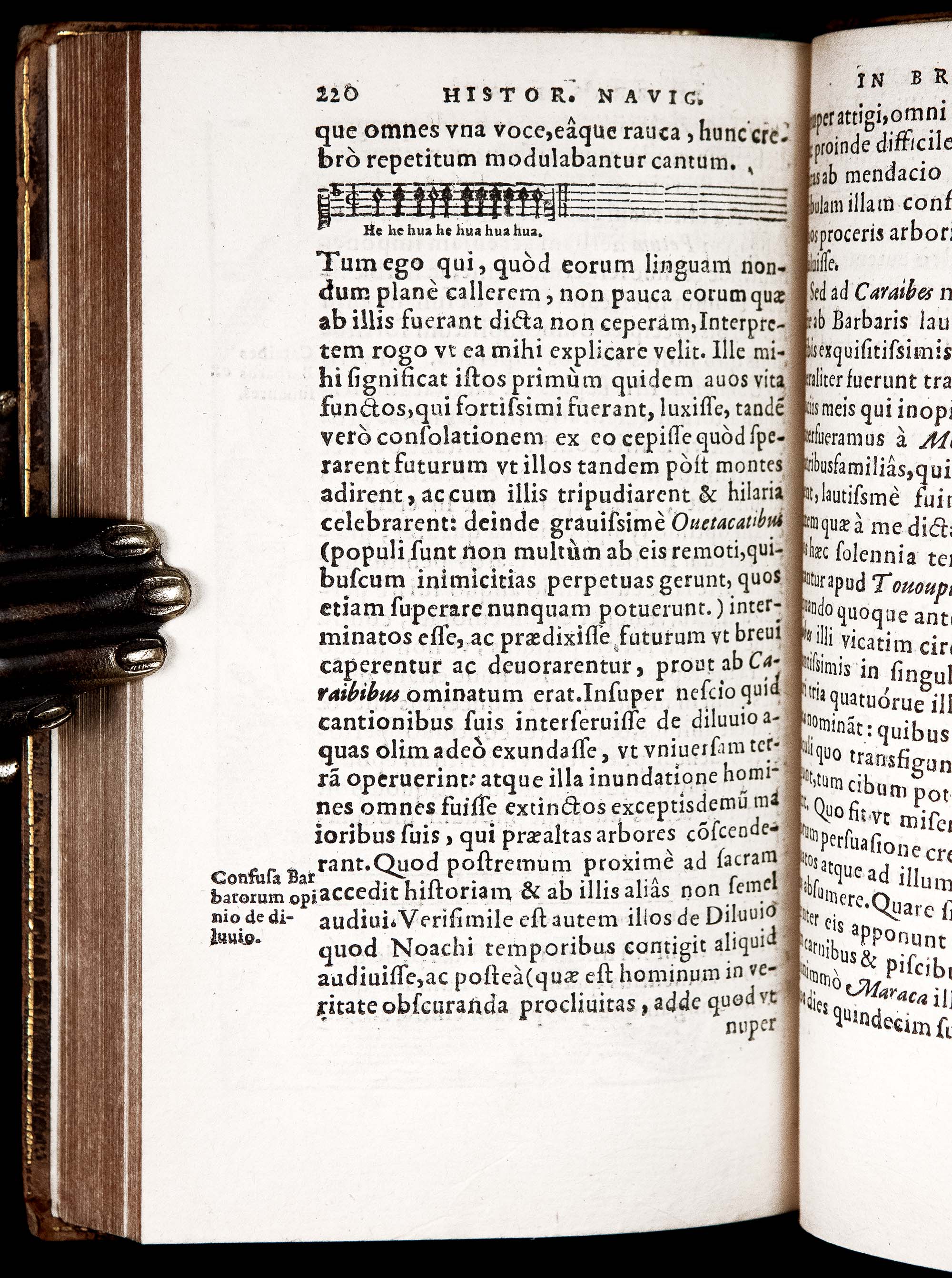
Five indigenous Brazilian songs were first transcribed in the 1585 French edition; two of these earliest printed transcriptions of Brazilian music are included here.
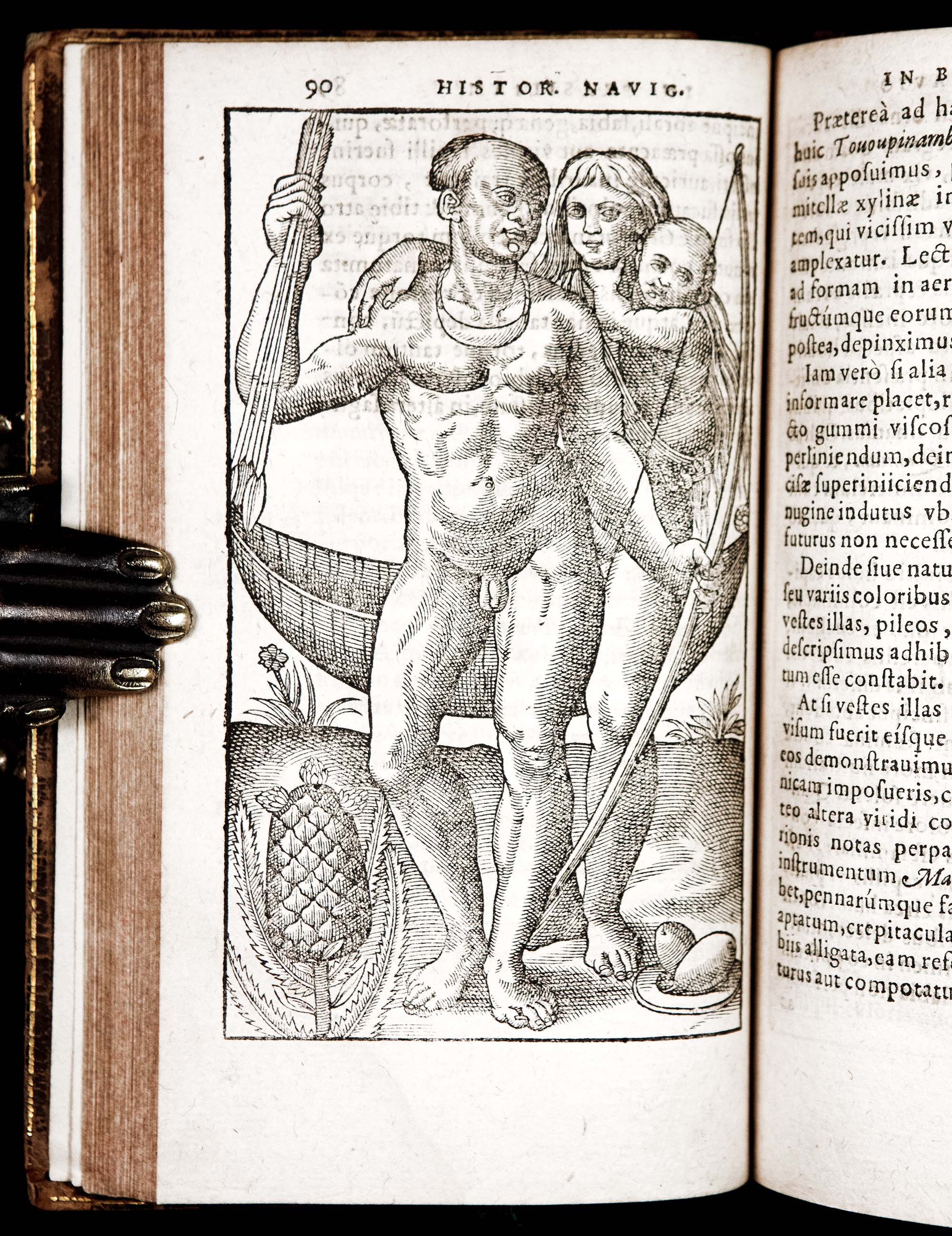
“Of all the many travel narratives of the sixteenth century Jean de Lery’s Histoire d’un Voyage fait en la terre de Bresil contains the most sensitive and detailed account we have of a Native America people before prolonged contact with Europeans had radically changed their culture.” (Anthony Pagdem)
Levi Strauss called the Léry‘s account of Brasil “the breviary of the anthropologist”.
Adams L536; Borba de Moraes I:470; European Americana 586/47; Sabin 40153.
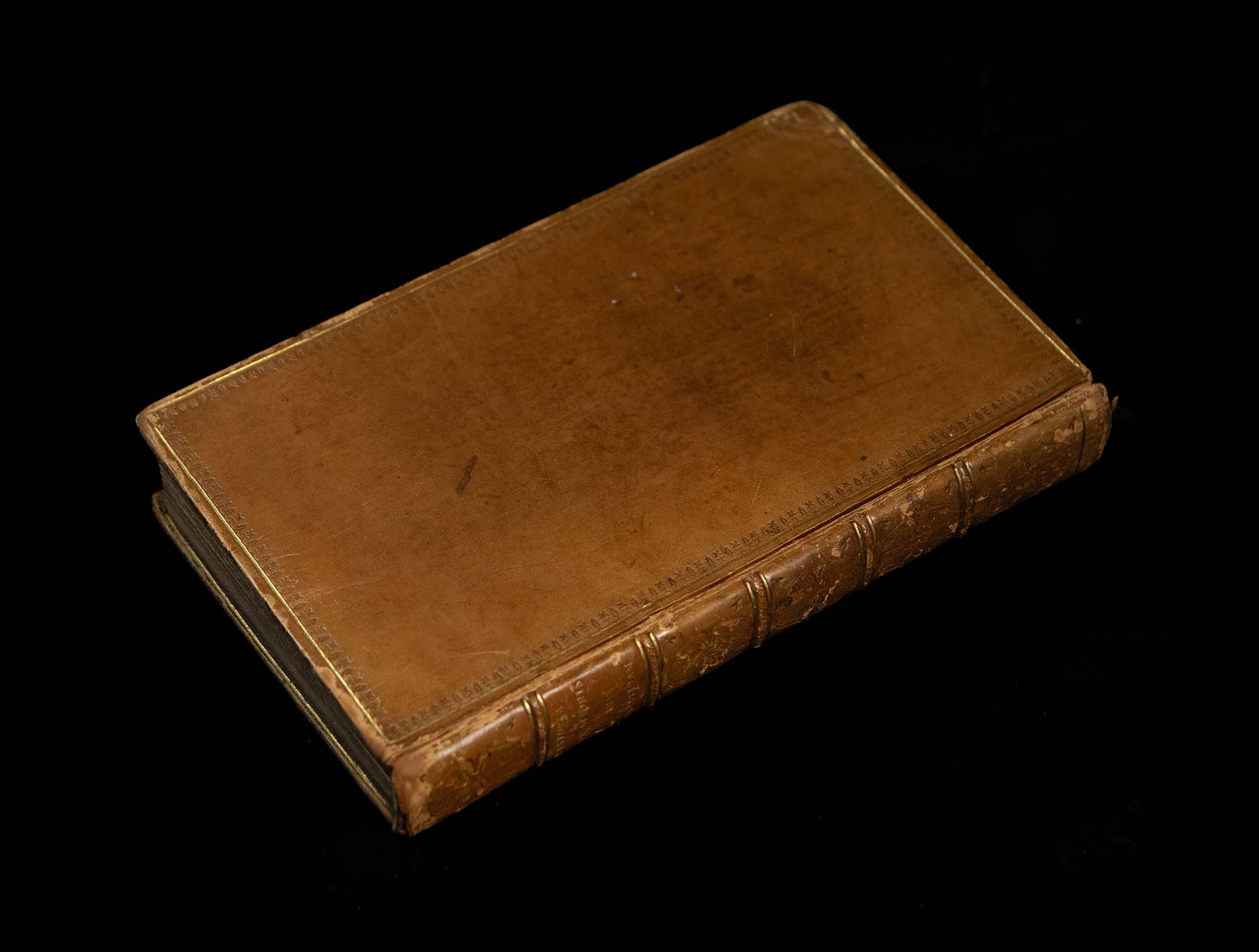
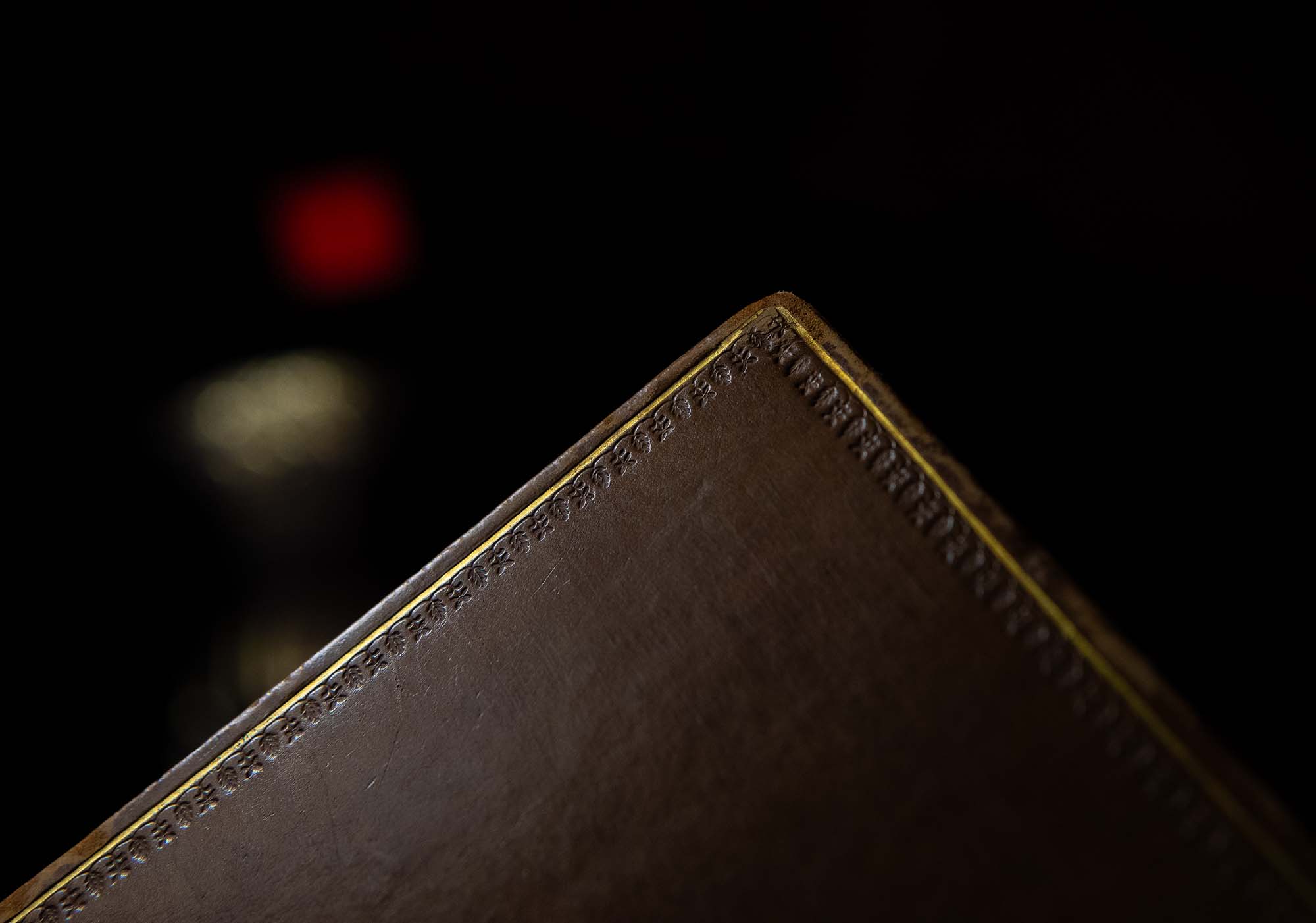
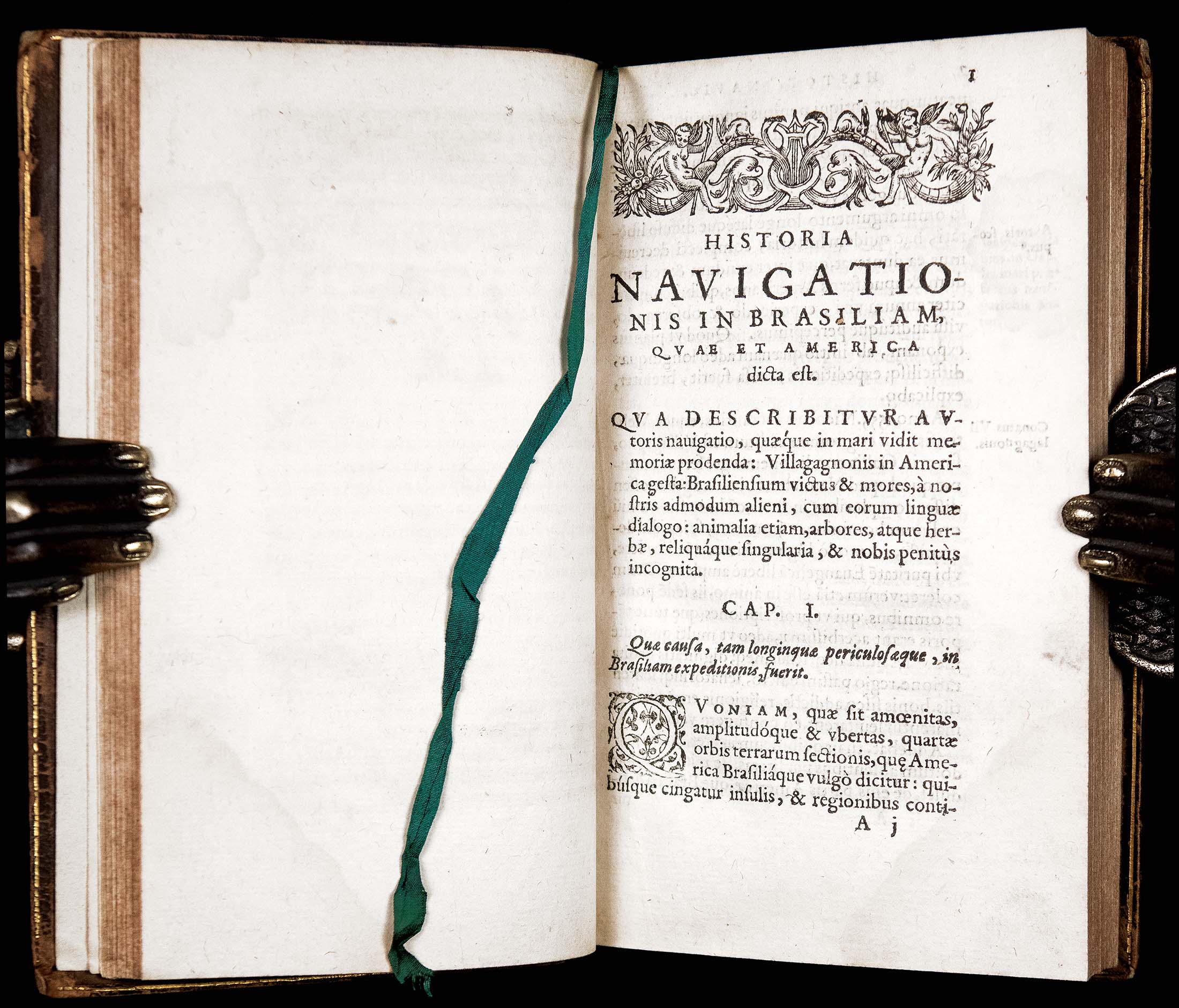
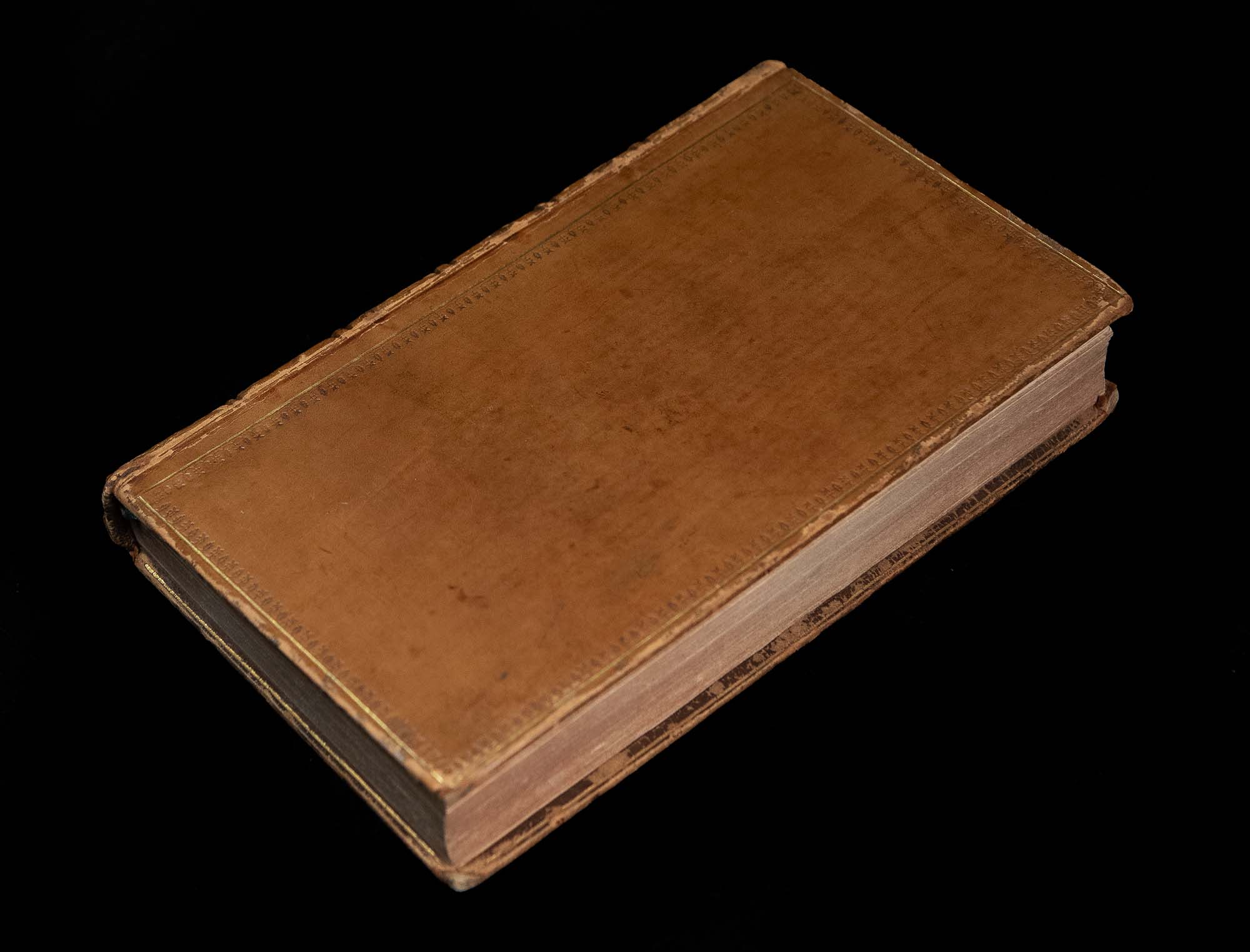
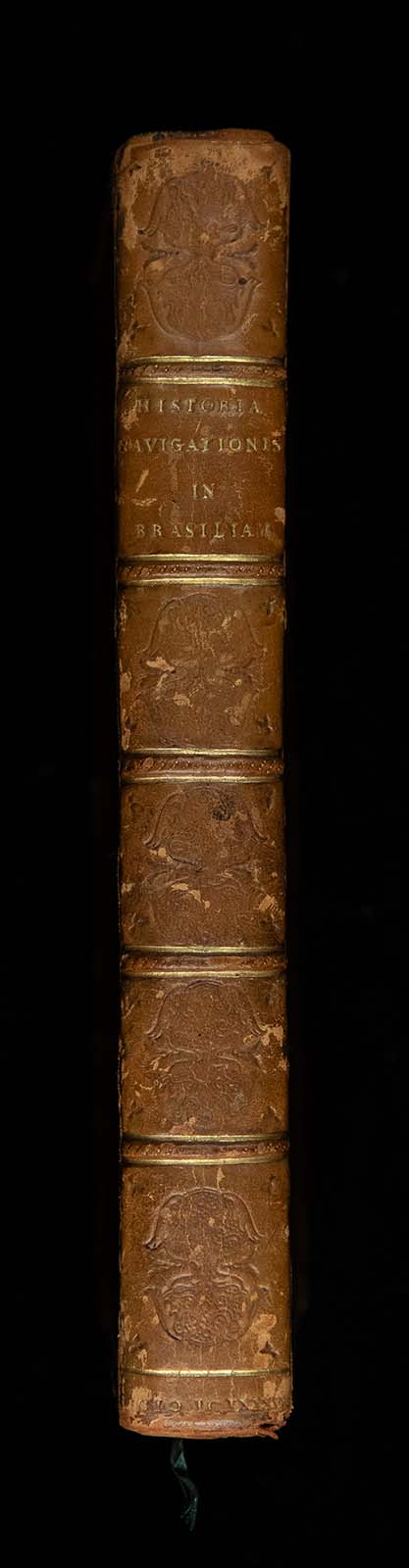
Octavo; leaves measure 173 mm x 100 mm. Bound in 19th-century light brown calf; spine ruled and lettered in gilt and with blind-tooled decorations in compartments. Green silk bookmark ribbon.
Pagination: [64], 1-223, 206-341, [17] pp.
Complete, including the integral blank ****8 at the end of the preliminaries.
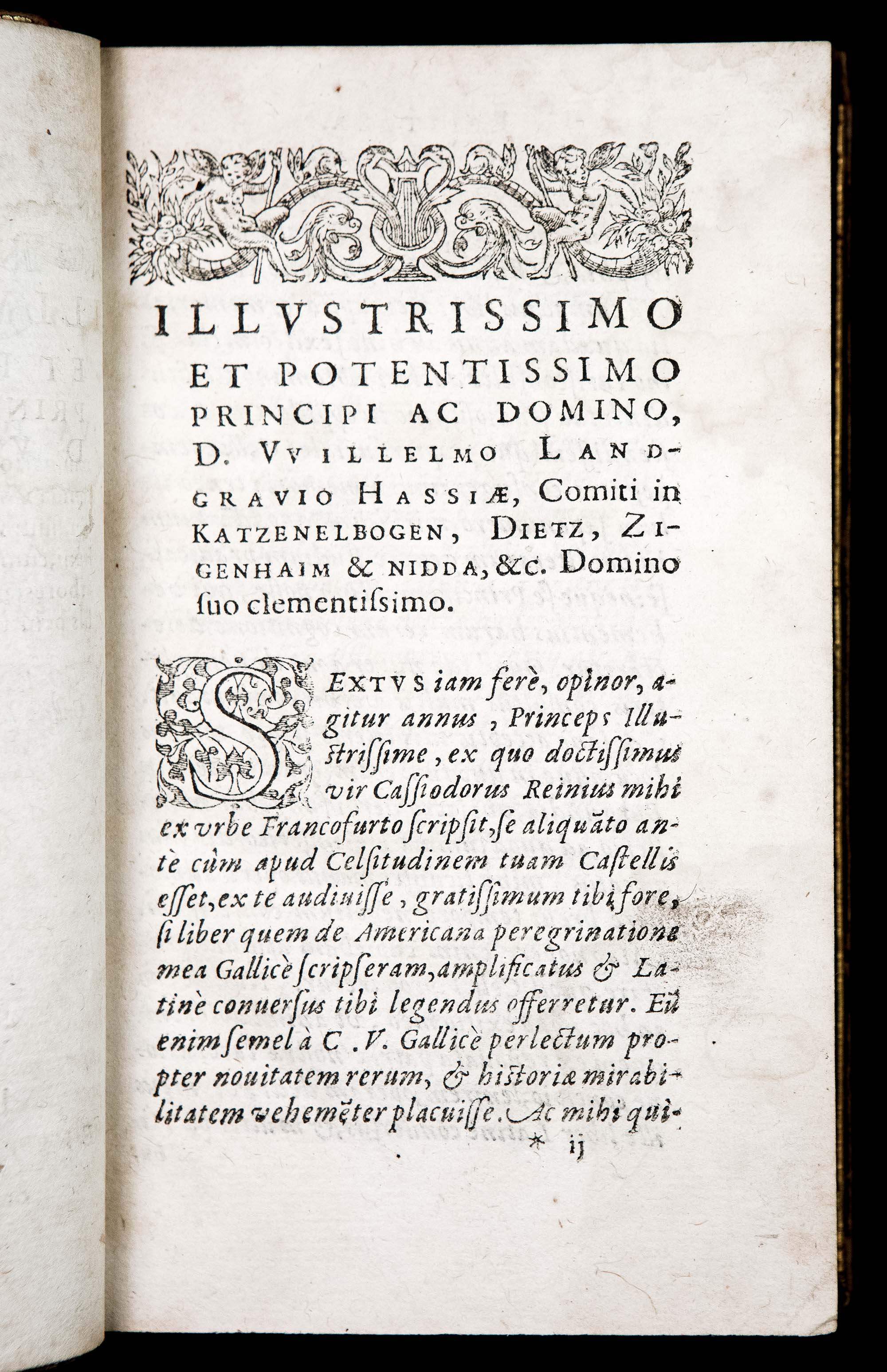
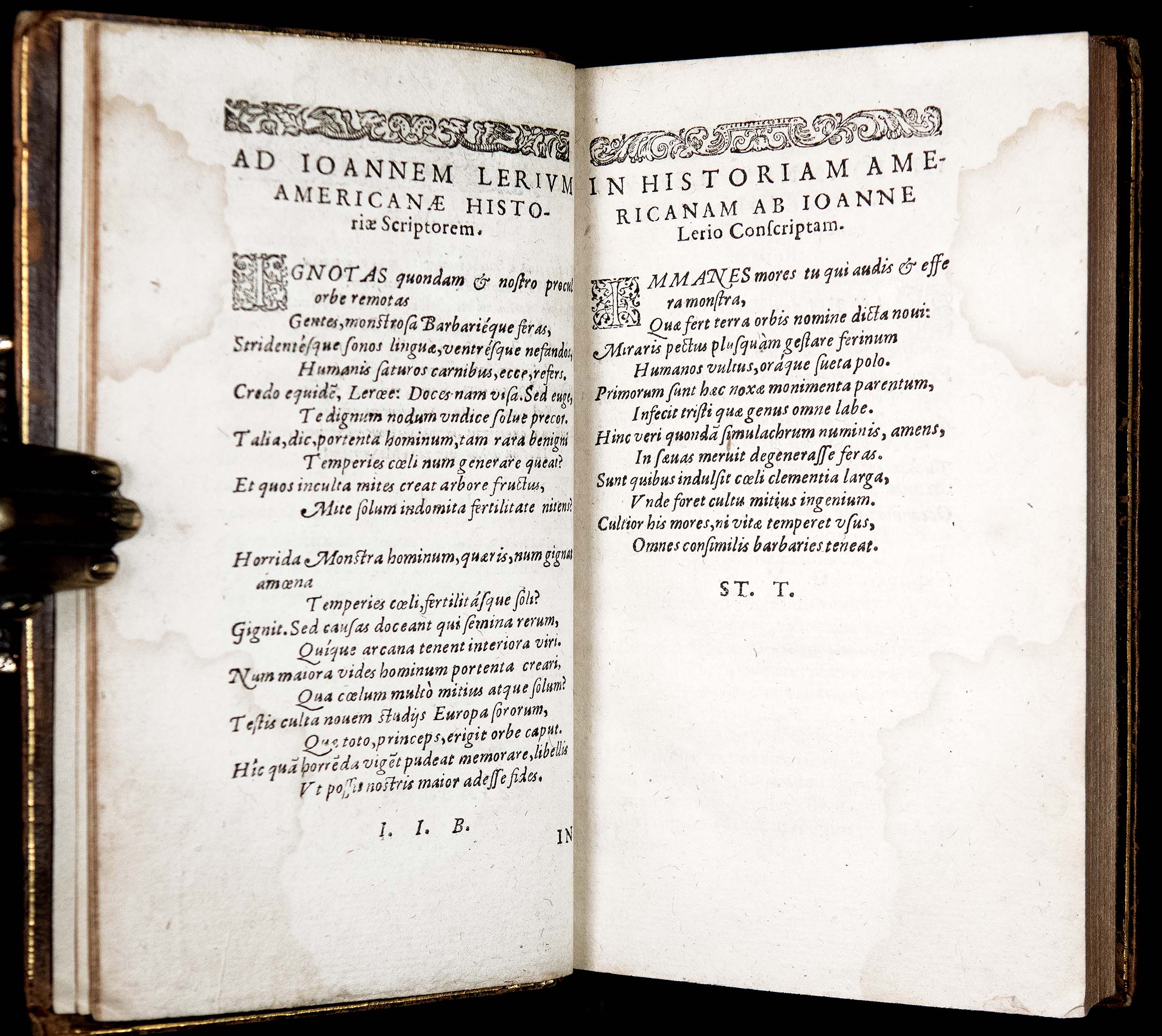
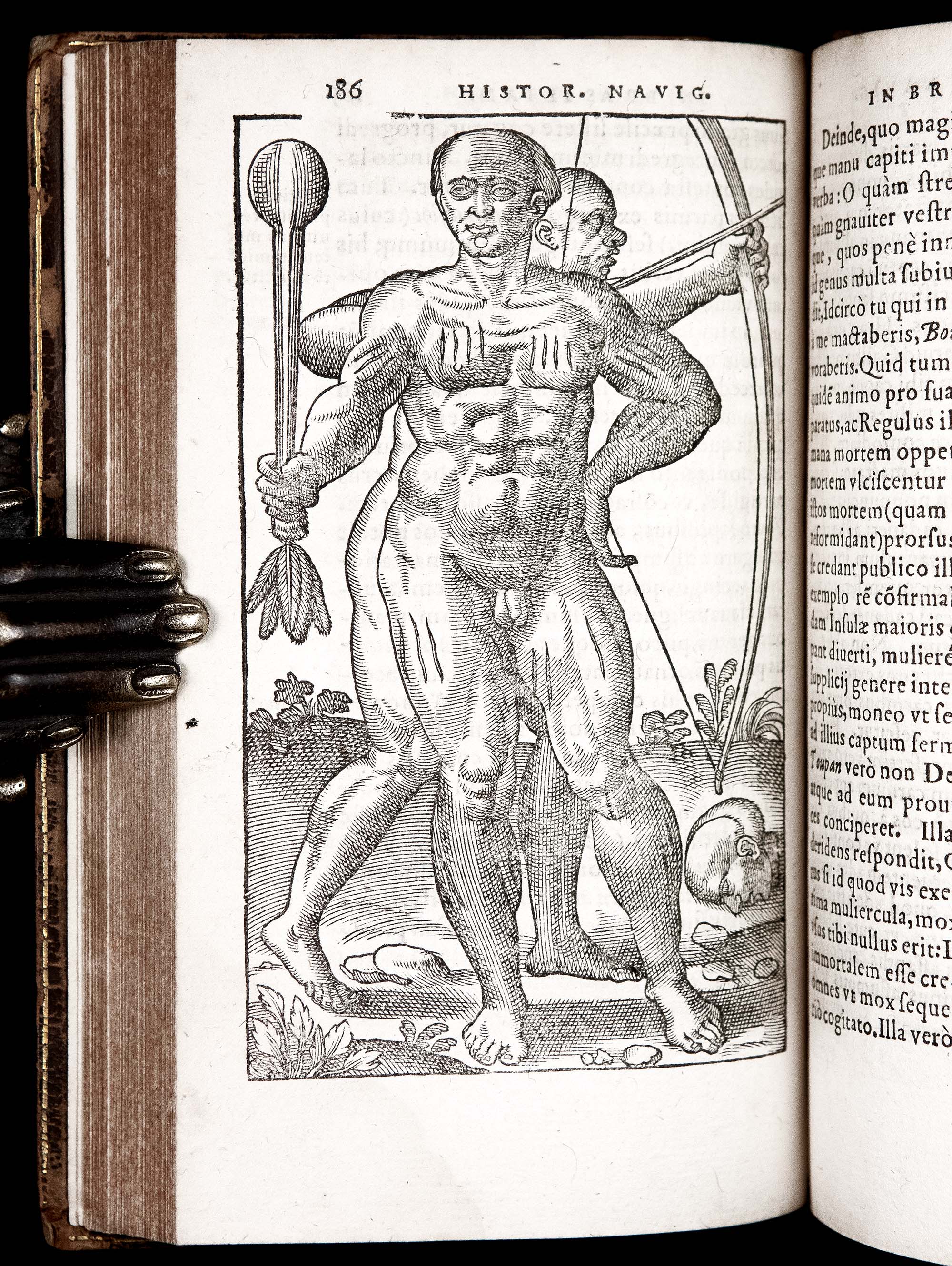
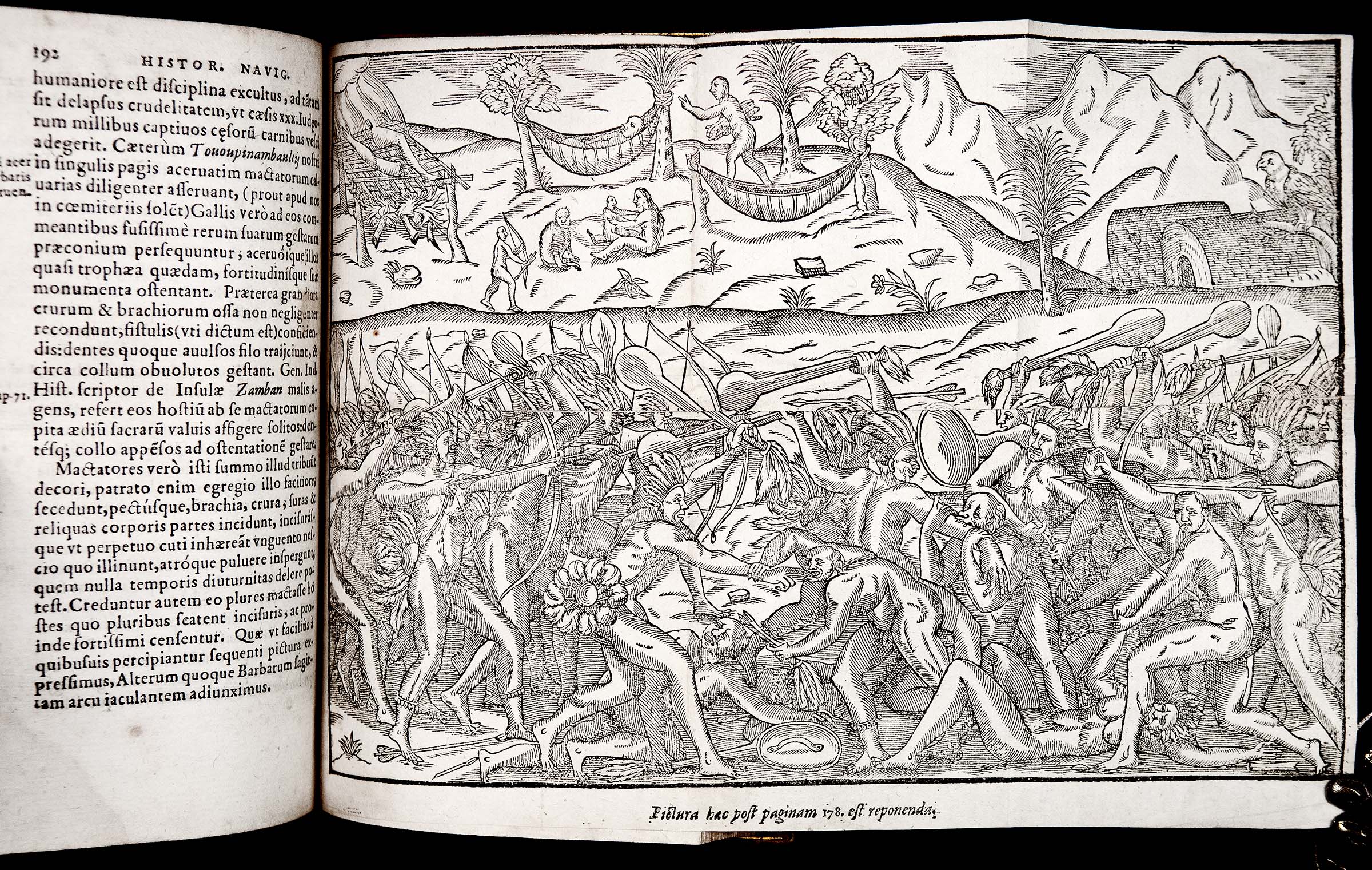
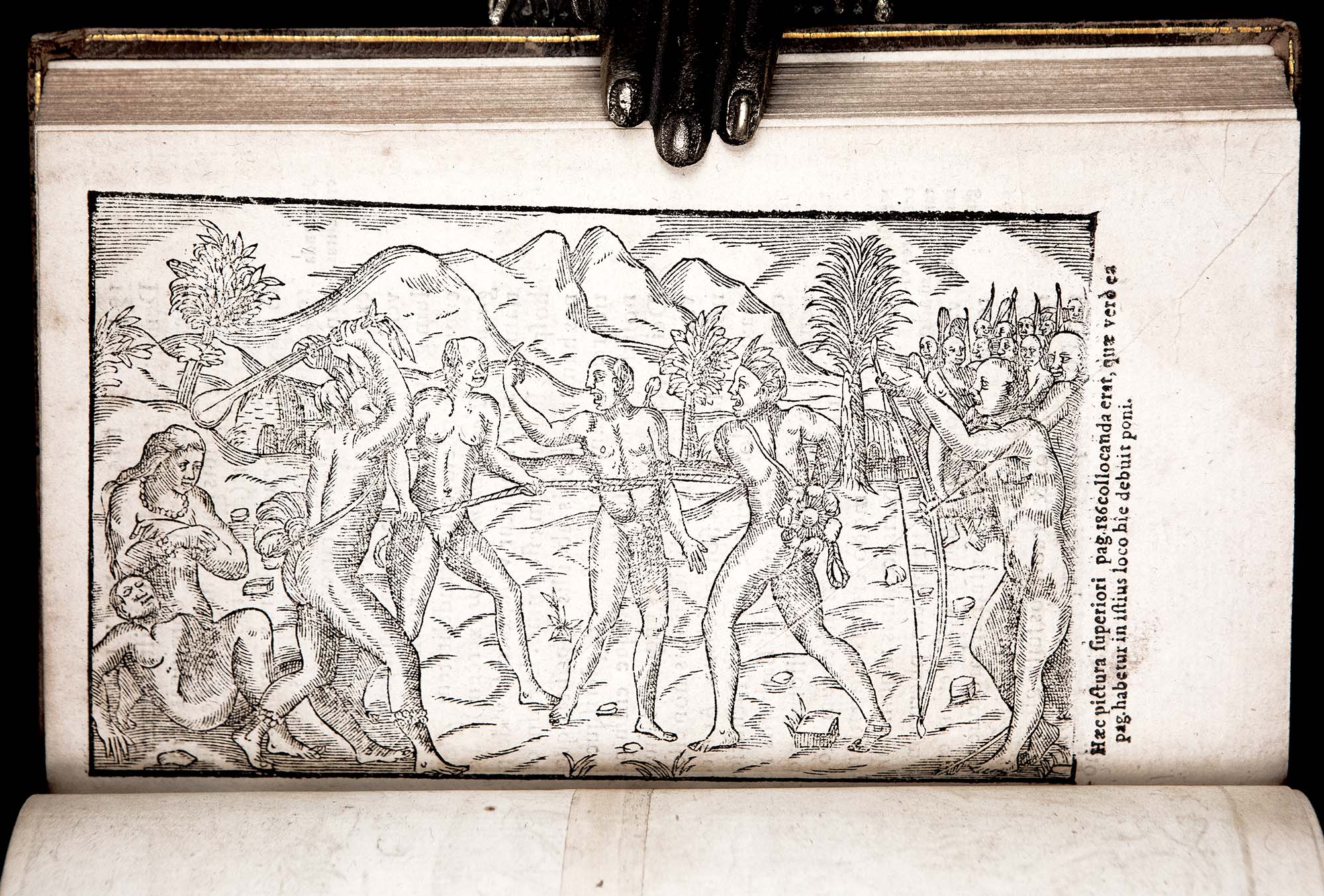
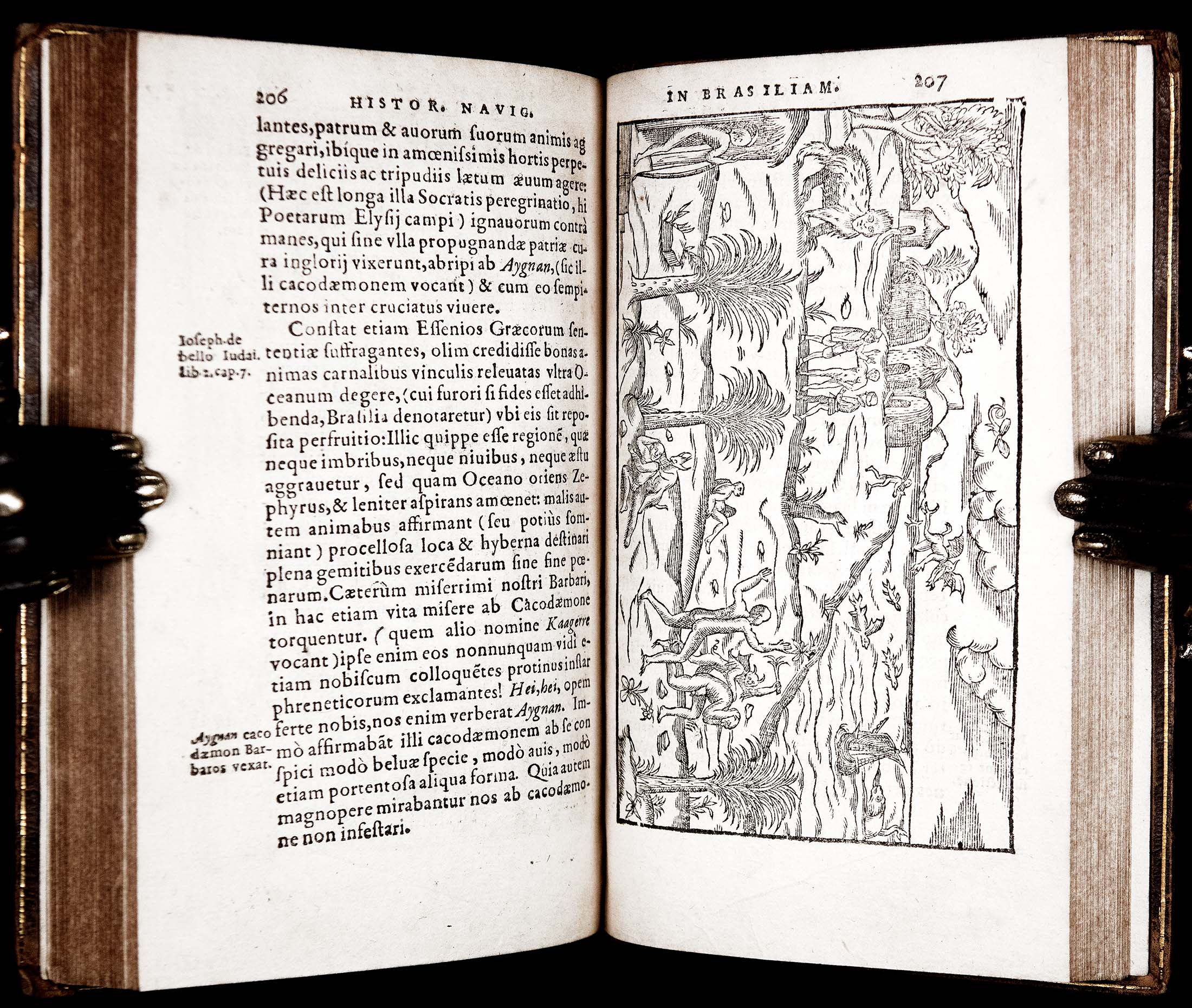
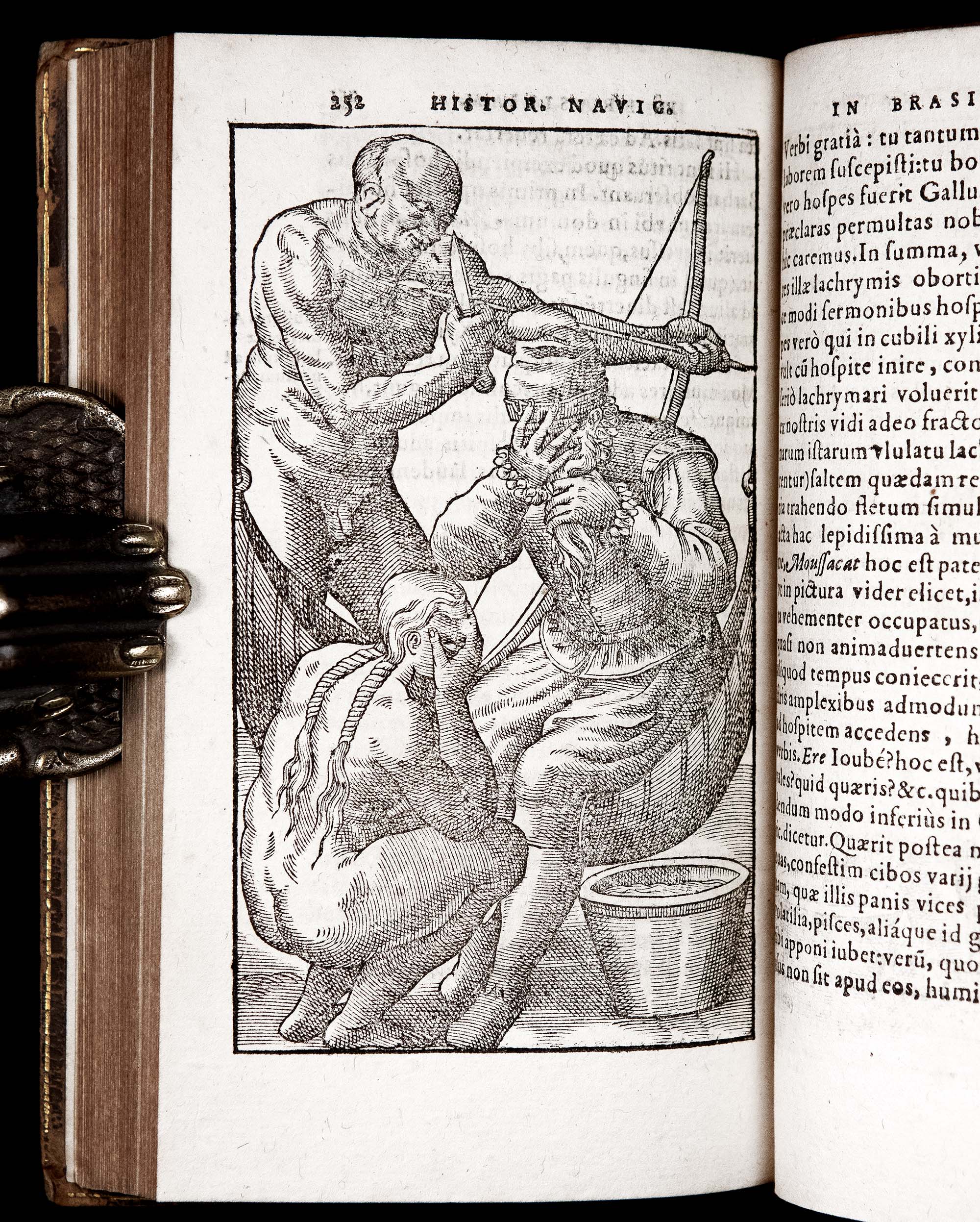
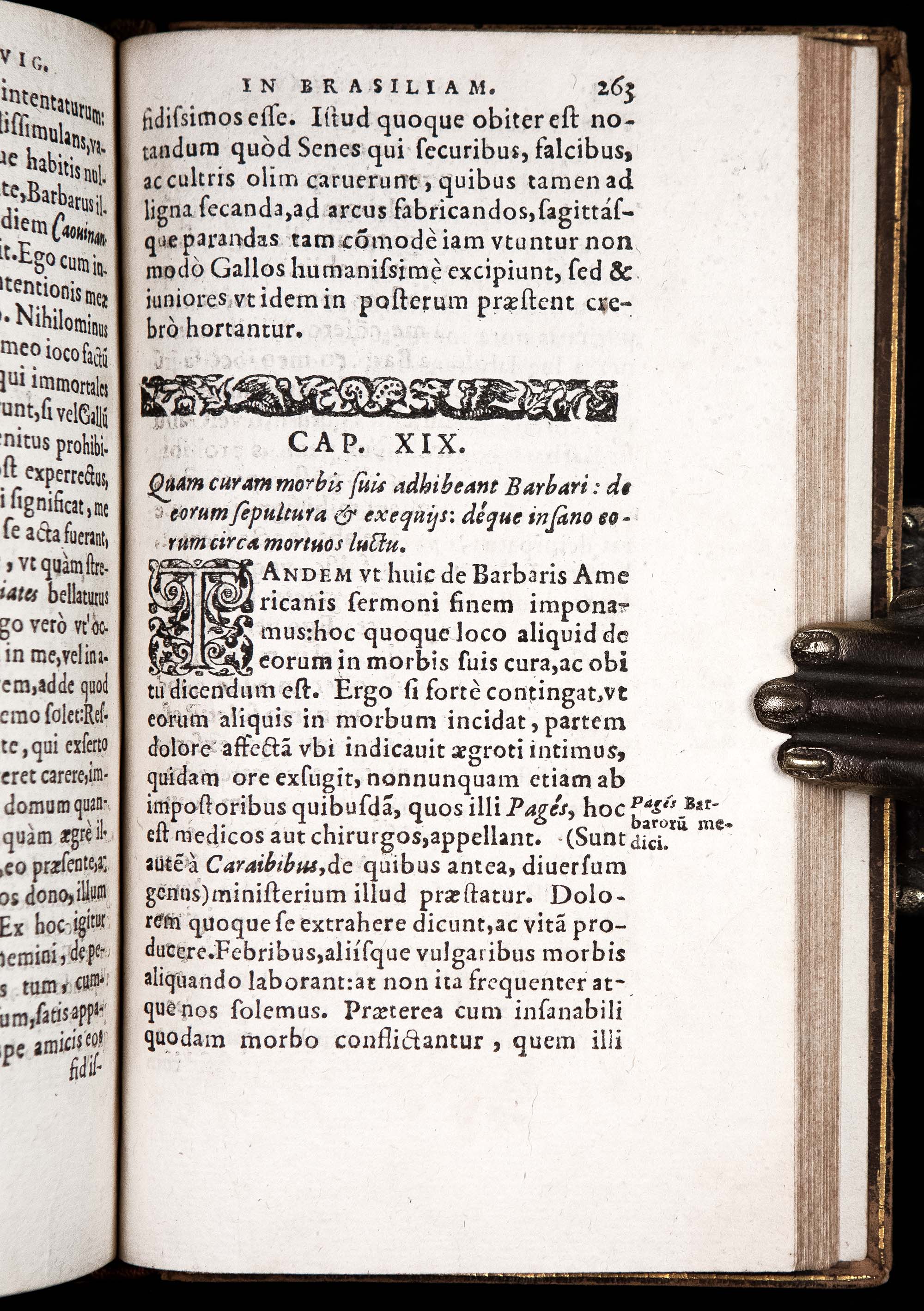
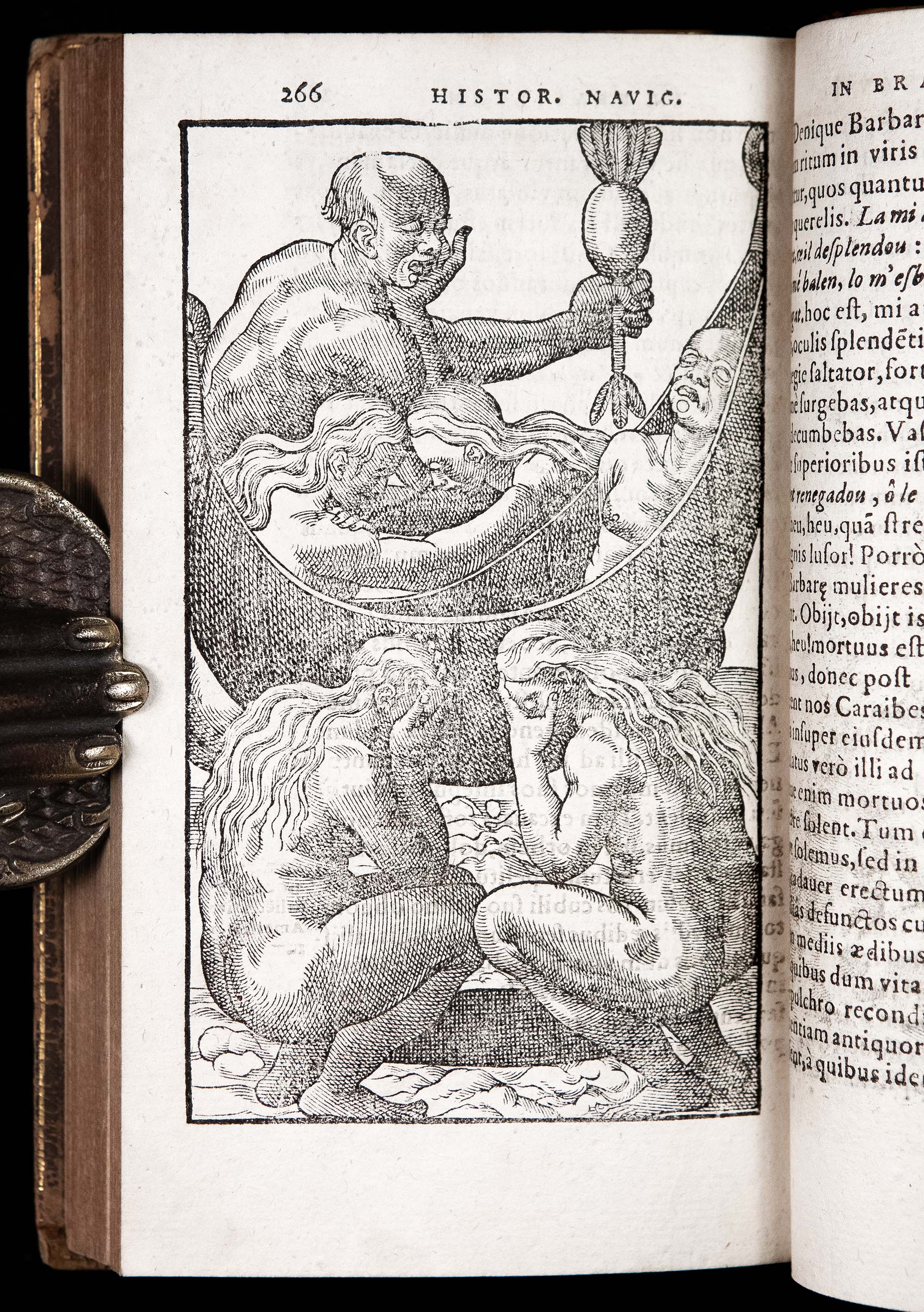
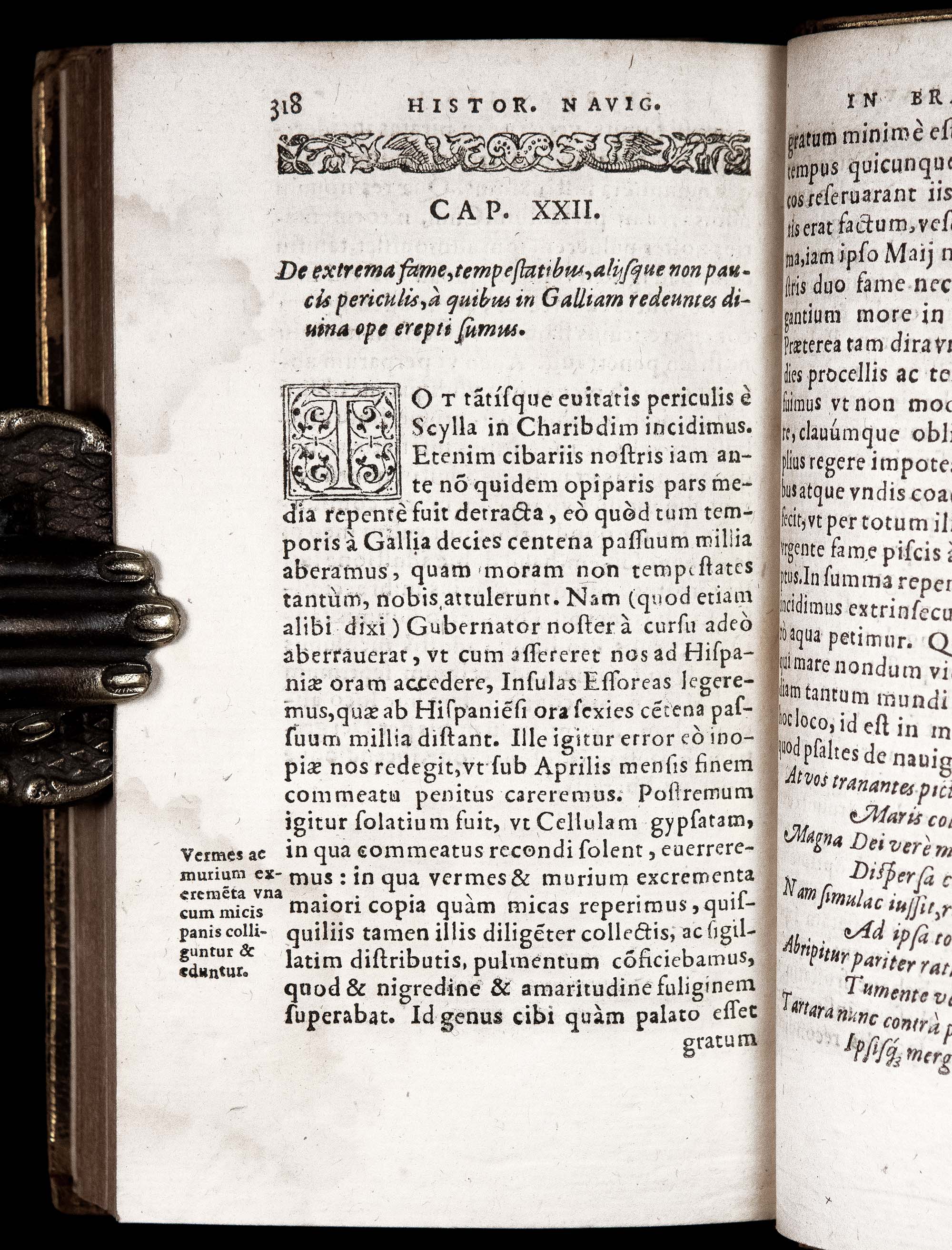
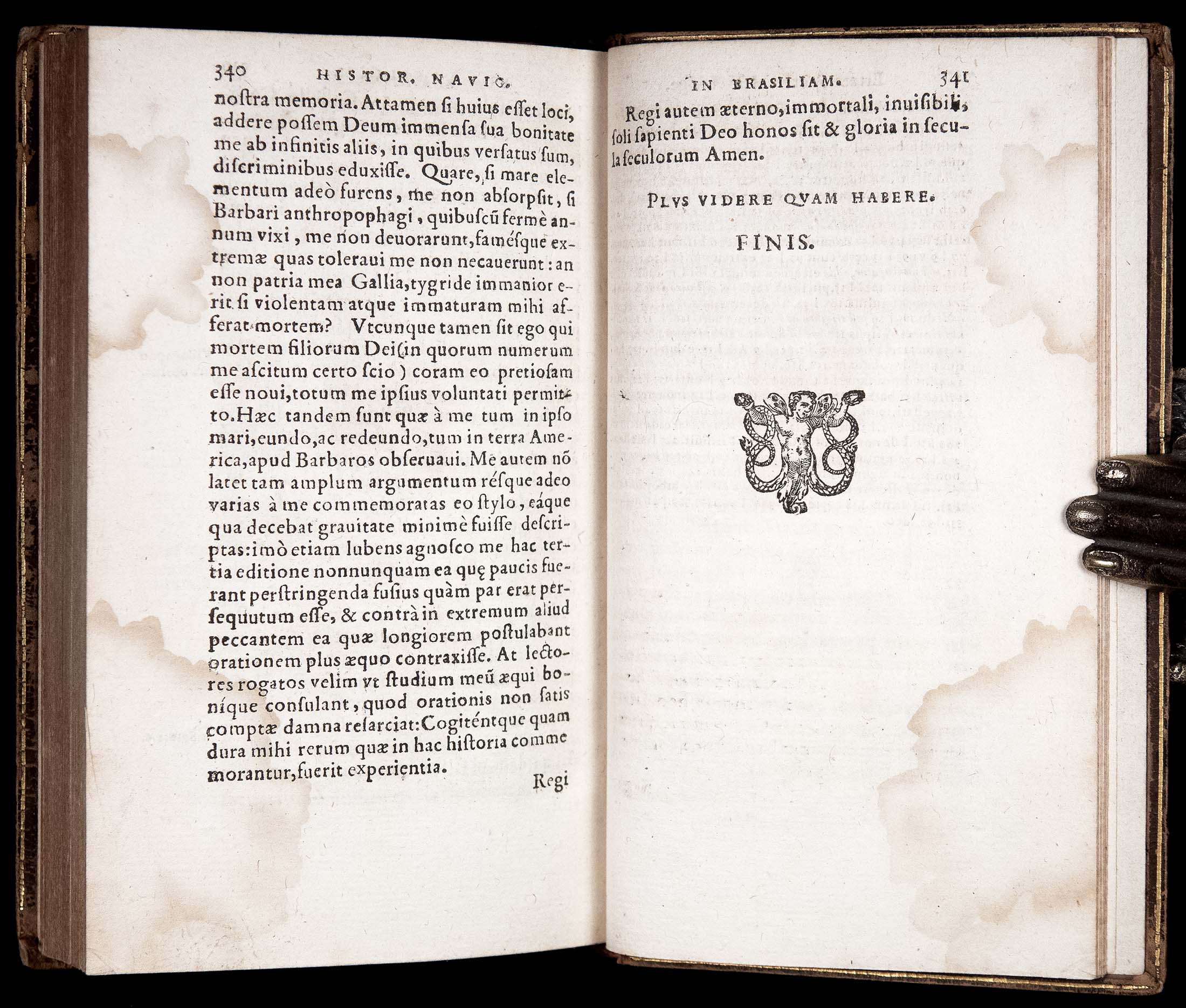
Illustrated with 7 full-page woodcuts in the text, as well as a fine folding plate (often missing), which depicts a battle between two native tribes. Some printed musical notations in text; woodcut headpieces and initials.
Chap.XX contains a dialogue in Tupi language of Brasilian natives and Latin.
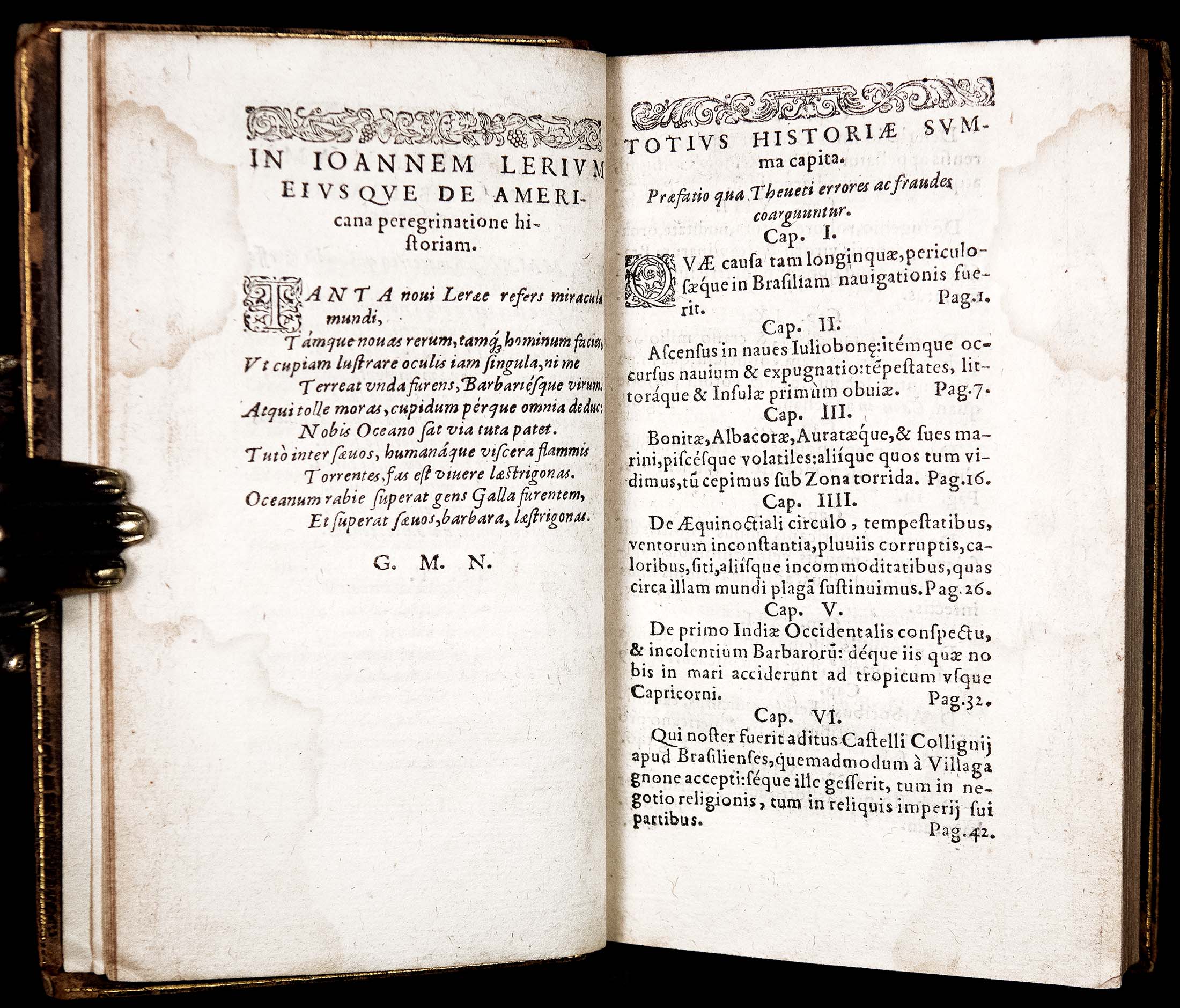
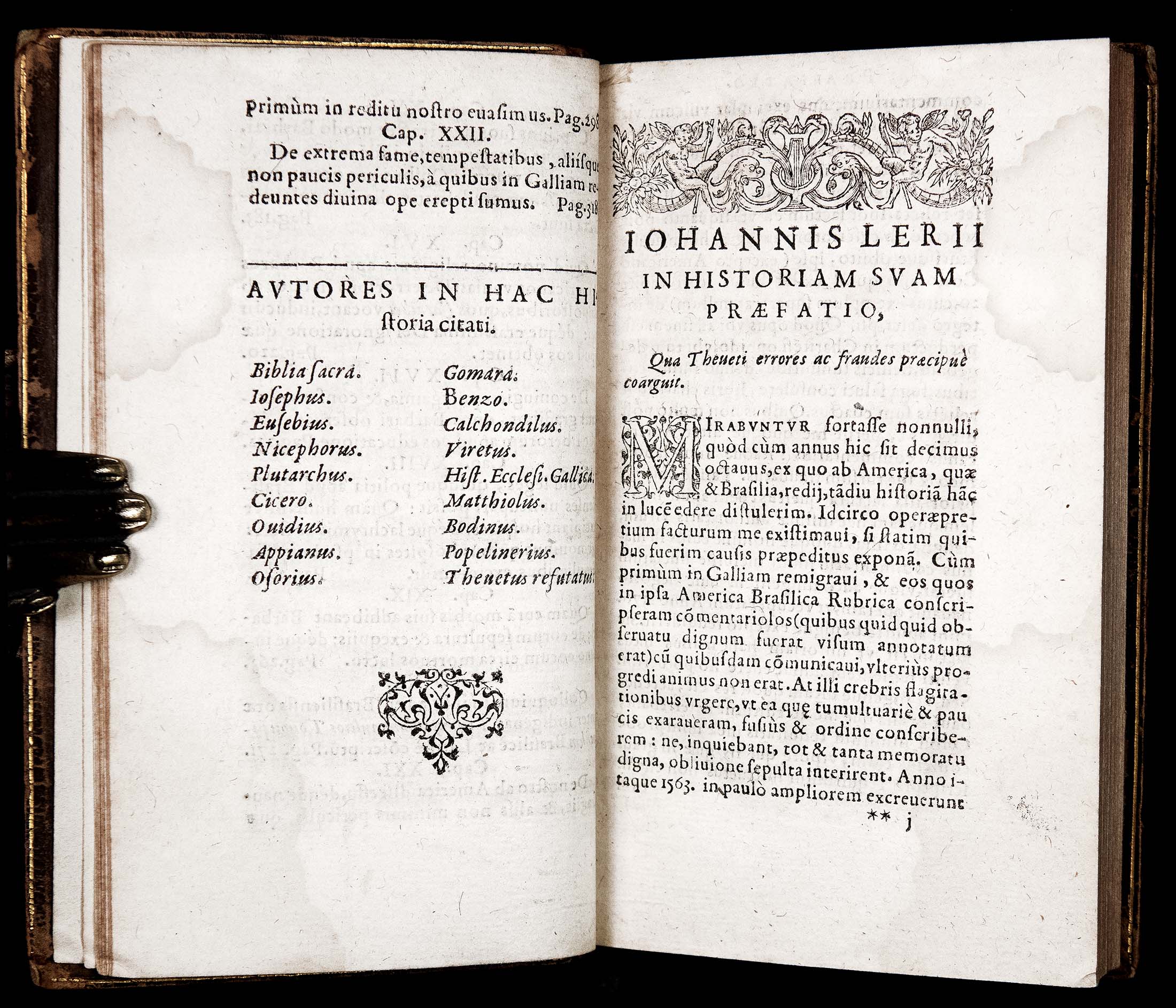
Preliminaries include a dedication; several laudatory poems; list of authors consulted, etc.
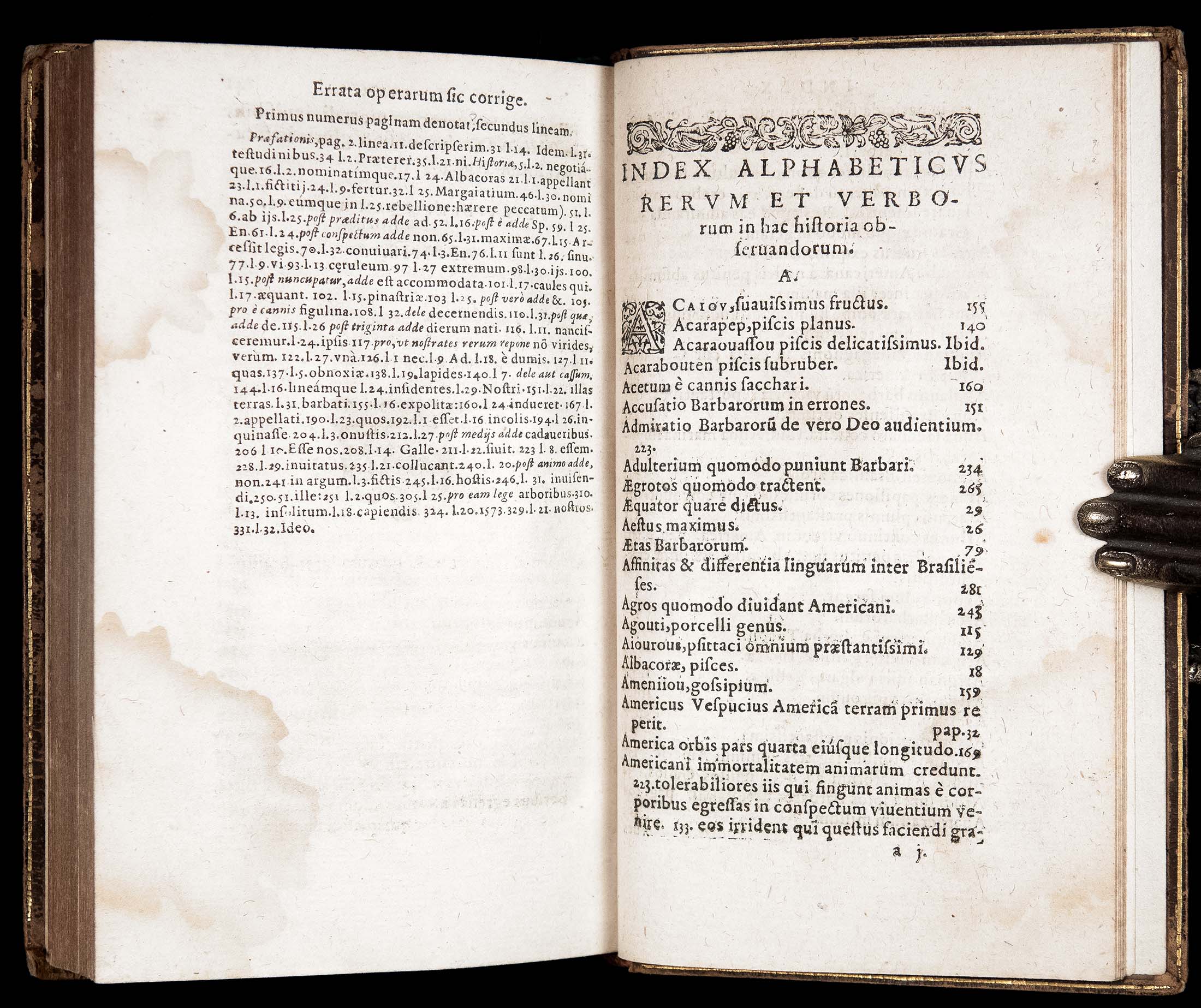
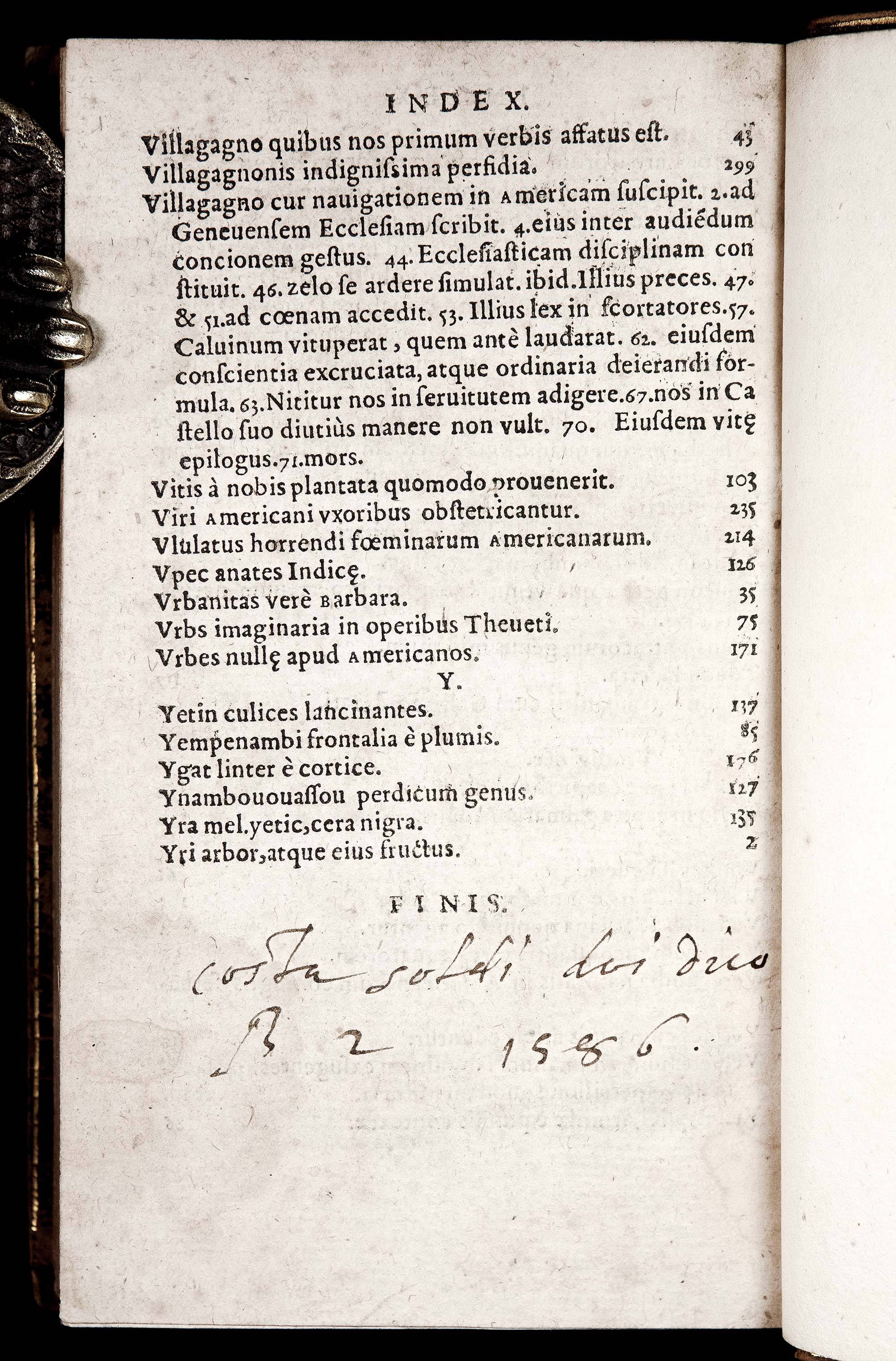
Included at the end are Errata and an alphabetical Index.
A manuscript purchase note in Italian dated 1586 on the bottom margin of the final page.
Very good antiquarian condition. Complete. Light water-staining, almost entirely marginal; occasional light browning. The folding plate with a long closed tear neatly repaired on blank verso (with approx. 2-3mm loss of the engraved part along the seam). Binding a bit rubbed on edges, corners a bit bumped. Otherwise an excellent, wide-margined copy.